Bocci adds a hand-applied mirrored finish to its 14 series, introduced in 2005. The Paris ORBITAL presentation explored reflection and light; these official images and product types reveal what to consider when choosing a configuration.
The same glass sphere transmits light when illuminated, then reflects a window and the room across its surface when dimmed. Canadian lighting brand Bocci’s 14 Mirror brings a hand-applied mirrored finish to the 14 series, first introduced in 2005, allowing a fixture to move between luminous and reflective object. It appeared in ORBITAL during Paris Art & Design Week. That presentation ran on October 20–21 and has now ended; this article focuses on the product information and design approach that remain available to explore.
A Mirrored Finish Changes the Relationship With the Room
According to Bocci, light passes through clear glass when 14 Mirror is fully illuminated. When dimmed or switched off, the mirror becomes more prominent, making ambient light and surrounding objects part of the fixture’s appearance. This change concerns the relationship between lighting, surface and environment; it should not be read as a screen or smart colour-changing feature. For rooms that need different moods throughout the day, the design offers visual layers that shift with use rather than a single fixed silver colour.
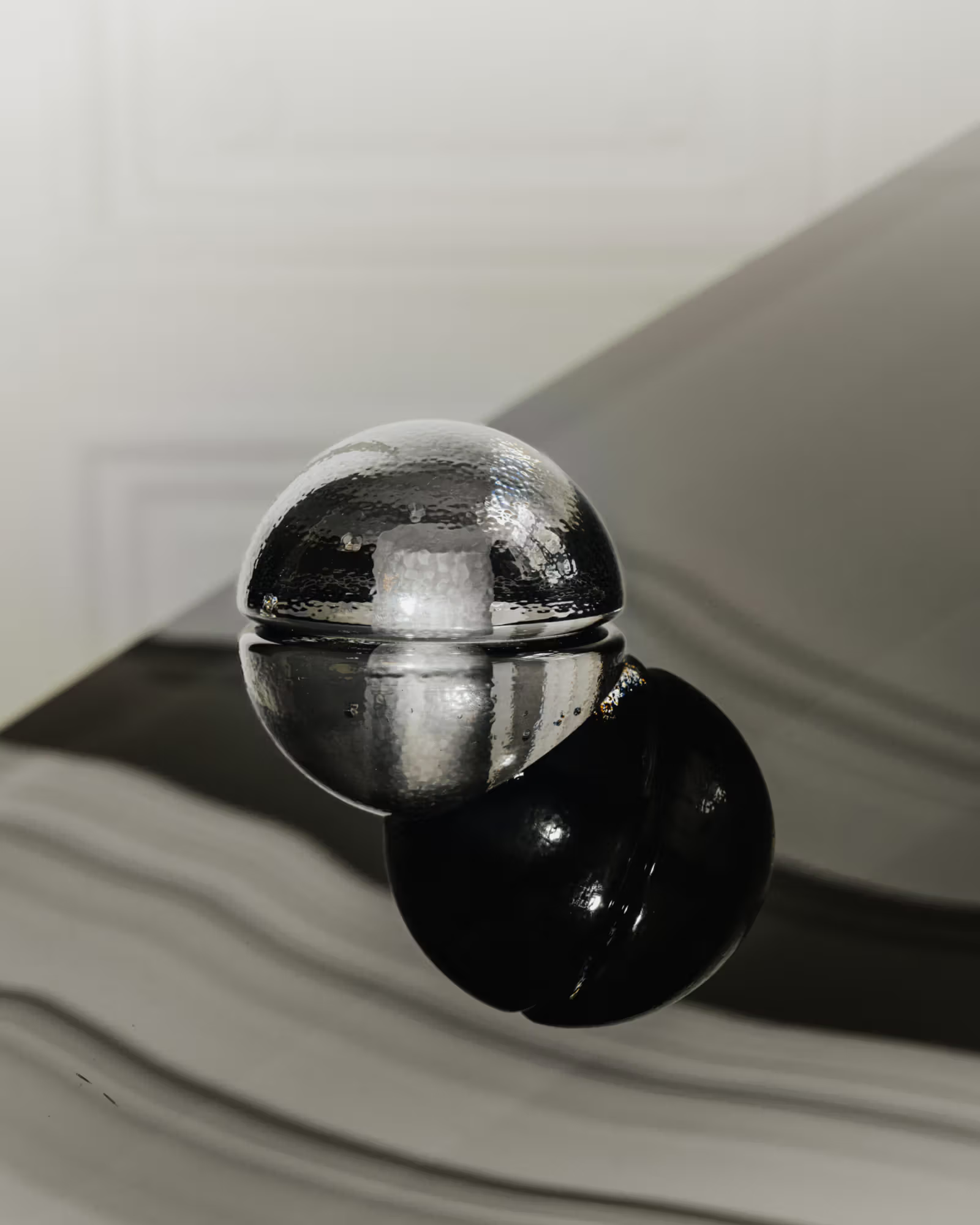
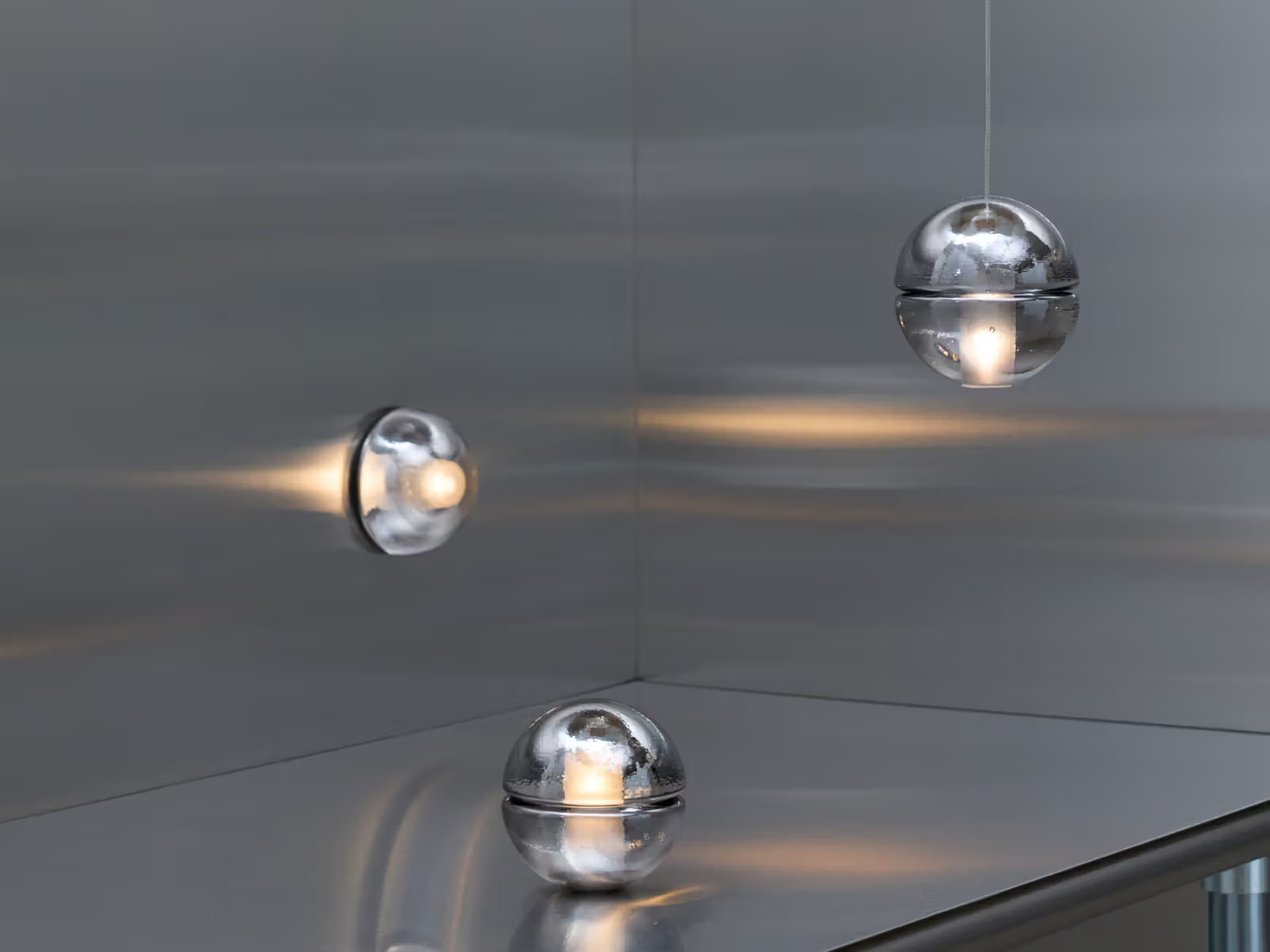
The mirroring is applied by hand, giving each piece small differences in transparency and reflection. Official close-ups show glass texture and the sphere’s joining line, with reflections leaving those material characteristics visible. Co-founder Omer Arbel understands the treatment as a condition rather than simply a colour. Following that idea, viewers can notice how the same object moves between a dense, dark sphere and a transparent illuminated form against different backgrounds.
A close view of 14 Mirror shows the glass texture and the sphere’s joining line.
ORBITAL Turned a Paris Apartment Into a Reflective Setting
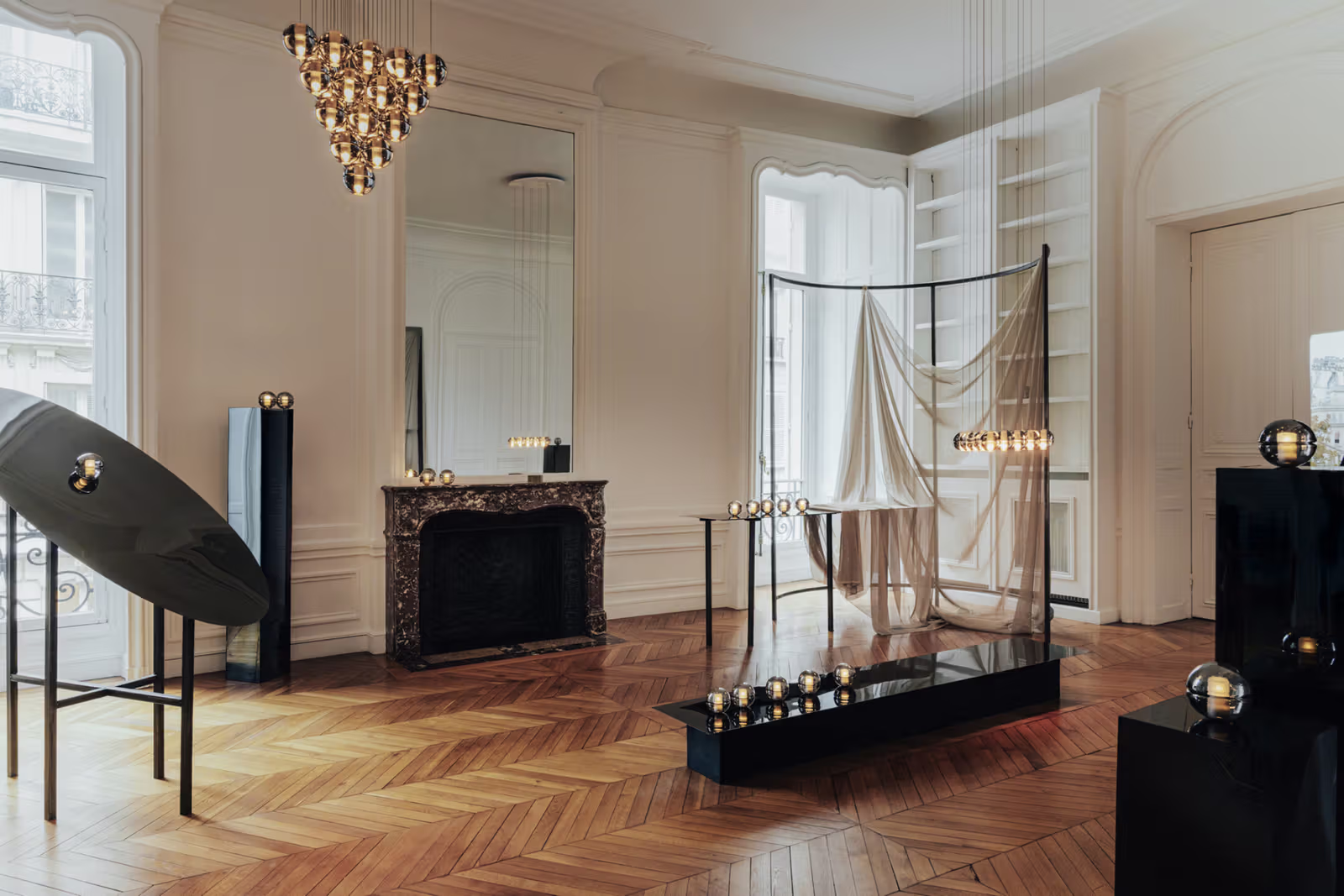
To introduce the collection, Bocci worked with Milanese design duo Cameranesi Pompili to create constellation-like scenes across four areas of the Reference Studios apartment in Paris. Sketch-like structures and Dedar fabric formed part of the arrangements, treating each lamp as a small moon. The point was more than placing as many lamps together as possible: symmetry, repetition, angles and mirrors gave the same sphere several apparent positions across object and reflection.
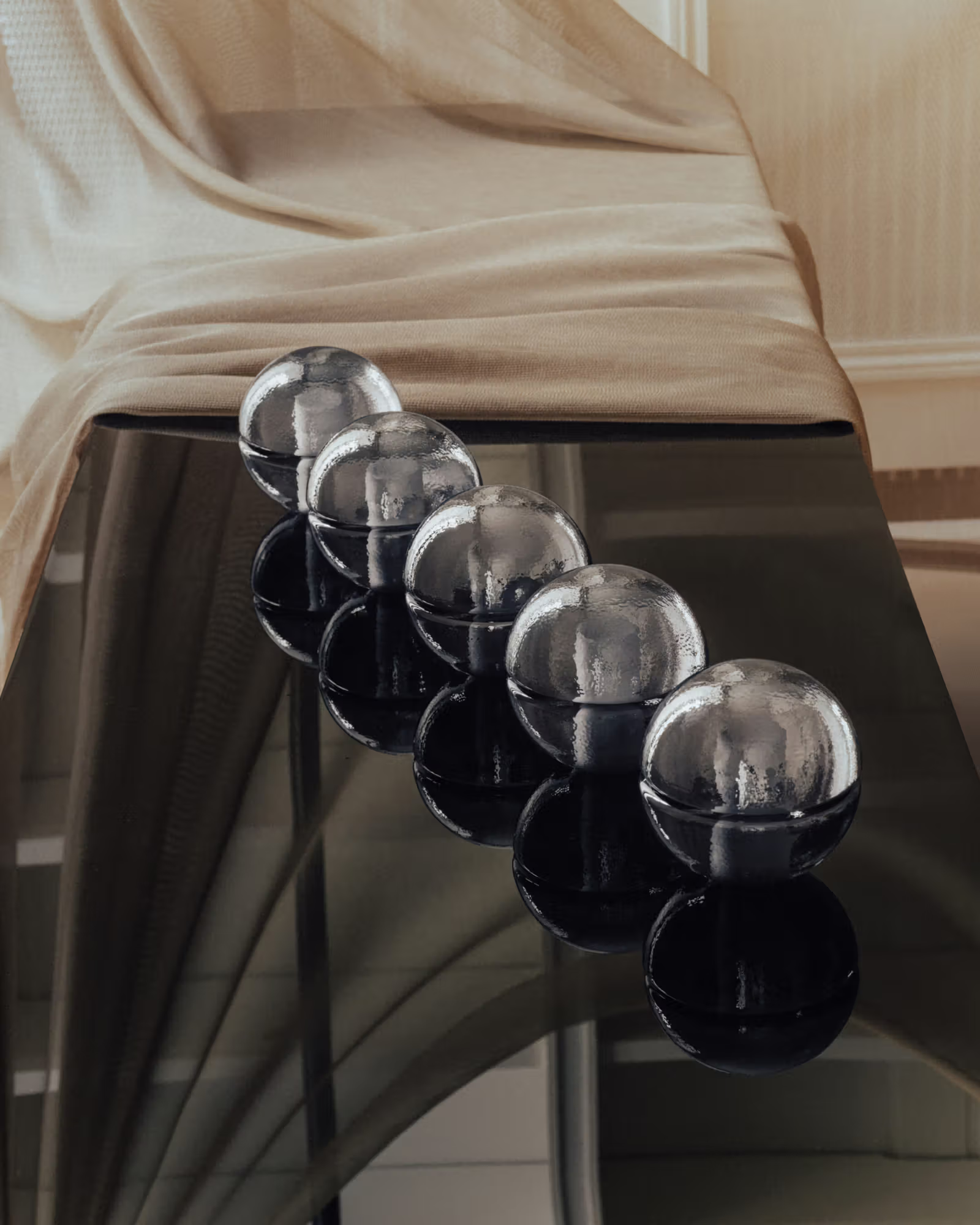
Rows of glass spheres and their reflections repeat objects across the platform.
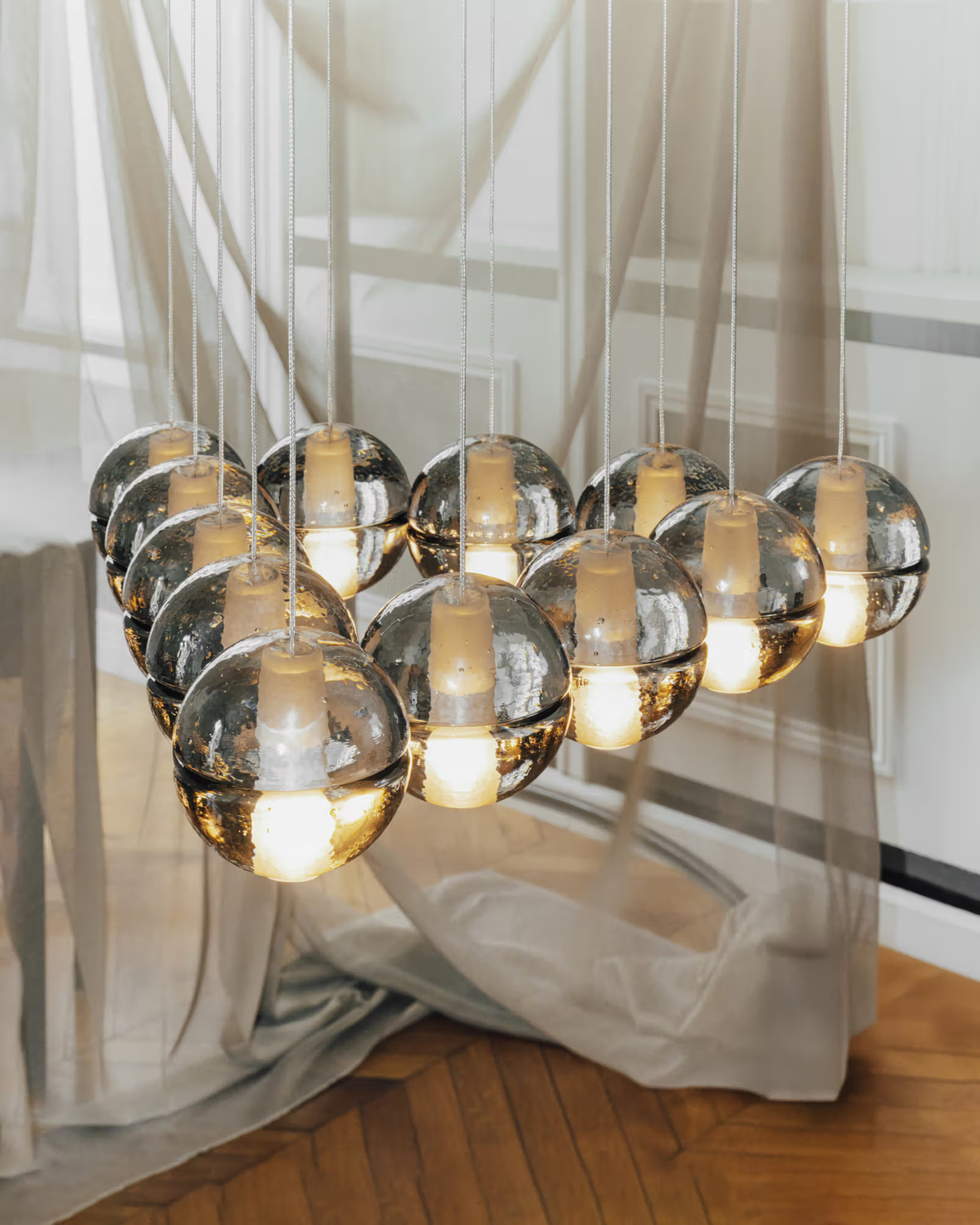
In the official interior photographs, a glossy black platform receives a row of glass spheres, while elsewhere curtains by a window frame an illuminated geometric suspension. Floors, door frames and daylight remain visible, providing reference points for reading the reflections. For domestic interiors, this suggests choosing a light through more than a white-background product photograph. A dark wall, bright window or mirrored tabletop can each change its visual density. This is spatial analysis based on the photographs and the brand’s explanation, rather than our own on-site test.
An illuminated geometric suspension combines emitted light with mirrored surfaces.
Choosing Portable, Surface-Mounted or Suspended Versions
14 Mirror extends across the existing 14 family’s portable, surface-mounted, random suspension and geometric suspension formats. The 14p, 14s and various suspended configurations serve different positions. A shared spherical appearance does not mean their dimensions, installation or power arrangements are identical. For a dining or living room, first decide whether the aim is to illuminate a working surface, a local corner or the overall atmosphere, then consider the relationship between a single fixture and a group.
Before choosing, ask the supplier about local electrical specifications, dimming compatibility, installation and available configurations, rather than predicting the effect at home from the Paris presentation alone. Bocci’s official 14 Mirror introduction provides the collection’s scope and images. The now-ended ORBITAL leaves a useful everyday question: if a light also reflects its surroundings, what we arrange includes both the light source and the room it will encounter each day.
Official product imagery places suspended, surface-mounted and portable versions at different heights.