Knoll Brings Its Storage Architecture Home With Sam Chermayeff
Building on Florence Knoll’s 1961 credenzas, Chermayeff Storage introduces shelving, a bar cabinet and three table types. Official images, materials and current US prices reveal how the collection approaches domestic life.
Can storage furniture become a room’s structural framework as well as a place to put things away? Announced by Knoll on September 23, architect Sam Chermayeff’s Chermayeff Storage collection extends the language Florence Knoll developed for her 1961 credenzas into contemporary homes. The interest in this recent design release lies in how it brings workplace order into reading, gathering and everyday living, going beyond simply giving an old piece a new coat of paint.
Five New Uses for a 1961 Design Language
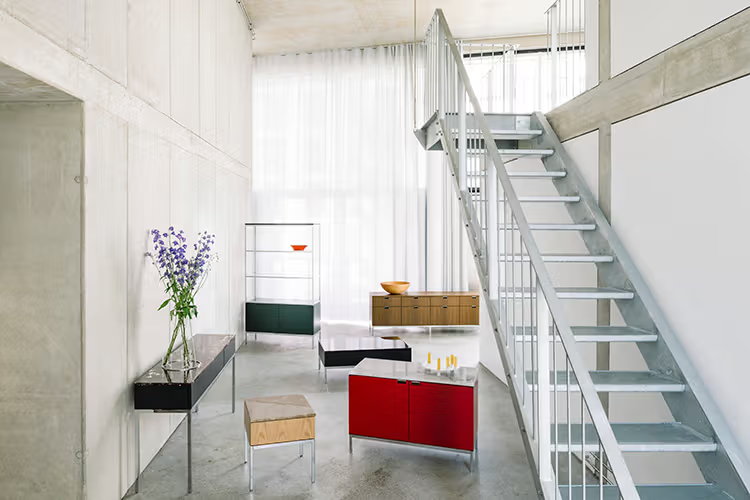
Florence Knoll planned offices with a clear architectural logic, using steel, veneer and marble to create carefully proportioned storage. The new collection retains those materials and its crisp geometric vocabulary while sending the volumes in different directions: the bookcase extends upwards, the bar cabinet supports entertaining, and coffee, side and console tables bring storage to lower or narrower positions. Each of the five types serves a different purpose while sharing a recognisable structural language.
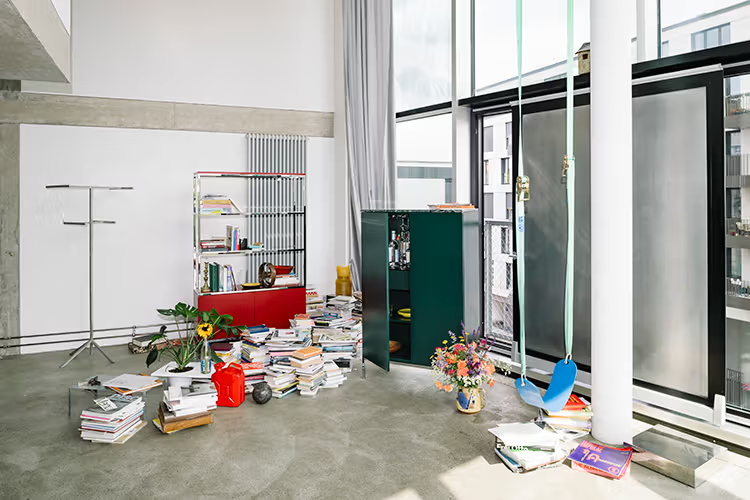
Shelving and a bar cabinet share a structural language for books, objects and living space.
Open shelving can make books and objects part of a room’s composition and visually suggest separate living zones, while the bar cabinet makes opening doors and retrieving items part of a gathering. All three table types integrate drawers, allowing display and everyday storage to coexist. Before choosing a size, ask whether the real need is vertical capacity, entertaining facilities or somewhere convenient to conceal small objects. A shared collection name need not be a reason to buy the whole set.
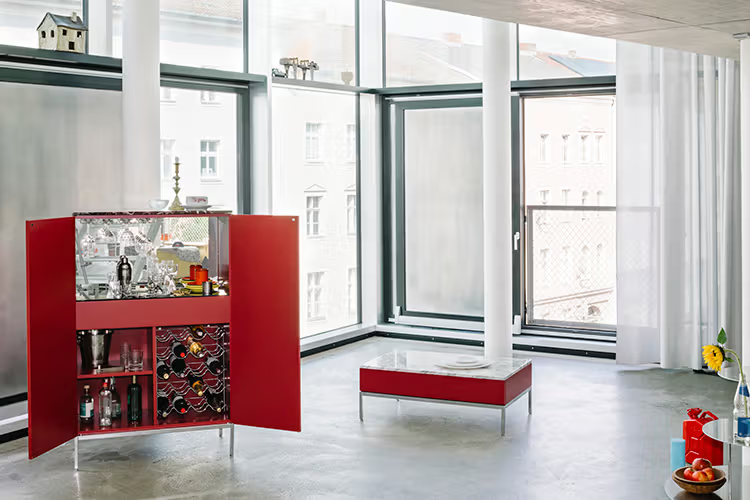
Opening the red bar cabinet makes bottles and glasses part of the gathering space.
How Lacquer and Stone Change Modernism’s Expression
The official lacquer palette includes Dark Red Ultra, Dark Python and Iris, alongside different wood and stone configurations. These are finish names: Dark Python does not mean the furniture is claimed to use python skin. From a red bar cabinet to dark table bodies, saturated volumes sit on slender steel supports, creating a contrast of visual weight. Material, surface and proportion work together; a single “retro” label does little to explain the collection.
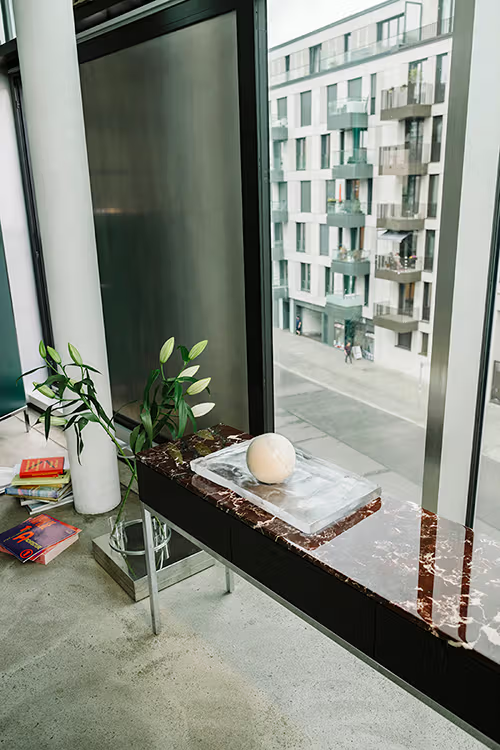
A stone top, dark cabinet body and steel legs create a material contrast.
The official campaign also offers a practical way to read the furniture. Exposed concrete and large windows provide a cool backdrop, while red doors, veined stone and books add density. Slender legs and straight edges preserve sightlines between pieces, suggesting that furniture can organise a room without everything being pushed against a wall. This is an observation from the photographs rather than a promise for every floor plan. A small living room still requires checks of actual dimensions, circulation and drawer clearance.
The Designer’s Background and Current US Prices
American-born and now based in Berlin, Chermayeff trained in Texas and London. His connection to Knoll also has a graphic-design dimension: his father, Ivan Chermayeff, worked with Tom Geismar on the brand’s identity and graphic standards in the early 1990s. The next generation’s reconsideration of furniture proportions and uses extends continuity beyond a logo to the everyday scale at which people touch furniture and arrange belongings.
The current US website lists the side table at USD 3,366–5,301, the bar cabinet at USD 7,512–10,607 and the bookcase at USD 8,230–8,562, depending on the finish configuration. These are US-market prices observed when checked; delivery, taxes and availability elsewhere require separate confirmation. Compare the five furniture types on Knoll’s official collection page. A useful buying sequence starts with what needs organising and where the piece will stand, allowing colour and material to complete the room afterwards.