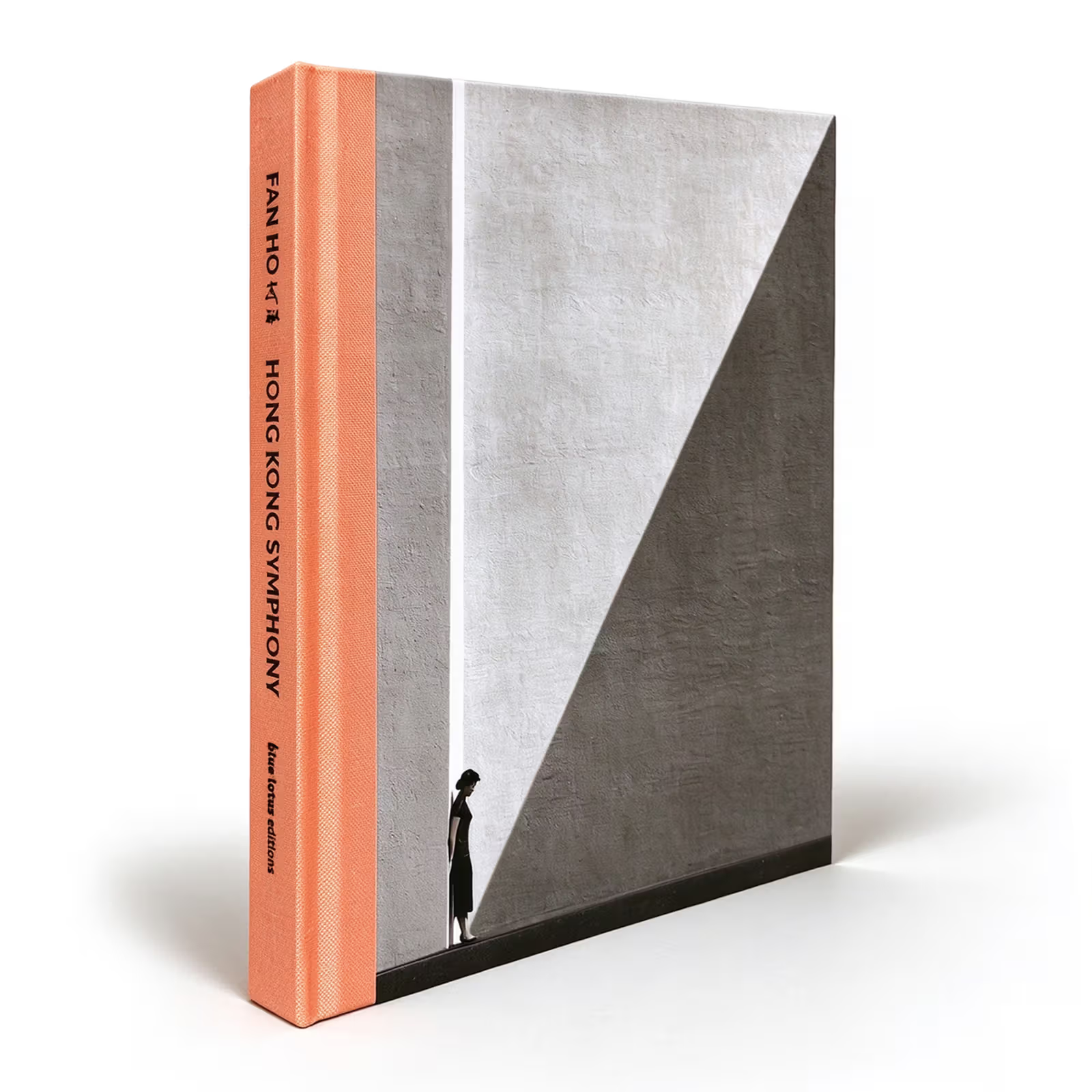
How does a Hong Kong street scene find rhythm in black and white? Blue Lotus Gallery has launched Fan Ho’s new photobook Hong Kong Symphony and opened an exhibition of the same name on October 23, 2026. Published by Blue Lotus Editions in 2026, the book contains more than 100 photographs, rearranging the city’s light, geometry and people on paper. For readers interested in street photography, architecture or book design, it offers a way to rediscover Hong Kong through composition.
What kind of book is Hong Kong Symphony?
The 200-page hardcover measures 26.5cm high, 21.5cm wide and 2.4cm thick, weighs approximately 1.4kg and is priced at HK$480. It also includes an essay by Sarah Van Ingelgom. Those specifications make it a photography book to sit down with rather than a booklet to carry casually. For collectors, dimensions, weight and shelf space are as practical as the images themselves.
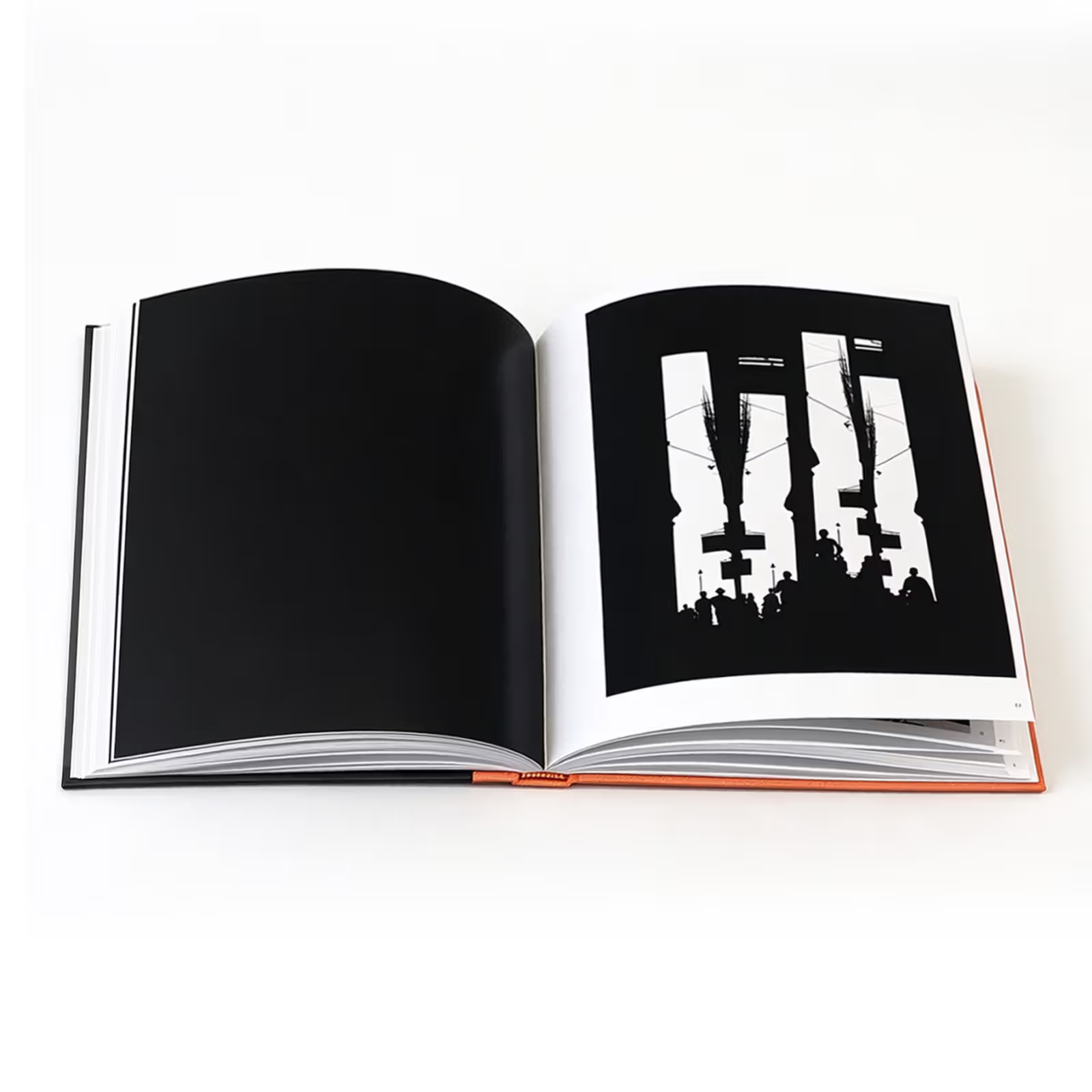
The published cover image pairs an orange spine with a large grey-and-white photograph. A figure stands near the lower edge, while a diagonal wall shadow occupies much of the frame. Lettering is concentrated on the spine, leaving the cover to retain the photograph’s space and visual pressure. An interior spread shows black pages and white borders framing an image. Looking happens not only within individual photographs, but also through page proportions, turns and the order of images.
A published interior spread shows the relationship between black-and-white pages and photographic layout.
See the architecture first, then find the people
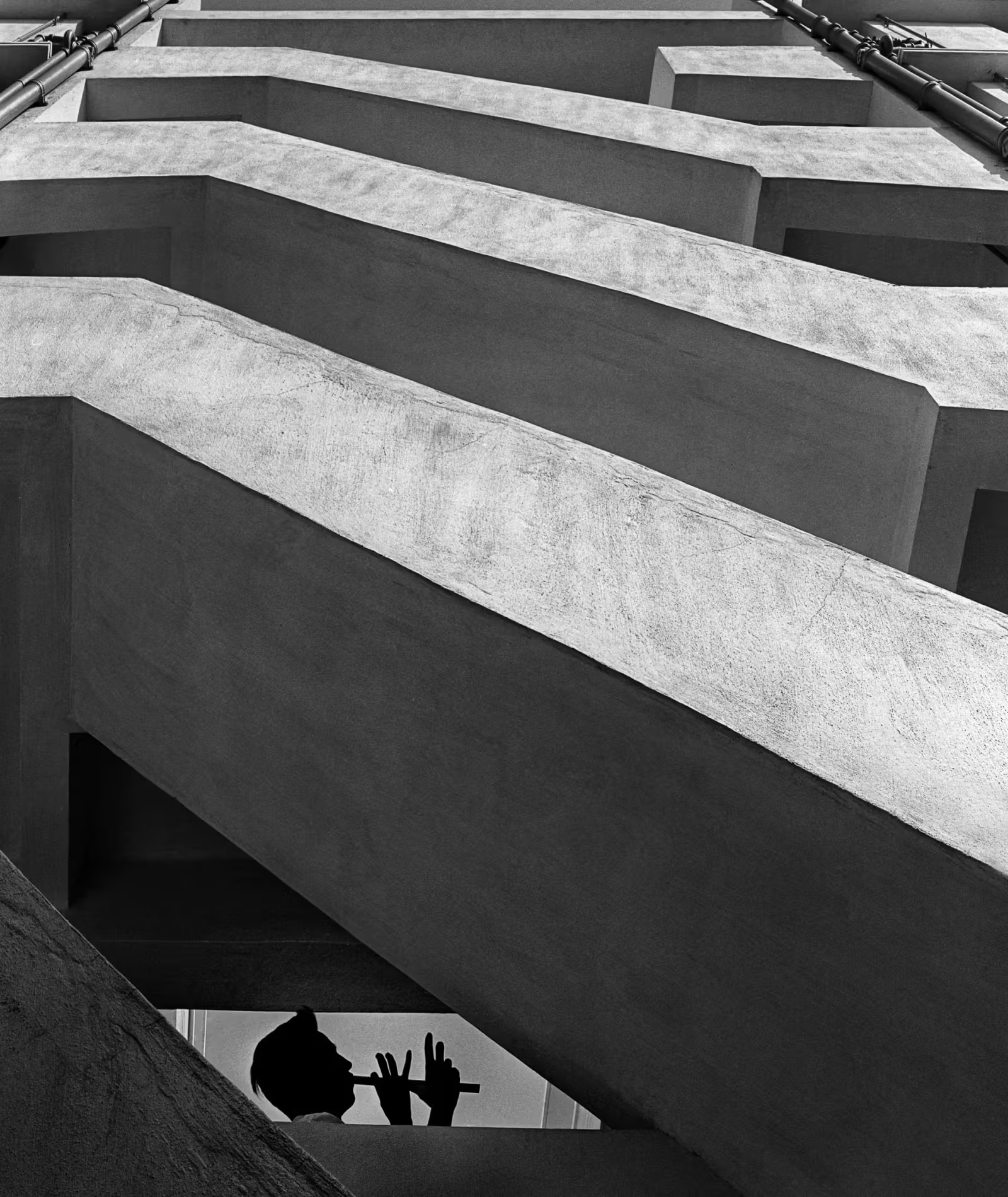
Fan Ho’s Melody leads the eye into overlapping architectural structures. Large diagonals and grey surfaces command attention before a silhouette playing a wind instrument appears below. The photograph does not build its story with an enlarged face; a difference in scale between huge structures and a small figure clarifies a single action. Try following the architecture’s lines before returning to the opening where the person appears.
Fan Ho’s Melody surrounds a figure with intersecting architectural lines.
Alex in Wonderland creates an almost maze-like visual rhythm with broad curved areas of light and dark. A small opening on the right reveals a boat and a person. Both photographs lead from shapes toward signs of life, but through different means. One organises space with straight lines, sloping planes and repeated structures; the other changes the route of looking through curves and enclosure. Composition’s effect on narrative can be understood without first asking which camera was used.
Fan Ho’s Alex in Wonderland surrounds a small boat on the right with curved areas of light and dark.
Planning a Sheung Wan visit for the exhibition and book
The exhibition of the same name opened on October 23 at Blue Lotus Gallery, 28 Pound Lane, Sheung Wan. If visiting both the exhibition and bookshop, compare looking at individual works with looking at pages: examine scale and detail on the wall, then consider how photographs sit beside each other in the book. The photobook is listed in the gallery’s official shop at HK$480. International delivery and shipping charges depend on the options available for the destination at checkout.
Hong Kong Symphony offers a newly organised sequence of images; it should not be mistaken for Hong Kong street photography shot in 2026. The time preserved in the photographs and the date of this new publication are different things. As you turn the pages, compare the size of people, the weight of shadows and where your eye pauses. When these details recur across pages, the “symphony” in the title becomes more than a metaphor: it becomes a practical way to read pictures.