How to explore Seoul’s Jongno 3-ga: hanoks, record shops and Seosulla-gil
Plan a day-to-night walk through Time Out’s top neighbourhood for 2026, with Ikseon-dong, record and guitar shops, Seosulla-gil and useful subway exits.
Why put Jongno 3-ga back on your Seoul walking itinerary? Time Out placed it first in its 2026 list of the world’s coolest neighbourhoods, highlighting late-night outdoor dining, independent businesses and an active local community. That ranking was announced in September. The attraction now is connecting Ikseon-dong’s hanoks, Seosulla-gil along Jongmyo Shrine’s western wall and the Nakwon Musical Instrument Arcade in an outing with music, craft and nightlife. This is an old neighbourhood continuing to be used, rather than a newly opened tourist complex.
Understand the ranking, then explore the hanok lanes
The list covers 40 neighbourhoods across 26 countries and territories. Time Out’s local editors and experts nominated candidates, which an editorial panel assessed for food and drink, nightlife, culture, independent businesses, liveability and community. Jongno 3-ga rose from third in 2021 to first in 2026. Its top place therefore refers to this editorial selection: it is neither an overall visitor-vote championship nor a guarantee covering every Seoul attraction. The useful lesson for an itinerary is to look beyond one famous shop to the concentration of everyday life along a street.
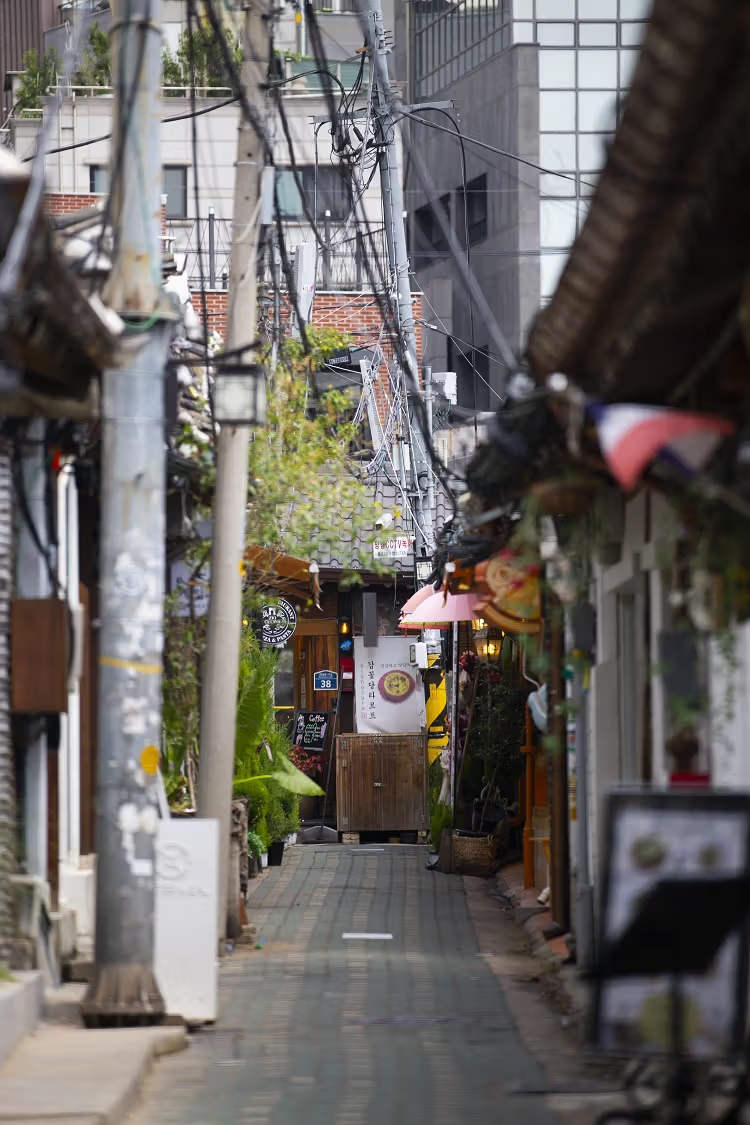
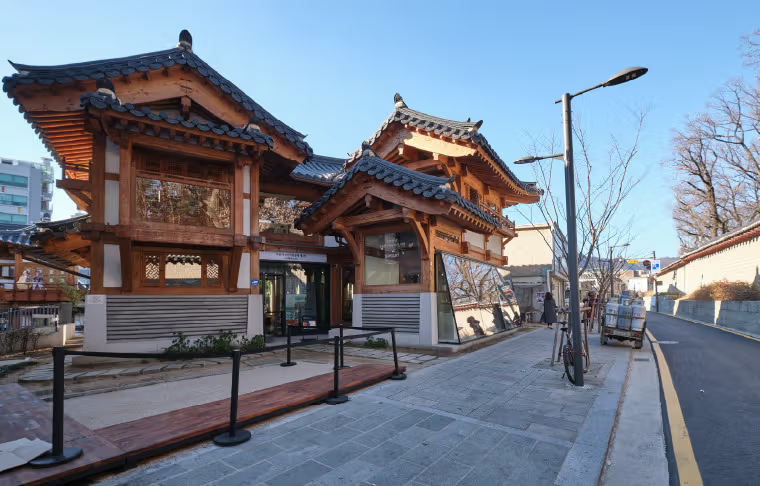
Ikseon-dong’s appeal lies in the scale created by low tiled roofs, narrow lanes and cafés. Restaurants and retailers now occupy an urban hanok cluster that developed in the 1920s. Its designation as a hanok-concentrated area in 2018 preserved a functioning piece of the city. Head north into the lanes from Exit 6 of Jongno 3-ga Station. By day, notice how eaves, courtyards and new storefronts meet; later, move towards Donhwamun-ro 11-gil to experience a different rhythm in the same neighbourhood.
A narrow lane between Ikseon-dong’s low eaves.
Records, guitars and craft beside the stone wall
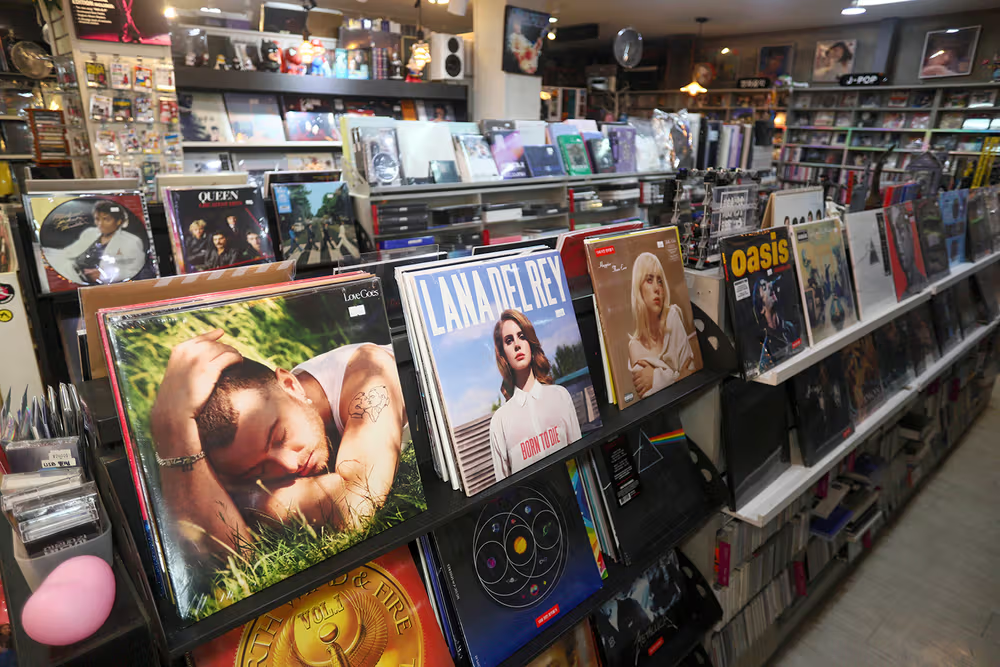
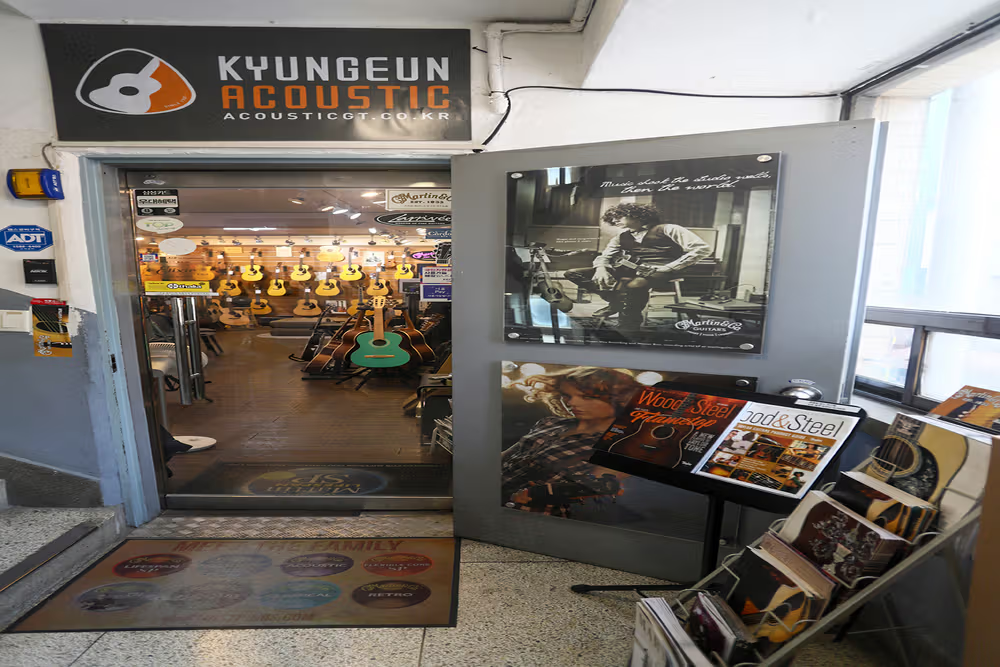
Music lovers can leave shopping time for longstanding businesses. Seoul Record, opened in 1976 at 154 Jong-ro, stocks vinyl, CDs and cassette tapes, keeping physical music a medium worth browsing slowly. The Nakwon Musical Instrument Arcade offers another perspective. Kyungeun Acoustic opened in 1987 and is located at B-282 on the second floor of 428 Samil-daero. Alongside its guitar displays, it offers instrument inspections and repairs. These two stops take music beyond an atmospheric soundtrack into collecting and playing.
Vinyl records displayed inside Seoul Record.The entrance and guitar displays at Kyungeun Acoustic in the Nakwon Musical Instrument Arcade.
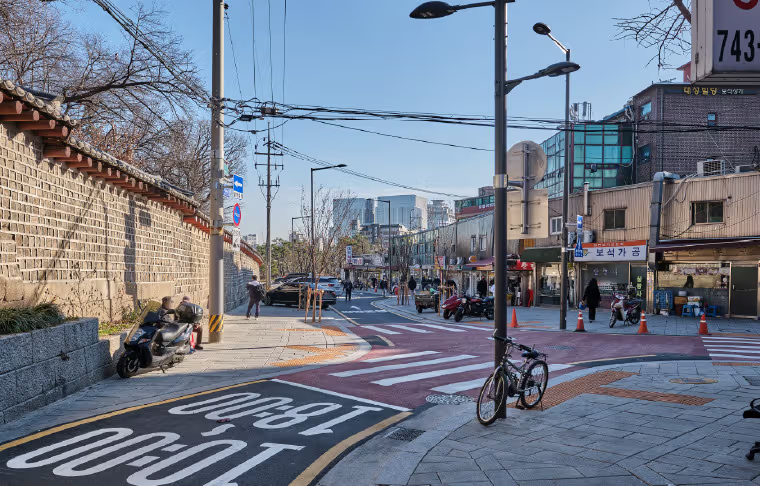
Continue towards Seosulla-gil beside Jongmyo Shrine’s western stone wall. Jewellery studios, craft shops and bars sit among low-rise buildings, creating different sightlines from Ikseon-dong. Between 2010 and 2022, Seoul carried out improvements in stages, including removing roadside parking and expanding pedestrian space. Today’s concentration of shops also has this public-space history behind it. Treating the street as a place to observe materials and the ways small businesses occupy their frontages offers more than searching for a single photograph.
Traditional architecture and a stone-wall streetscape around Seosulla-gil.Pedestrian space on Seosulla-gil beside Jongmyo Shrine’s stone wall.
Slow down after dusk and plan your subway exits
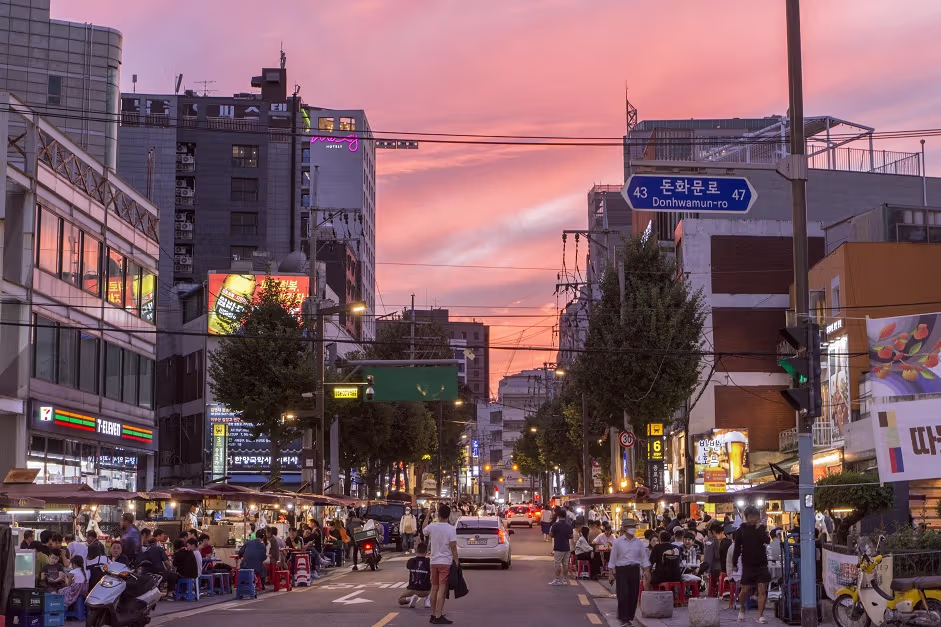
After dark, Jongno 3-ga’s yajang means outdoor tables and tented food stalls. Alfresco dining around Donhwamun-ro 11-gil has turned an everyday stop for an after-work meal into a meeting place for young people and visitors. Its atmosphere comes from a shared streetscape, rather than a festival with fixed sessions. Each business sets its own hours, seating and menu. A photograph of an empty daytime lane or a lively evening table cannot guarantee the scene at another time.
You can use different exits from the same Jongno 3-ga Station, served by subway Lines 1, 3 and 5. Exits 4 or 6 are useful for Ikseon-dong; head towards Exit 7 for Seosulla-gil, while outdoor dining is around Exits 4 and 5. Shops do not share a single timetable. Check individual businesses before planning record or instrument shopping, then leave dinner for the neighbourhood’s other side. Give yourself time to browse records, observe craft and wander the lanes: that brings you closer to the urban character recognised by the ranking.