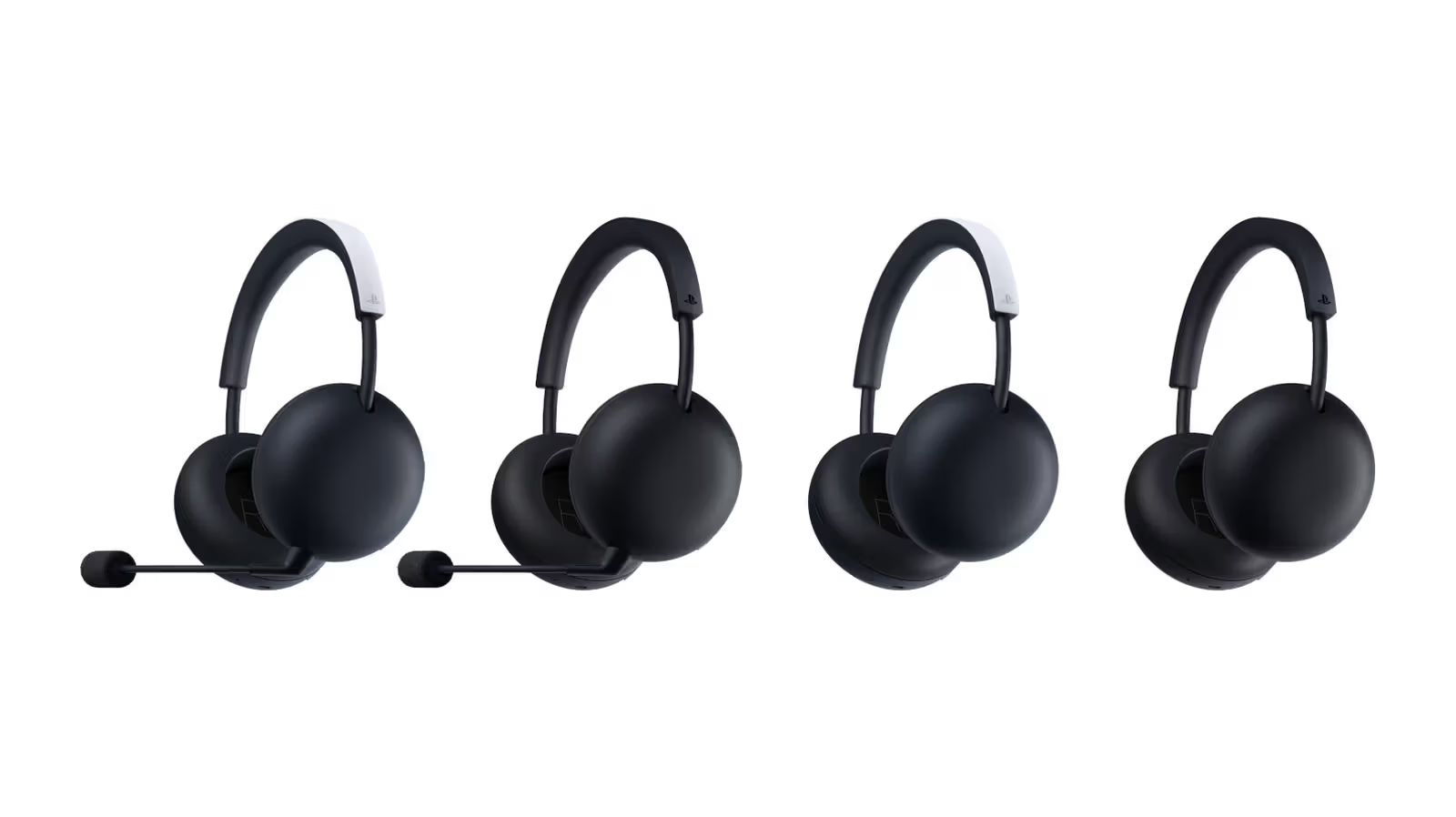
The gap between the two new headsets essentially boils down to a single spec: magnet count. Sony has unveiled the PlayStation Pulse and Pulse Edge, both featuring planar magnetic drivers, but the Pulse Edge packs twice the number of magnets found in the Pulse. According to Sony, this allows for deeper bass response.
Planar magnetic technology works by suspending a thin, flat diaphragm between magnets, typically delivering lower distortion and cleaner bass compared to other driver types. Sony introduced its first planar magnetic headset, the Pulse Elite, in 2024 — the first product to emerge following its acquisition of premium headphone brand Audeze, which built its reputation on this very technology.
Both the Pulse and Pulse Edge come equipped with microphones featuring AI-enhanced noise exclusion, which Sony says filters out background noise. Directional audio positioning is another shared highlight, with Sony claiming players will find it easier to pinpoint the source of footsteps in first-person shooters.
The real differences lie with the Pulse Edge: beyond the doubled magnet count, it also adds active noise cancellation and a detachable boom microphone, which Sony says delivers clearer voice chat. Both headsets support PlayStation Link connectivity, letting users switch between PS5, PlayStation Portal, PC, and Mac with low-latency audio, while Bluetooth remains available for added flexibility.
Neither headset is available for purchase yet, and Sony has not disclosed pricing. However, based on the spec differences, it's safe to assume the Pulse Edge will carry the higher price tag. For reference, the Pulse Elite currently retails for $149 on Amazon, while the PlayStation edition of the Audeze Maxwell 2, unveiled at CES 2026, is priced at $329.