Tai Shan Schierenberg’s Asian solo debut in Hong Kong: water, forests and portraits in Mixed Blessings
Flowers Gallery’s exhibition runs until November 21. Three 2026 paintings guide the eye through figures, paths and a bird’s movement; visits require appointment confirmation.
How can a forest, a stretch of water and a self-portrait speak about belonging? London-based Tai Shan Schierenberg’s Mixed Blessings opened at Flowers Gallery Hong Kong on October 23, 2026 and runs until November 21, marking his first solo presentation in Asia. Landscapes and portraits share a space, allowing identity to emerge through environments, colour and remembered places as well as faces.
Growing up across places, returning to layers of paint
Schierenberg was born in England to a Malaysian-Chinese mother and German father and grew up between Malaysia, the Black Forest and London. The gallery introduces these works through the convergence of identity, memory and cultural inheritance. Rather than assigning every forest to a birthplace, viewers can notice how different scenes coexist and which parts of an image remain clear or indistinct.
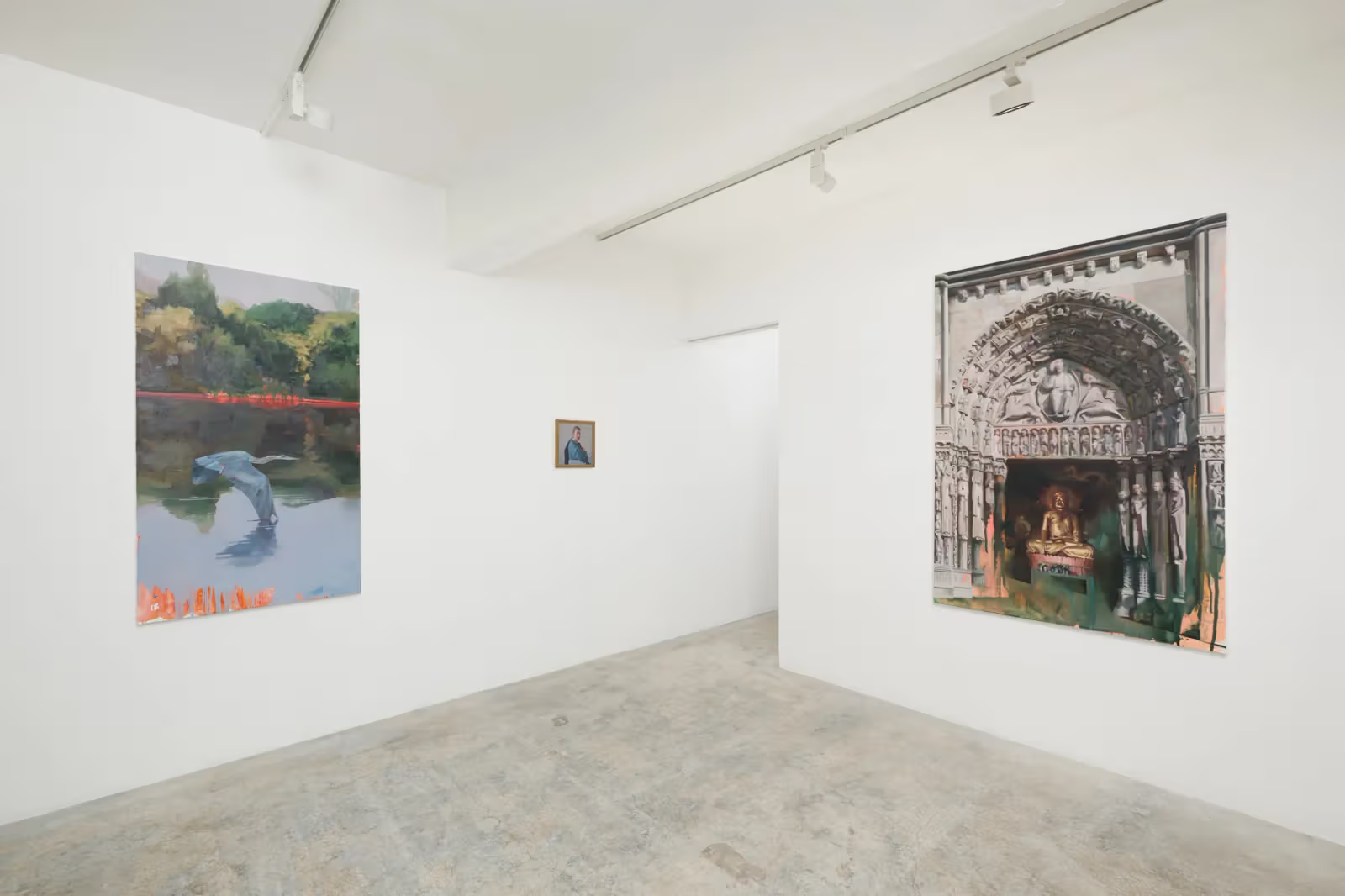
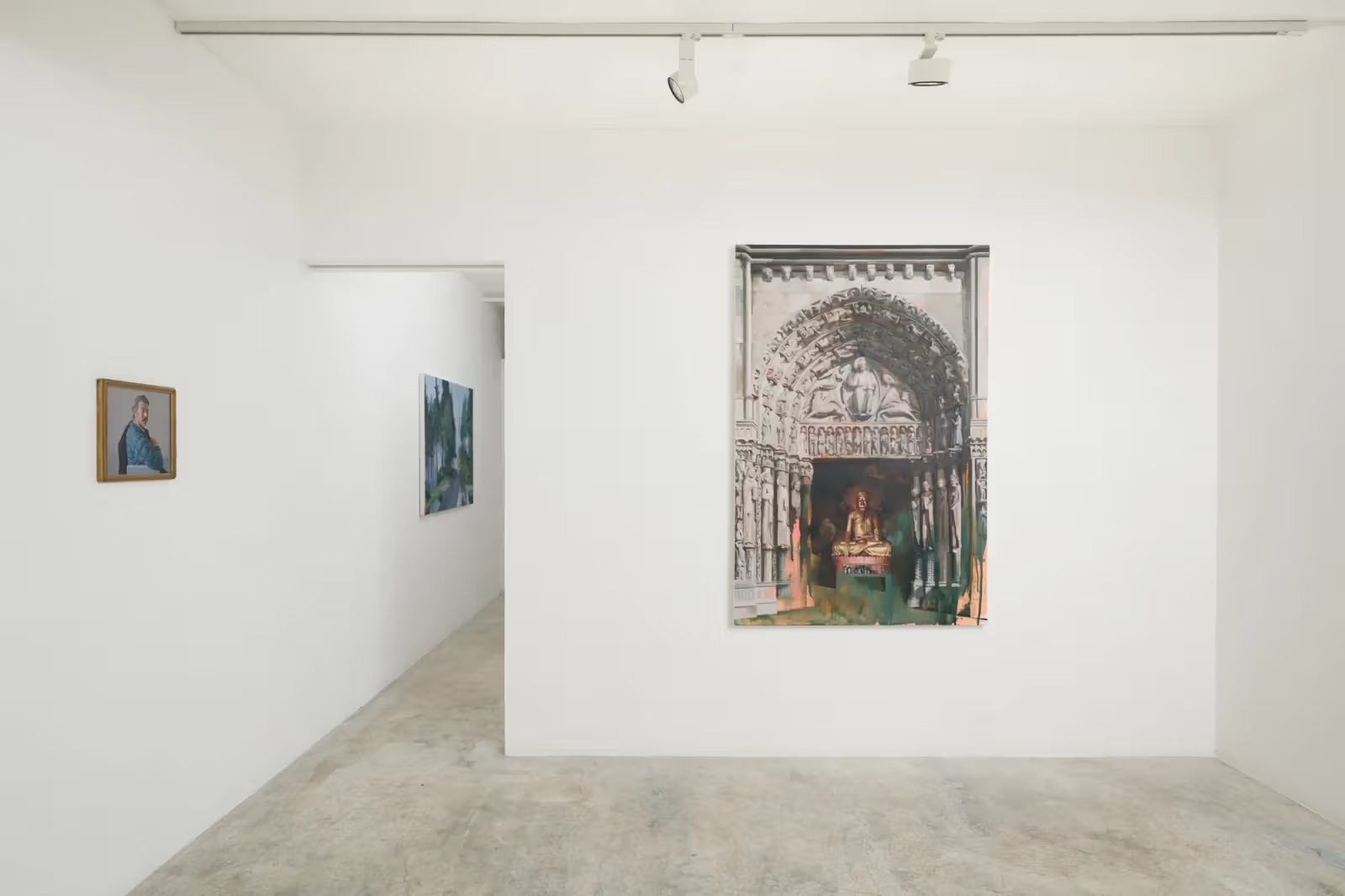
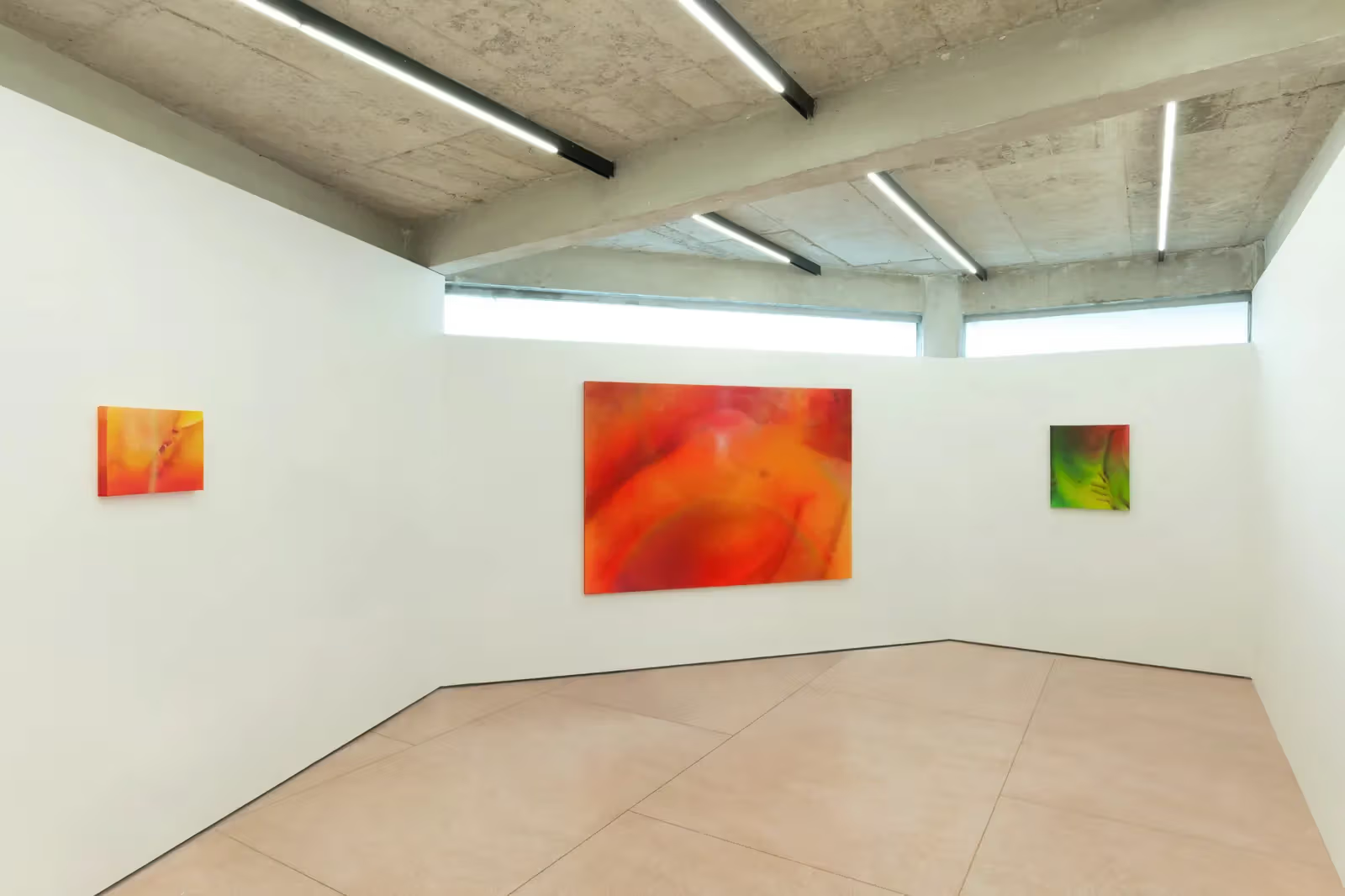
Official installation photographs place small gilt-framed portraits beside larger landscapes and architectural paintings, leaving ample wall space between them. Differences in scale prompt movement between approaching a face and stepping back to see an environment. A portrait need not be the sole centre of a story; surrounding space also shapes a person. White walls contrast with substantial brushwork, directing attention to the paintings’ layers of colour and surfaces.
Three works from 2026: how water changes the route of looking
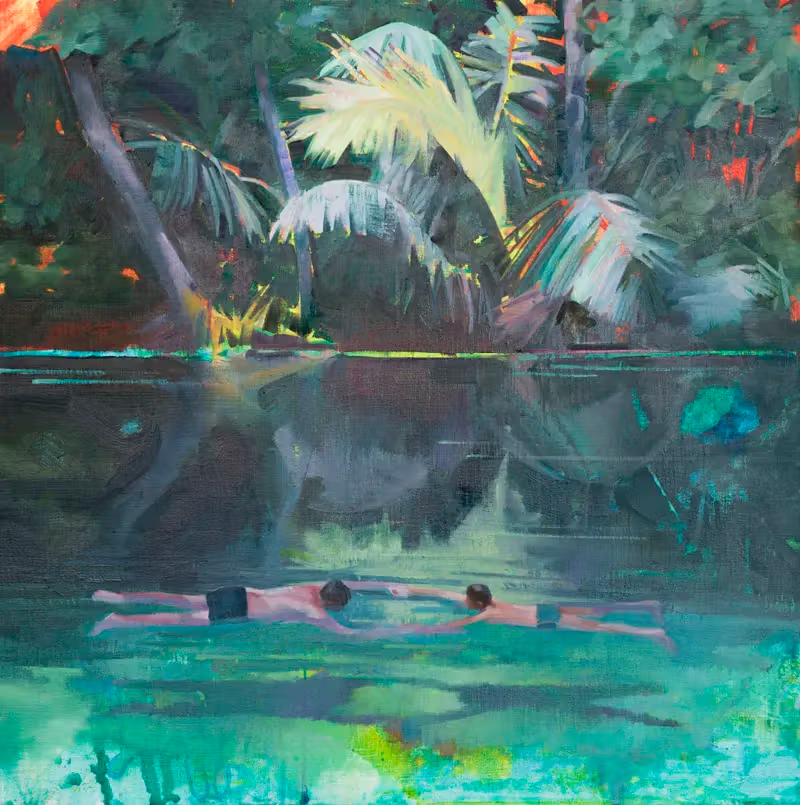
The Swimming Lesson places two horizontally extended figures in green-blue water, with plants built from broad strokes behind them. Arms and waterlines carry the eye sideways, while reflections extend the scene downwards. Rather than describing each leaf in detail, alternating warm and cool colours and changes in tonal depth establish different viewing distances between swimmers and surroundings.
The Swimming Lesson (2026) surrounds two swimmers with green-blue water.
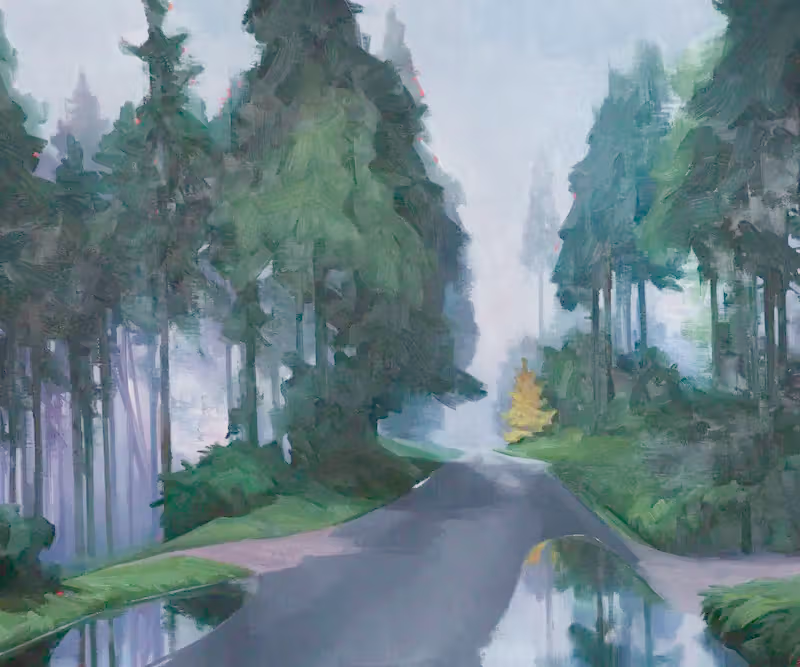
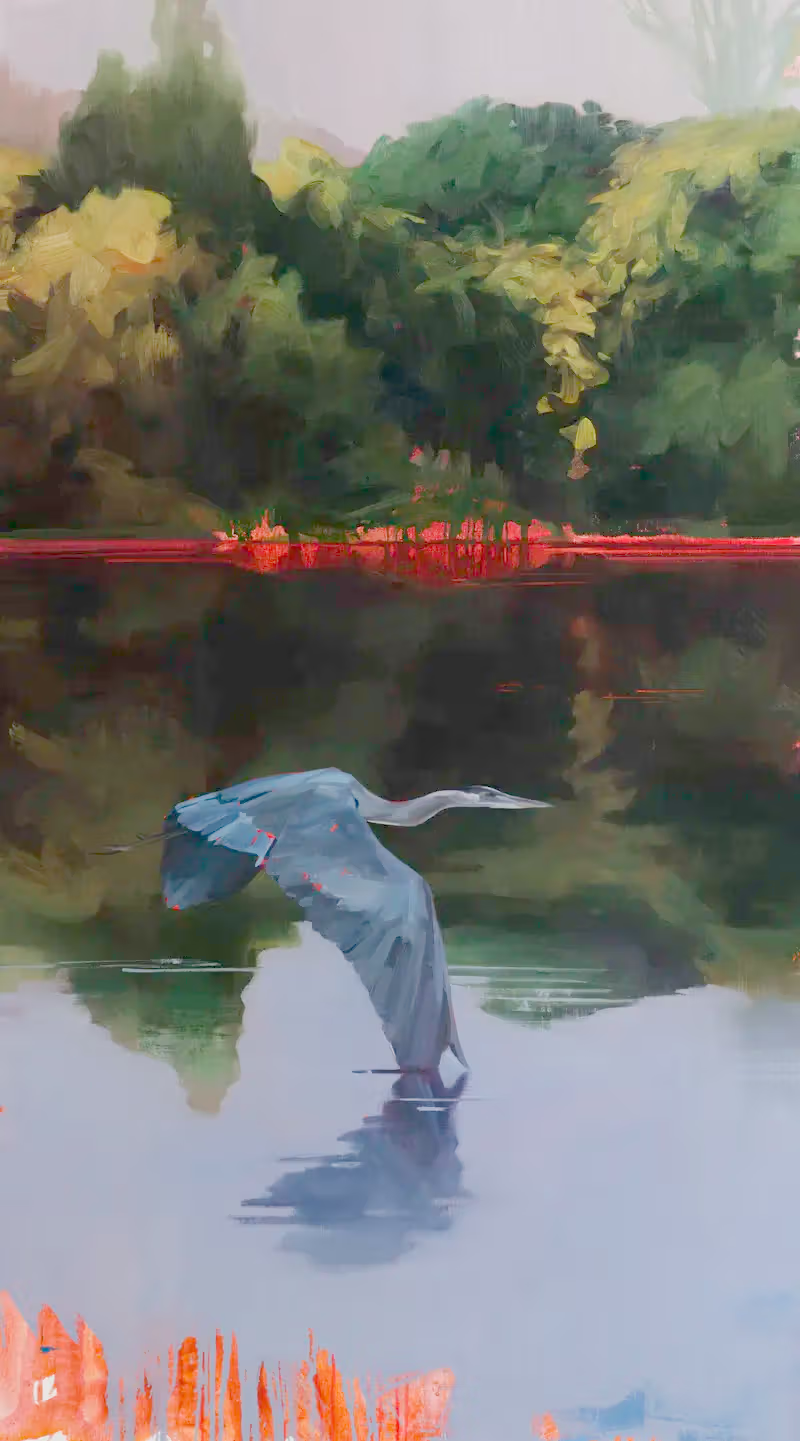
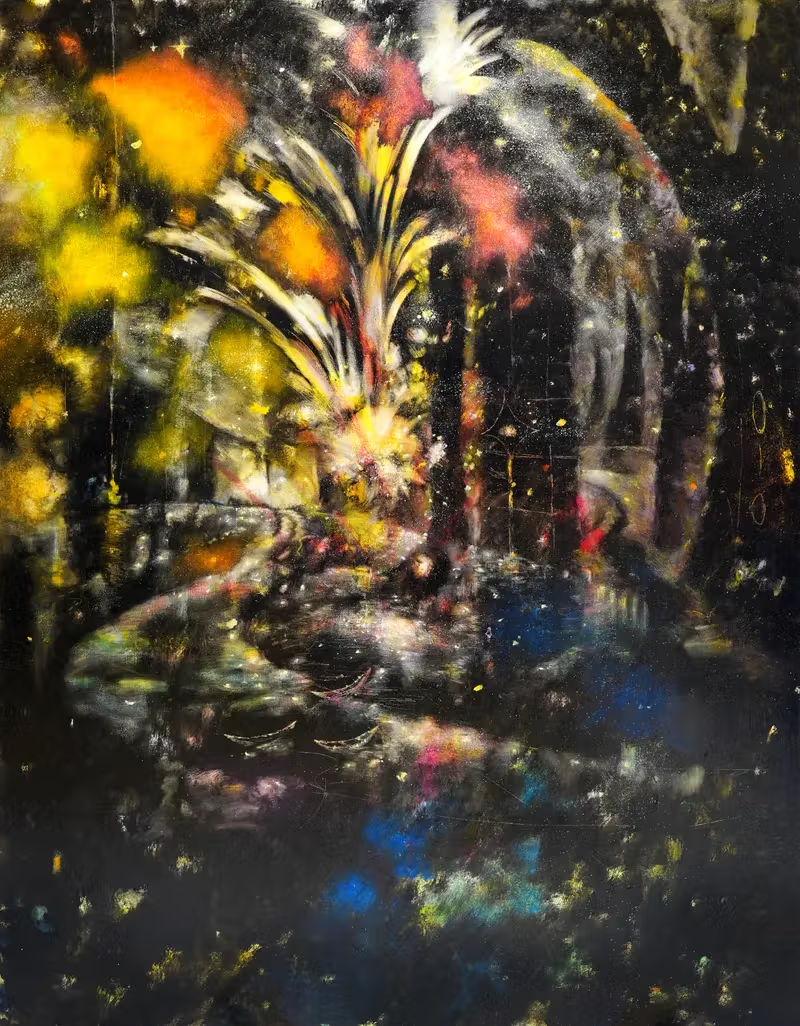
Yellow Tree directs the gaze down a road among tall trees towards a distant yellow tree; foreground puddles bring tree reflections back into view. A Chinese Scene in an English Garden instead centres a waterside bird, with a striking red horizontal line running through yellow-green vegetation behind it. All three use water and reflection, but guide the eye through figures, a route or a bird’s movement respectively, showing how similar elements can create different spatial rhythms.
Yellow Tree (2026) guides the gaze with a road and puddles.A Chinese Scene in an English Garden (2026) combines a waterside bird with a red horizontal line.
Planning a Sheung Wan visit starts with an appointment
Flowers Gallery’s Hong Kong space is at 49 Tung Street, Sheung Wan. Its official Hong Kong contact listing currently states “Open by appointment”, so confirm an available visit time with the gallery rather than applying the London location’s Tuesday-to-Saturday hours from the same page. If combining nearby galleries into a half-day route during the exhibition, secure this stop’s visiting time before linking other venues.
Mixed Blessings rewards a slow comparison of one artist’s approaches to different subjects. First see where figures or birds sit in the frame, then follow how roads, waterlines and architecture lead the eye towards them. Finally, move closer to notice when colour patches remain independent and when they resolve into a scene. As portrait and landscape cease to be separate categories, belonging becomes more than an abstract background: it becomes a visible relationship among colour, proportion and space.
Mixed Blessings places portraits, landscapes and architectural subjects together.