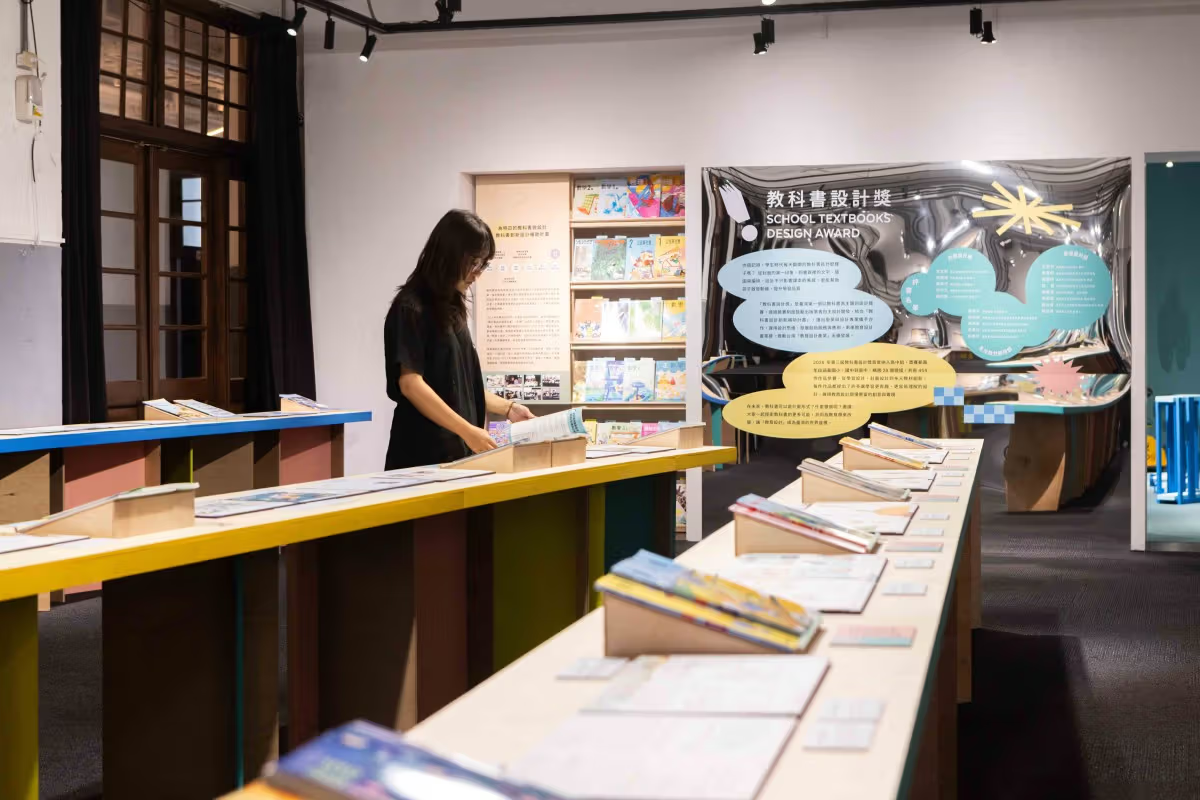
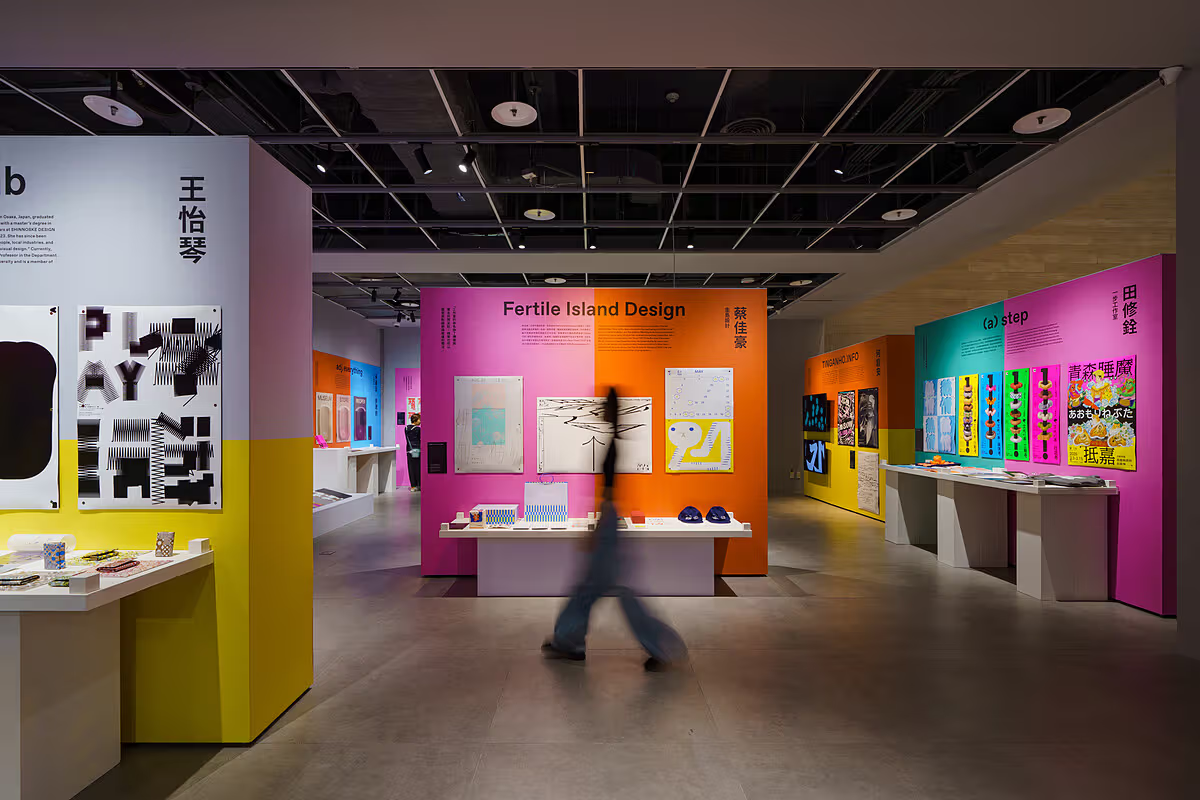
The third textbook design awards announced results on October 14, 2026. Its annual AHA exhibition continues until November 8 in Gallery 01 of the Taiwan Design Museum at Songshan Cultural and Creative Park, with free admission. Forty-seven winning works address how knowledge is divided, how words and pictures explain one another and whether learners participate, extending beyond cover decoration. For readers interested in publishing and interaction, they ask what design conditions make a book understandable.
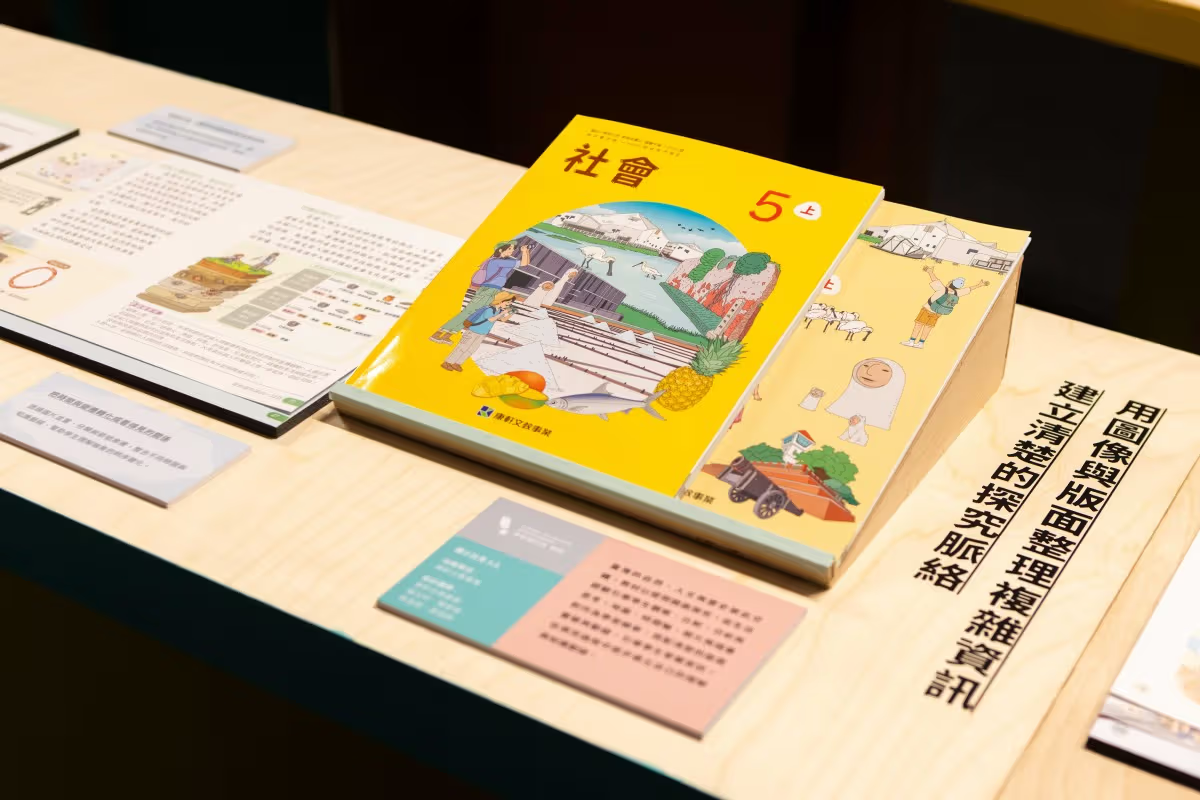
Covers, inside pages and design explanations are displayed together.
Three categories address different needs from primary through upper-secondary school
Guided by the Ministry of Education and implemented by the Taiwan Design Research Institute, the initiative began in 2021. This edition changes its name and extends into general and vocational upper-secondary education, covering twelve-year basic education. Sixteen education and design specialists and frontline teachers assessed 459 entries. Learning design considers approved textbooks, cover design considers conceptual proposals, and innovative diverse materials brings local-government and teacher-created resources into discussion.
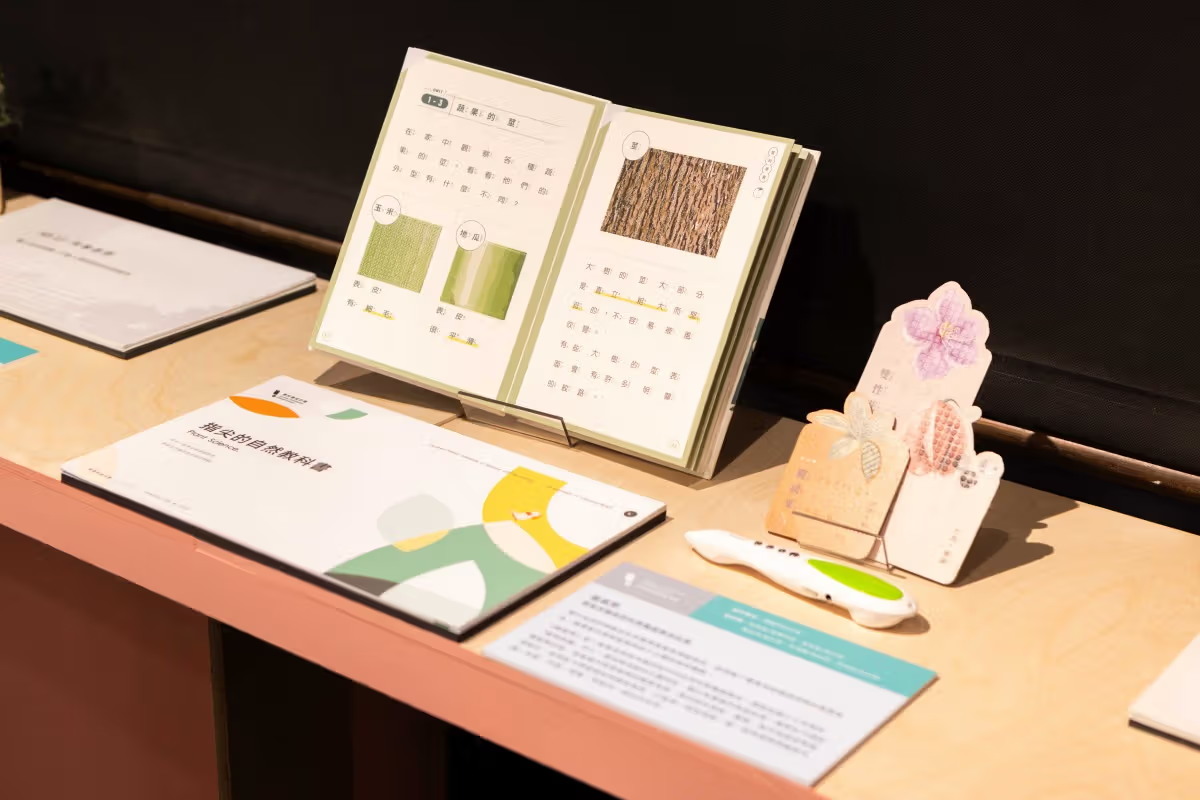
Open pages and three-dimensional displays introduce learning-material concepts.
The cover-category gold-winning giant-tree project, published by Han Lin and designed by Lin Yi-Ting, draws on Taiwania and Rukai legends. Textbook and workbook form a tall tree, with animal and plant stickers inviting participation. Thermochromic ink makes the trunk gradually disappear as temperature rises, turning an environmental theme into observable visual change. The cover becomes a question opening a lesson as well as identification.
Emotional and science materials first organise routes to understanding
Chunan Senior High School teacher Chen Min-Hsuan’s nightmare-transformation project combines social-emotional learning with Taiwanese monster culture. Students write dreams, identify emotions and then use AI tools to generate guardian figures symbolising inner strength. The focus includes the sequence of writing, recognition and creation rather than just generated pictures. It is an educational-design case, not a universal answer to emotional problems.
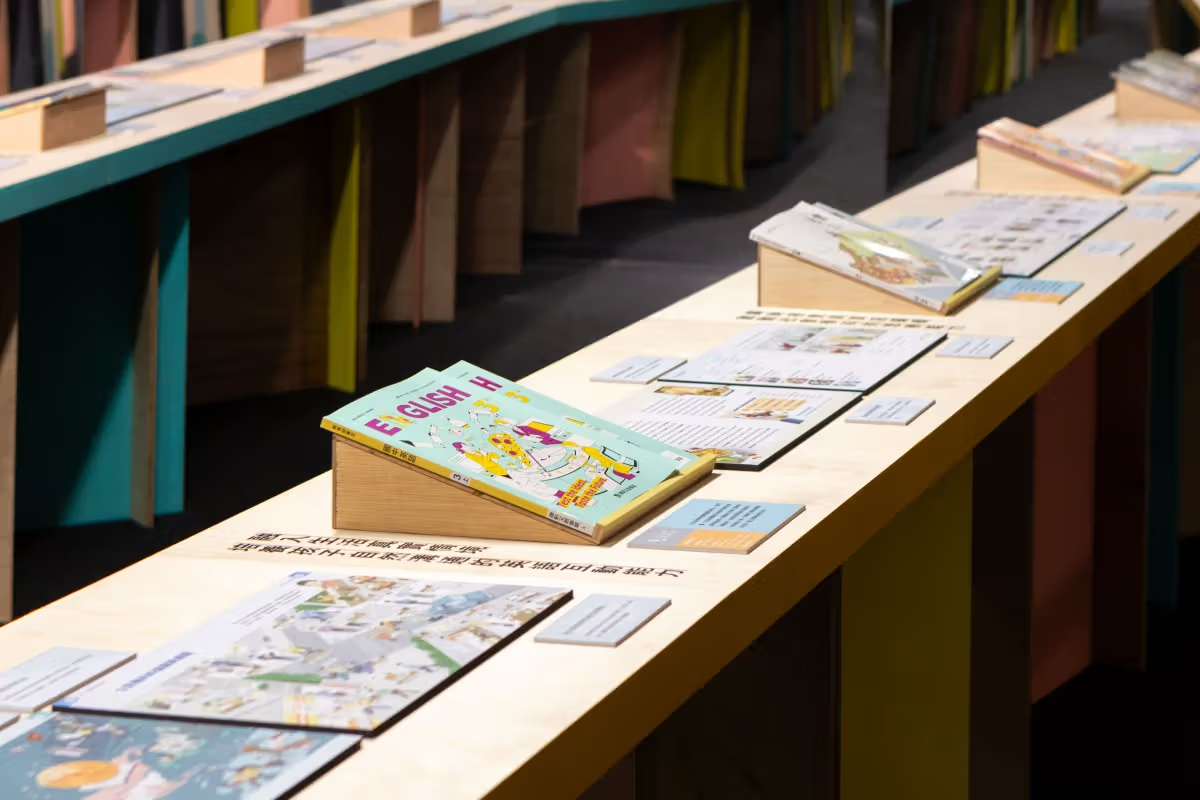
The primary-school professional-design gold winner, sixth-grade Taiwanese-language volume eleven, combines everyday and local culture with interactive image cards. The junior-high winner, first-year natural-science volume two, organises information through ecological photography, illustration, charts and comic characters. The new upper-secondary winner, first-year vocational English volume two, links language with marine culture, documentary-style narrative and film-review worksheets. Aesthetic decisions work with each subject’s needs rather than merely changing course names on one template.
Compare forty-seven winners with thirty-eight volumes heading into schools
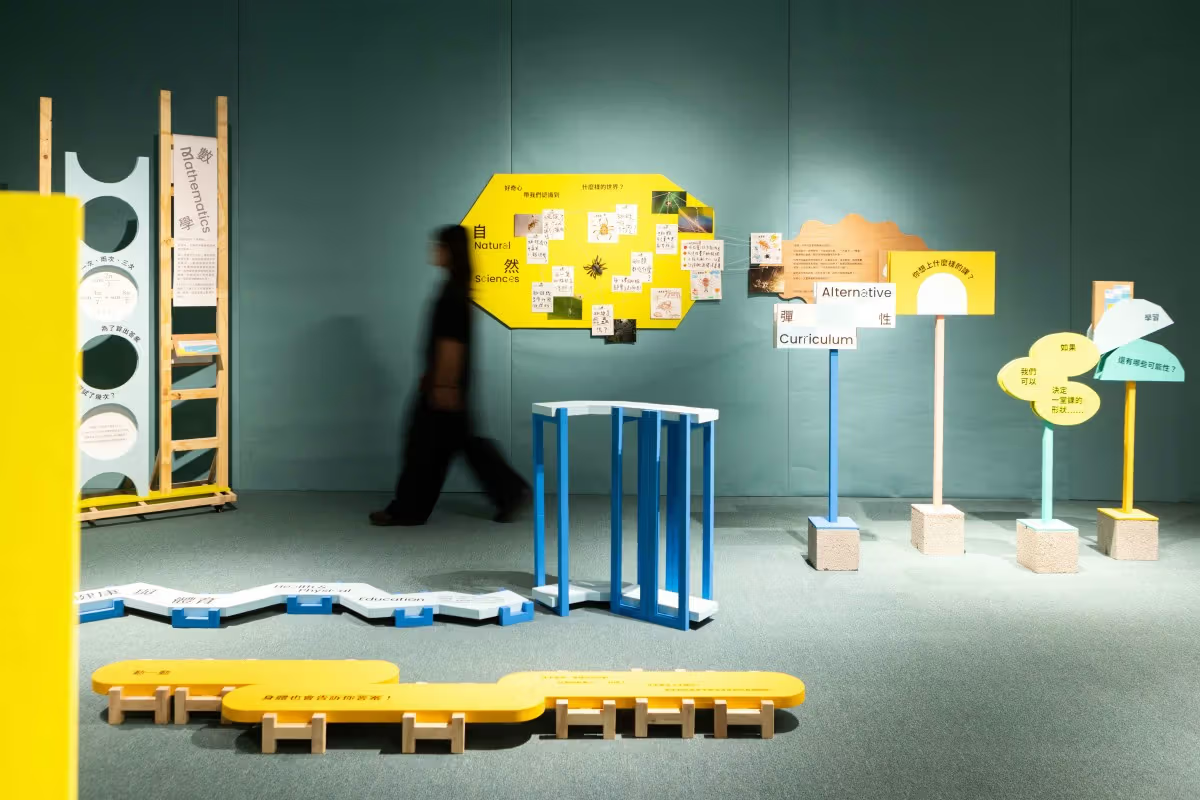
The exhibition, curated by Aestheticell, uses interactive installations to turn subject knowledge into participation and explain how text-image arrangements reduce reading burdens. Separately, the 2025 textbook-design innovation subsidy programme involves seven publishers and designers redesigning 38 volumes, scheduled to enter schools progressively in 2026–27. Those volumes are another programme’s results and should not be added to the 47 award winners as one award count.
Several textbooks and open pages share a long display table.
Opening hours are 10am–6pm, closed Mondays. Choose a complicated page and see whether a question, image or definition appears first and how the next step follows. Compare how a textbook and workbook use shared clues for navigation. When page order, touch and interaction become learning tools, design does more than dress knowledge attractively: it helps learners reach an understanding for themselves.
Shapes and colours turn subject knowledge into an interactive space.