Kennedy Yanko in Paris until January 3: metal and paint skins among architectural casts
Ce qui nous rassemble opened October 16 at the Cité de l’architecture et du patrimoine, bringing contemporary sculpture into dialogue with historic architecture.
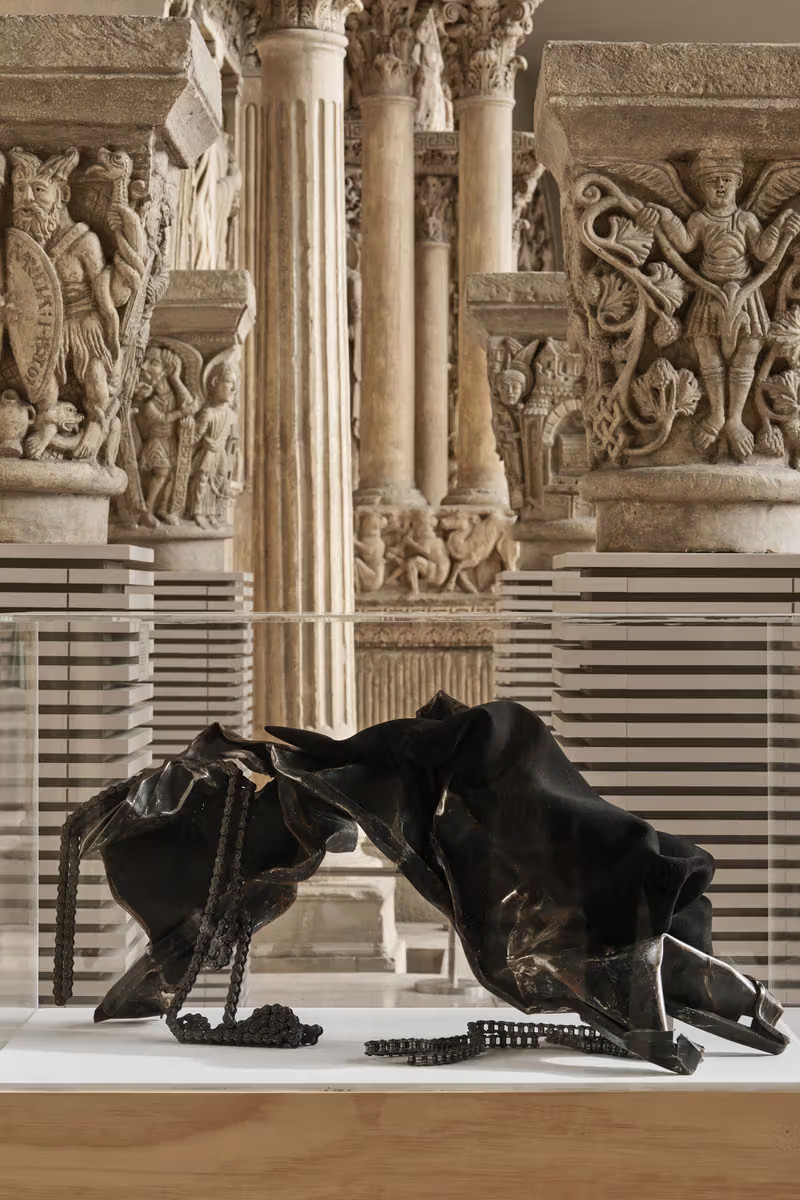
Contemporary sculpture need not compete for the largest volume in a room filled with historic architectural casts. Kennedy Yanko’s Ce qui nous rassemble runs from October 16, 2026, to January 3, 2027, at Paris’s Cité de l’architecture et du patrimoine. Reclaimed metal and folded paint skins enter the Carlu Gallery’s plaster-cast collection. The title can be understood as what brings us together; the first visible connection is how old and new materials share attention.
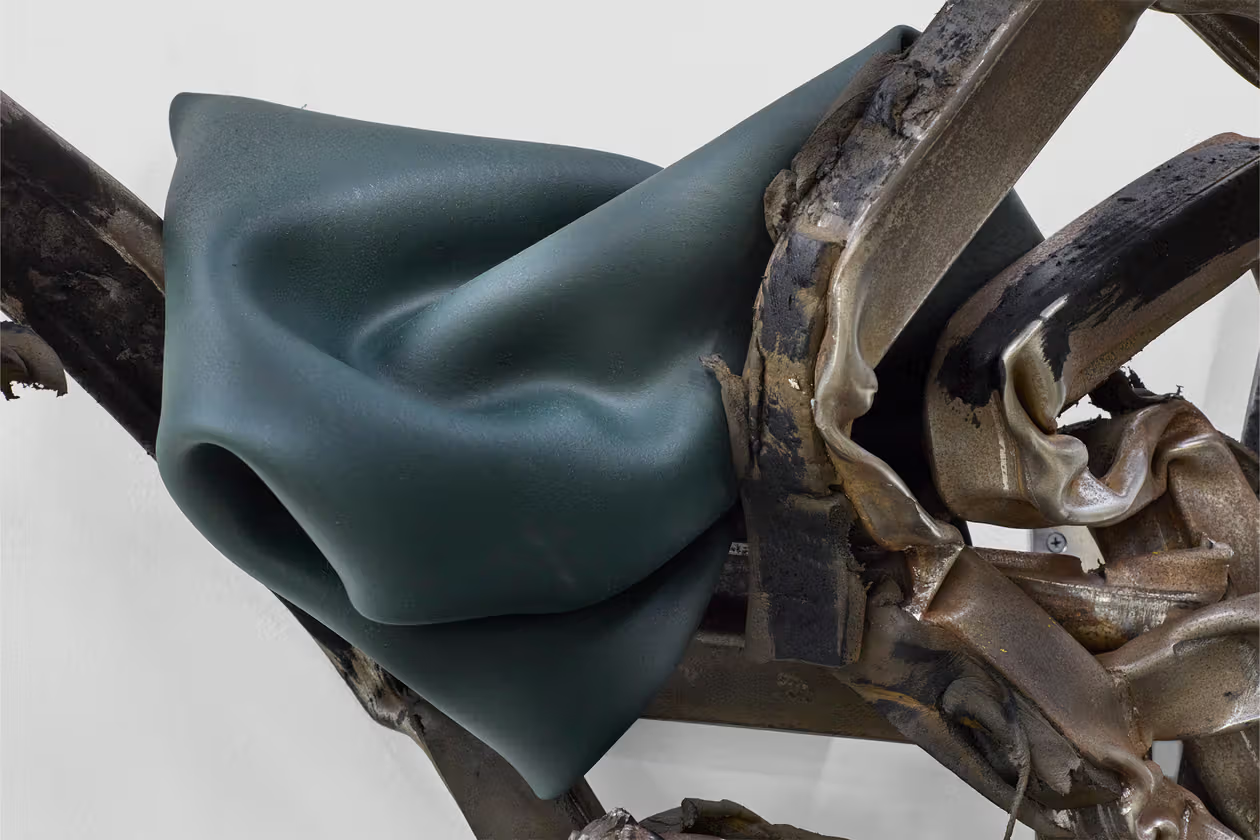
A close view brings smooth dark green against rough edges.
A fabric-like surface emerges from paint and metal
Yanko’s practice spans painting, sculpture and installation, setting bends, dents and oxidation in industrial metal against thick, flexible paint layers. The parts often called paint skins carry fabric- or skin-like folds, but their appearance does not make them cloth. Existing material weight and apparent drape form a distinctive tension.
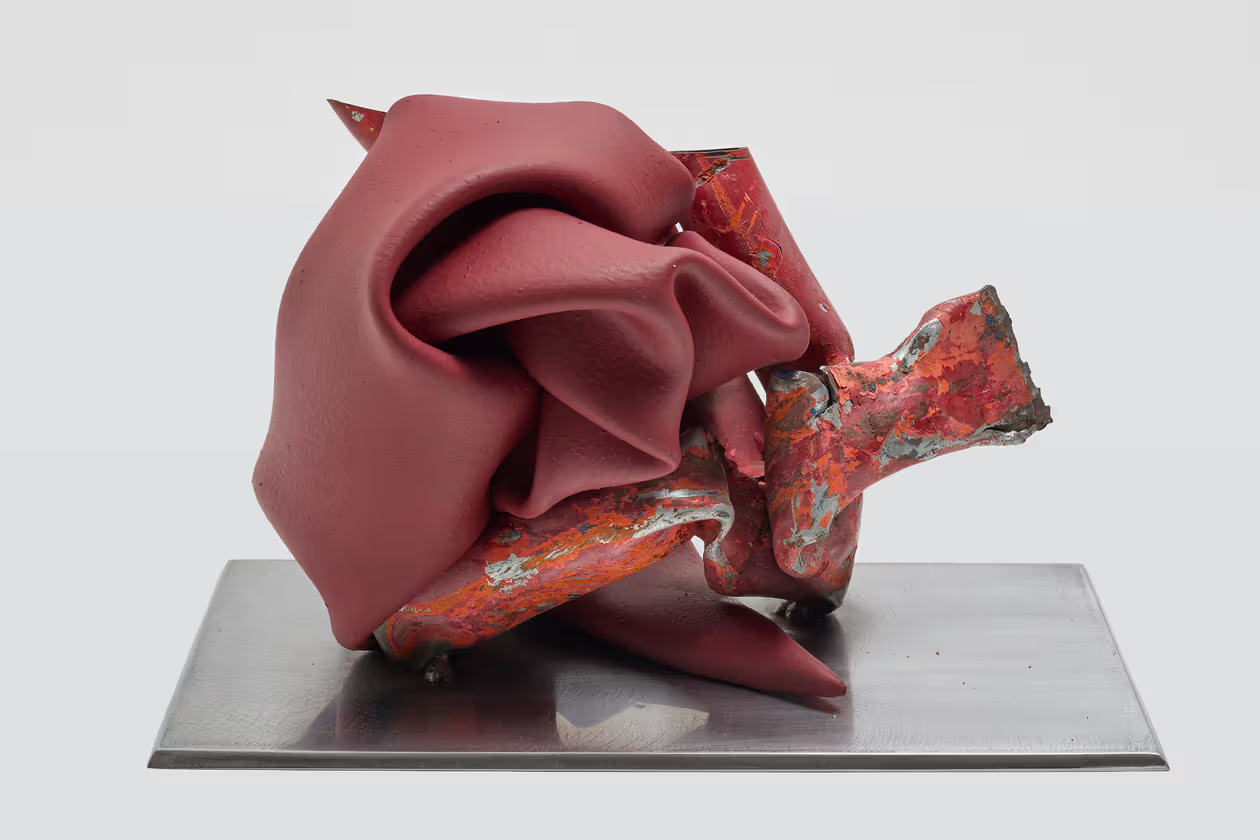
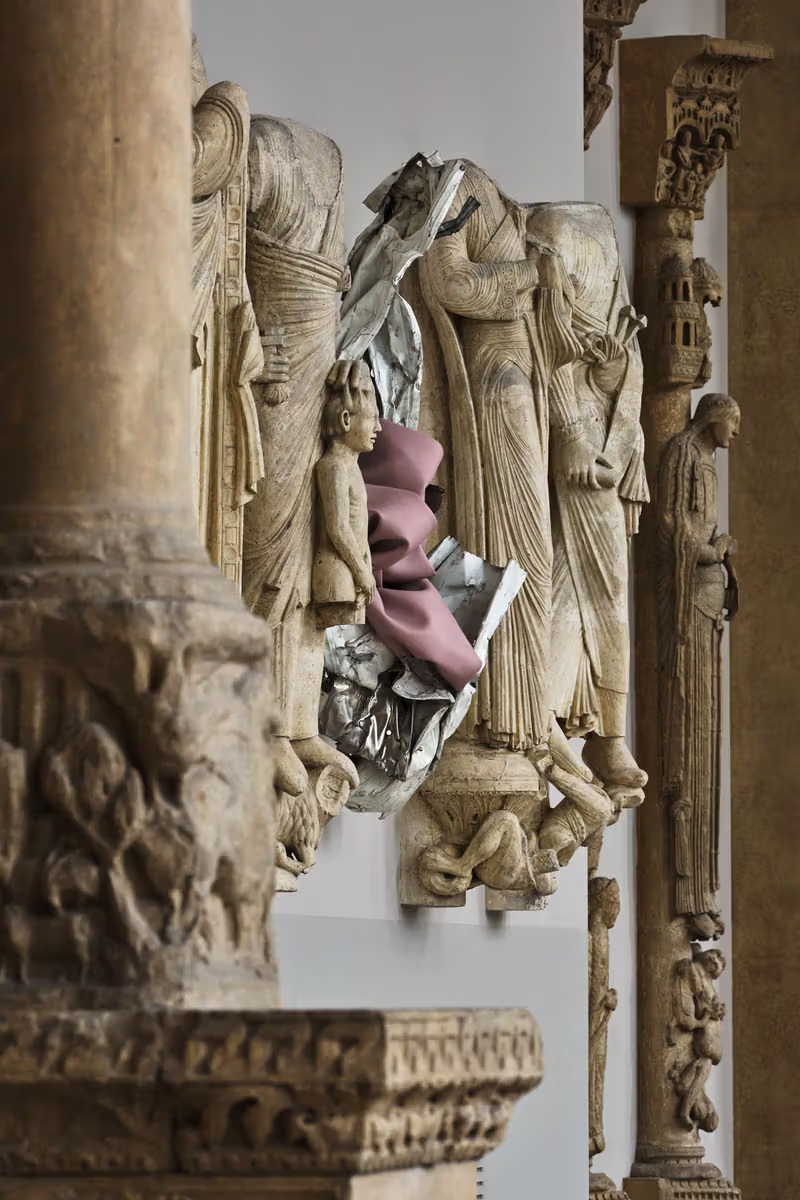
Red paint folds meet metal retaining traces of an earlier life.
Installation photographs show smooth blue-grey, dark-green and deep-red surfaces caught against irregular metal edges. Some works stand on plinths; others appear near walls. Identifying which surfaces retain traces of former objects and which are covered by colour gives abstract sculpture a concrete entry without assigning a fixed symbol to every fold.
Architectural casts provide a background and change scale
The Carlu Gallery preserves casts of monumental French architectural sculpture, with portals, figures and decoration already full of folds and dimensional rhythms. Placing Yanko’s work before them lets metal angles meet drapery and smooth paint meet relief marked by historical atmosphere. The existing collection continues to participate rather than being removed for a white-box setting.
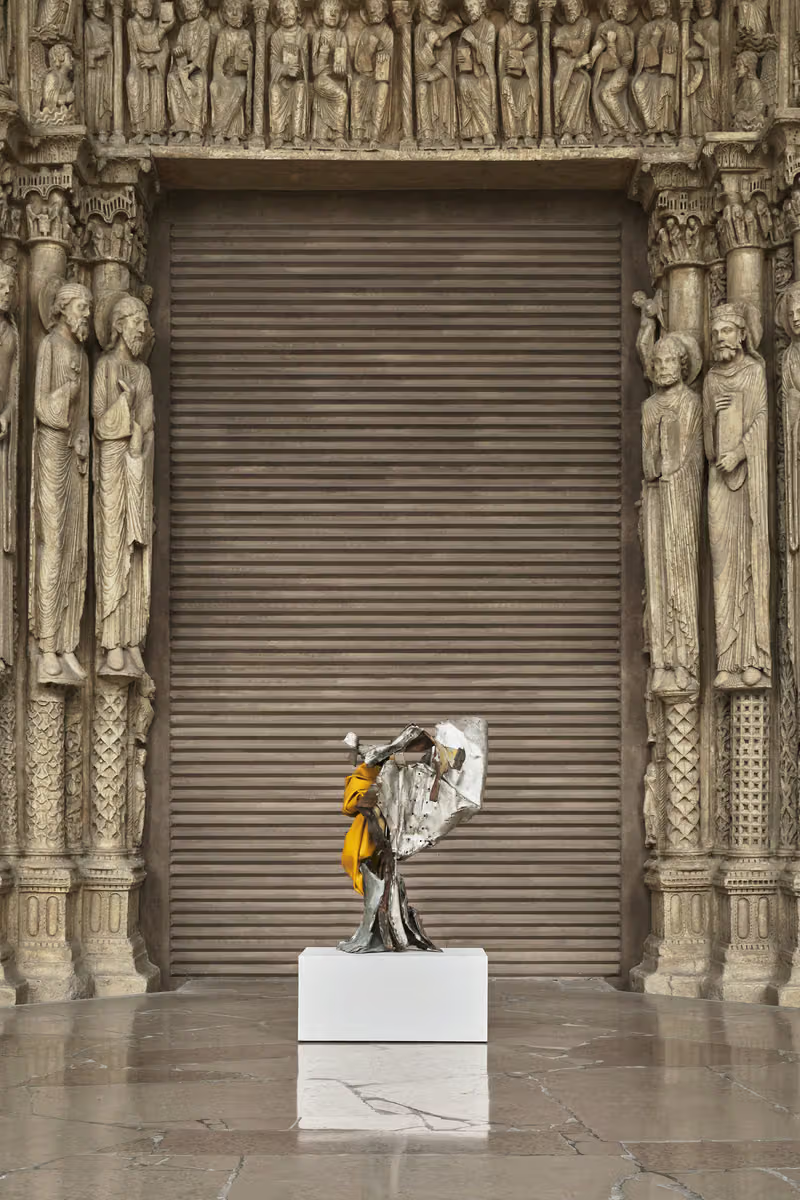
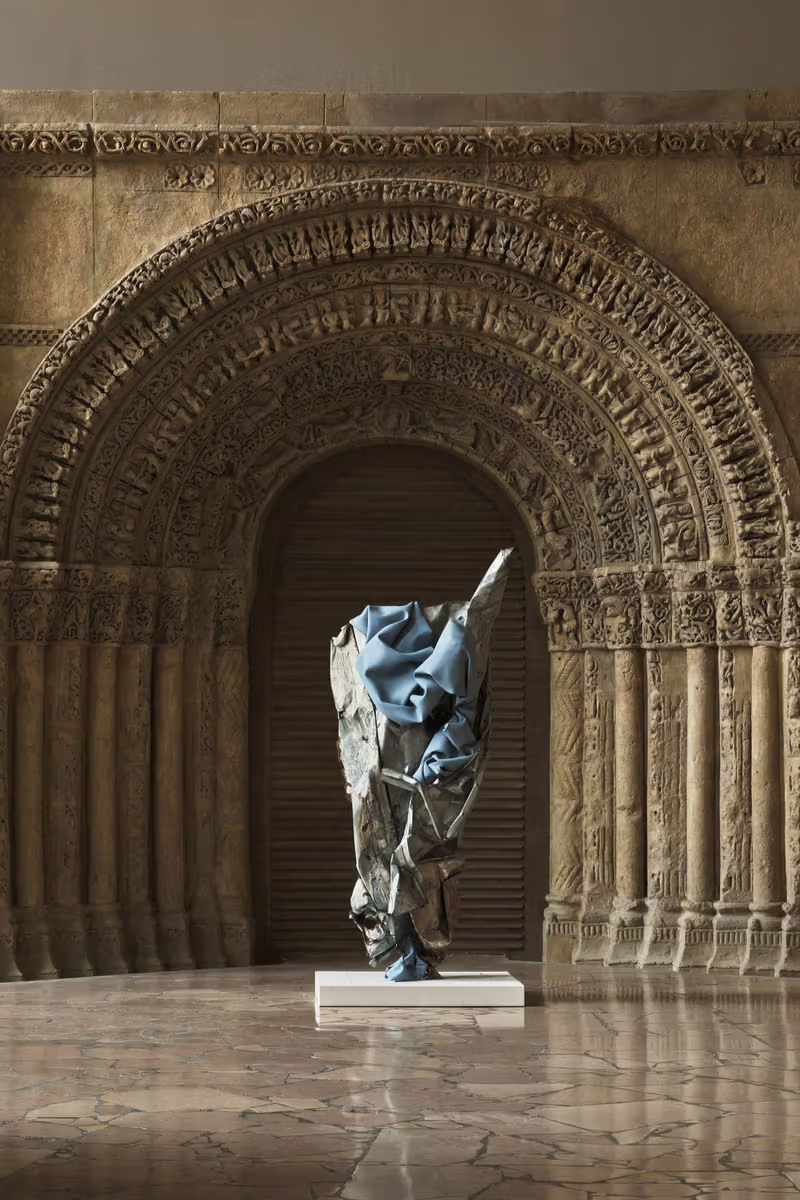
A vertical sculpture changes scale before a tall portal.
Some pieces look small beneath large arched portals, yet closer viewing draws attention through gloss, rust and dark folds. At a distance, architecture and sculpture establish proportions; nearby, force, cut edges and colour become visible. Photographs offer this comparison without replacing the dimensions and experience of walking around the works.
A wall-positioned work sets a soft-looking coloured surface against sculpted detail.An arched background frames blue and metal forms.
For a Paris visit, confirm the museum rather than a gallery address
The institution invited the artist as part of its dialogue between architecture and contemporary art, with the exhibition also receiving attention during Paris art week. Ideas of devotion, making and material memory extend the narrative. More useful than reducing these to a slogan are specific questions: where does discarded metal regain weight, and which old marks does colour allow to remain?
The venue is at 1 Place du Trocadéro et du 11 Novembre, 75116 Paris. Salon 94’s official exhibition introduction confirms the dates; opening hours and ticketing should be checked with the museum. Gallery contact addresses in a website footer are not the exhibition venue. This is an exhibition already under way, continuing until January 3, rather than an art-week event still awaiting its opening.