Louvre Renaissance in Tokyo through December 13: beyond Leonardo, how final-week tickets work
The National Art Center, Tokyo traces travel, technique, antiquity and portraiture through over 50 works. General tickets expire December 6; December 7–13 requires separate timed tickets.
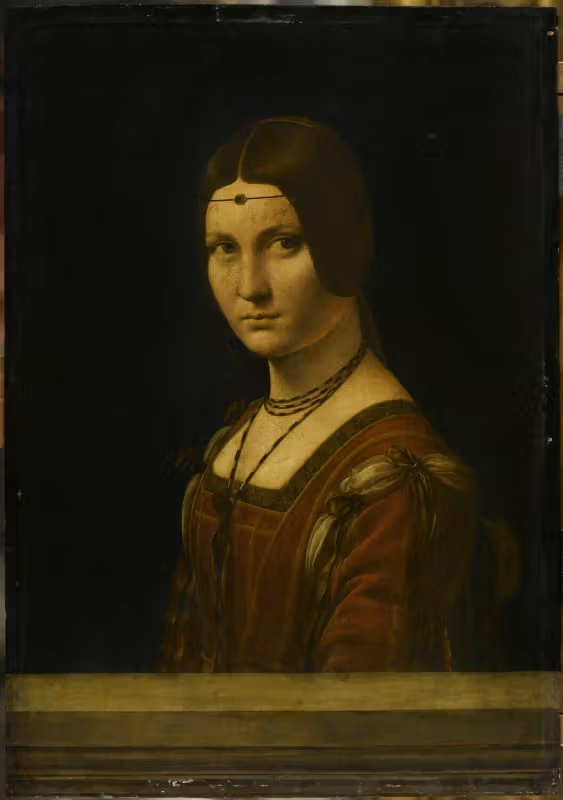
Masterpieces of the Renaissance from the Musée du Louvre runs at the National Art Center, Tokyo, September 9–December 13, 2026, with over 50 paintings, sculptures, prints, drawings and decorative works. Leonardo’s Portrait of a Woman, known as La Belle Ferronnière, makes its Japanese debut. Beyond bringing one masterpiece to Tokyo, four threads—travel, technical innovation, antiquity and portraiture—reconsider how 15th- and 16th-century Europe saw people and the world.
Start with a face, then move into different media
Leonardo’s work, dated around 1490–1497, is oil on walnut panel, measuring 63.5 by 44.5 centimetres. The turn, gaze and dark background suggest inward activity within a still portrait. The official description notes that La Belle Ferronnière is a later, mistakenly applied name; a familiar title should not become an established identity. Seeing a face and knowing who she is are different questions.
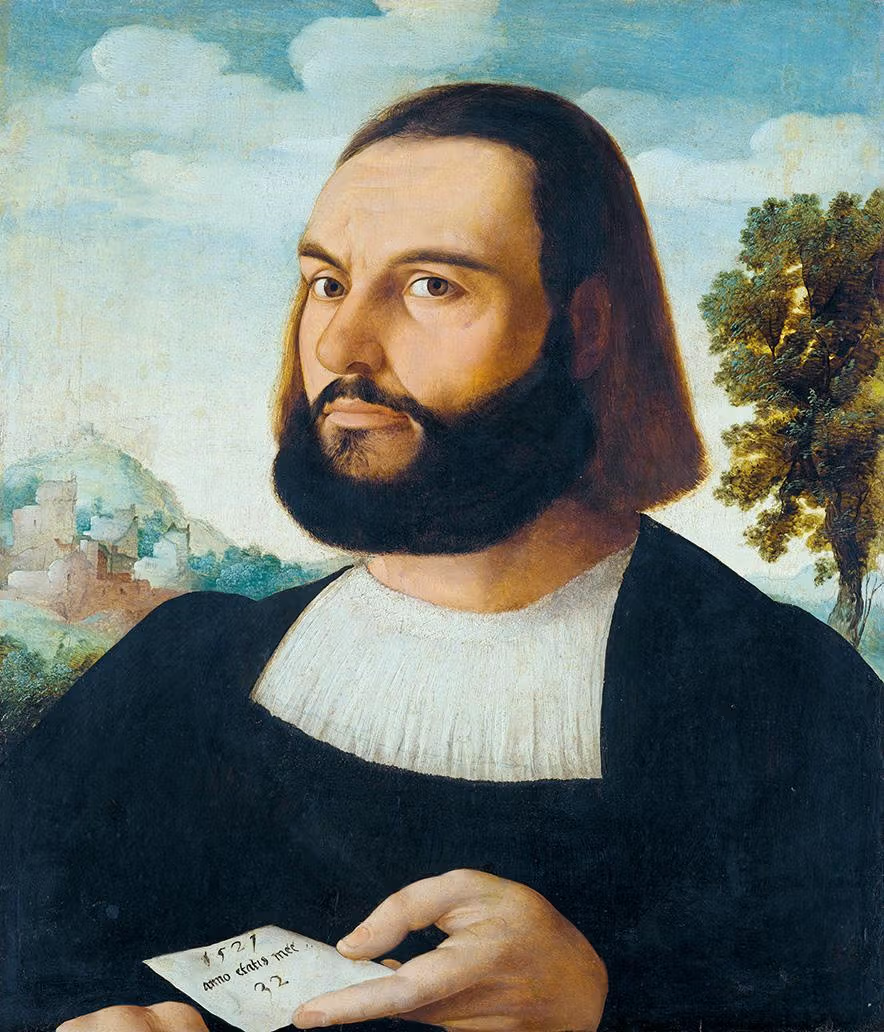
Portraiture’s rise can also be read against Jan van Scorel’s 1521 Portrait of a Thirty-Two-Year-Old Man. Clothing, gesture, the writing in his hand and the landscape behind him offer clues to self-presentation. By placing artists and media together, the exhibition moves beyond likeness towards what information a person leaves in an image and how those signals help an individual be remembered.
Jan van Scorel’s 1521 Portrait of a Thirty-Two-Year-Old Man.
Travel, techniques and antiquity change how images circulate
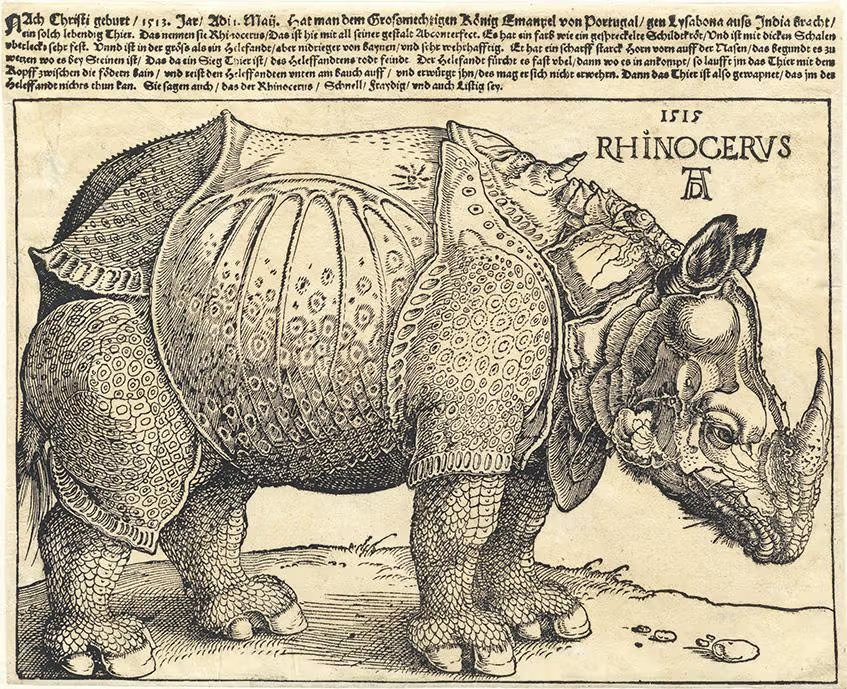
Dürer’s 1515 woodcut The Rhinoceros suggests another direction: an image need not exist only as a single oil painting, since printing allows forms to be reproduced and transmitted. Travel also connects human movement with circulating images. Beside a closely observed individual portrait, it shows the Renaissance as an intersection of knowledge and technique rather than one uniform style.
Dürer’s 1515 woodcut The Rhinoceros.
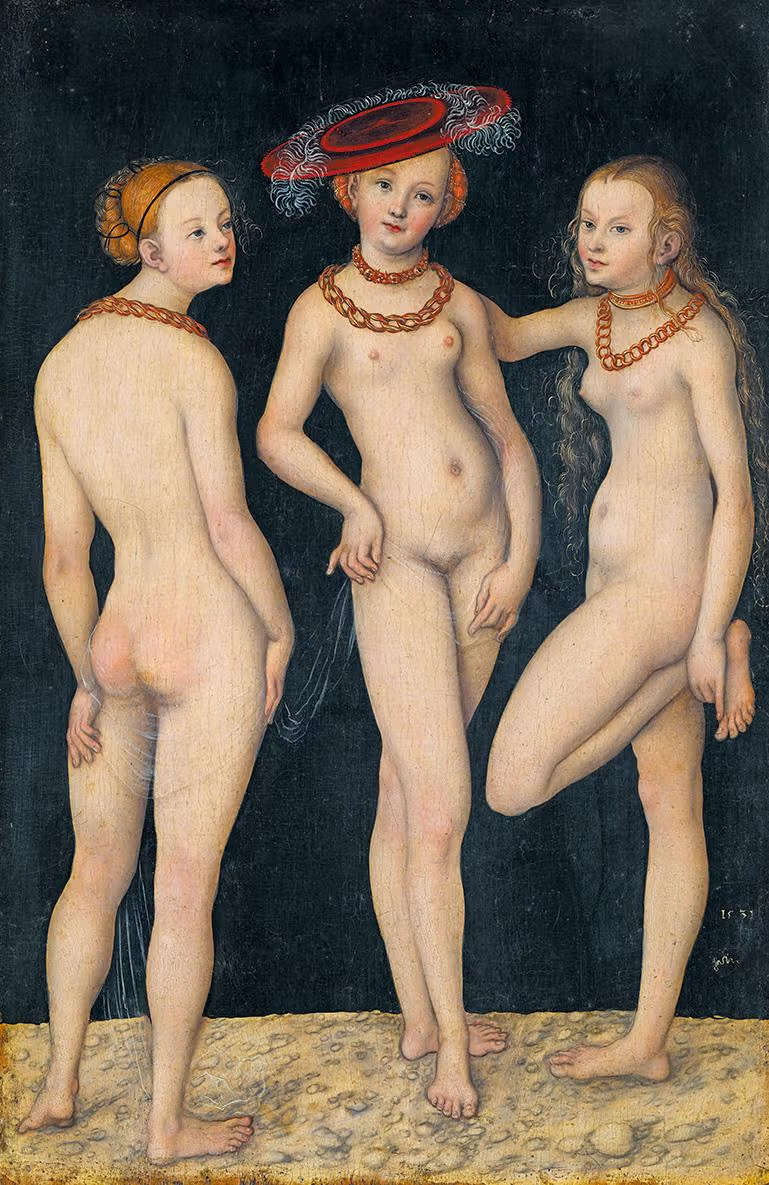
Decorative works and sculpture connect learning from antiquity with casting, modelling and ornament. Lucas Cranach the Elder’s 1531 The Three Graces brings a classical subject into northern painting; proportions, dress and poses can change as a subject crosses regions. Moving from portraits to prints, myth and objects turns the four threads into a route rather than a chronology to memorise.
Lucas Cranach the Elder’s 1531 The Three Graces.
Final-week timed tickets are separate; general tickets do not carry over
Regular same-day admission is ¥2,400, university students ¥1,400 and high-school students ¥1,000; junior-high pupils and younger enter free, with other eligibility governed by official rules. Advance and regular tickets are valid only through December 6. December 7–13 switches to dated, timed tickets, scheduled to go on sale through Asoview at noon on October 31. Existing general tickets cannot admit holders that final week; free and discounted categories also have specific procedures, so check ticket type and validity when planning.
The venue is Special Exhibition Gallery 1E at 7-22-2 Roppongi. A further official notice extends opening to 8pm on December 7–12, last admission 7:30pm; even timed entry may involve a wait. Observe details in a portrait, then compare woodcut, classical subjects and decorative techniques. This approaches the exhibition’s multiple Renaissances more closely than pursuing its single most famous painting alone.