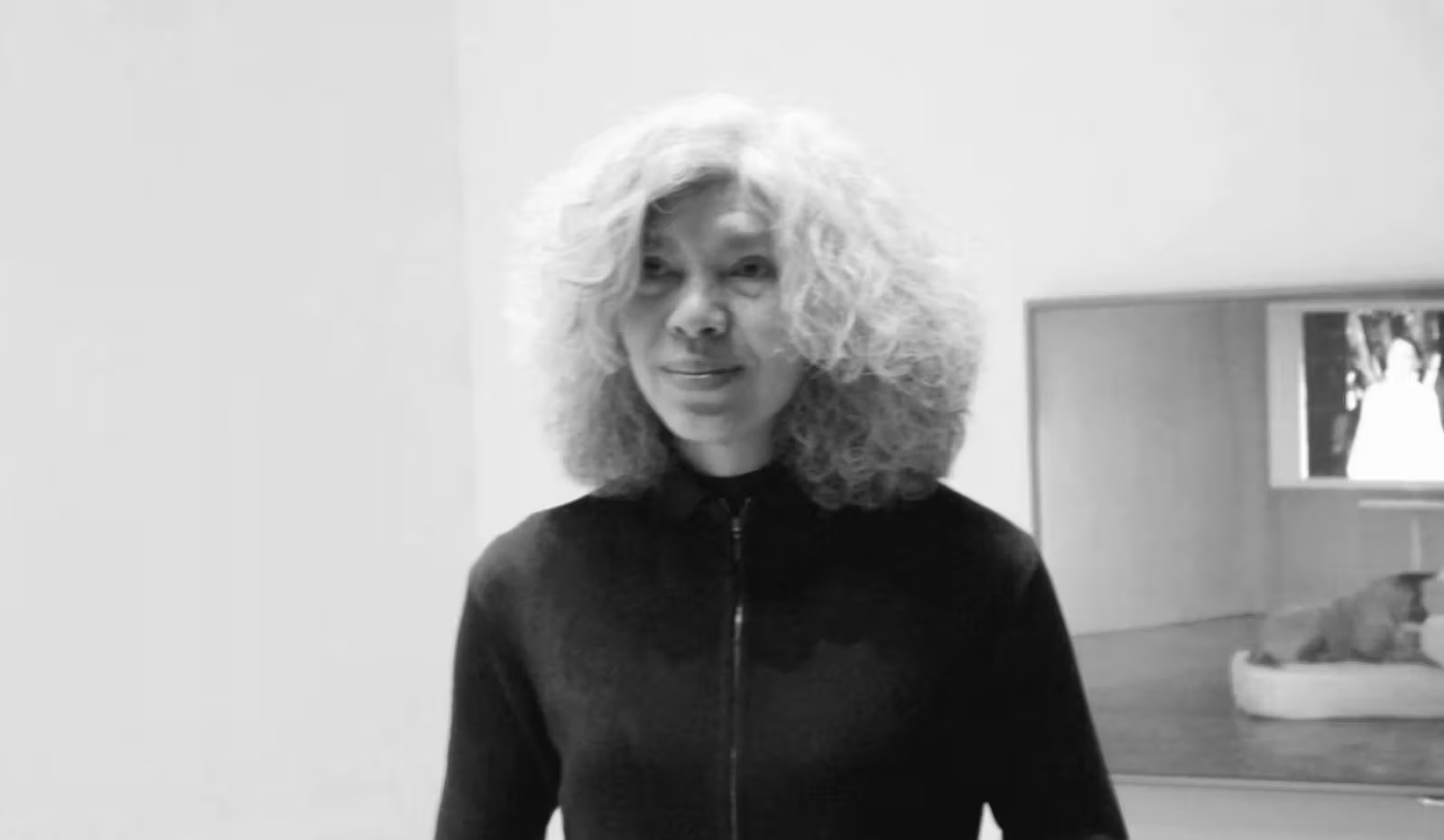
Looking at Araya Rasdjarmrearnsook’s work is not always comfortable, but it can make familiar relationships open to questions again. The Thai artist brings villagers, hospital beds, literature and rescued dogs into video, installation and sculpture. Who has the authority to interpret art, and which experiences of life are overlooked? Giving Life, currently at Dib Bangkok until May 3, 2027, offers an entry into her work. It is an ongoing exhibition rather than one opening today.
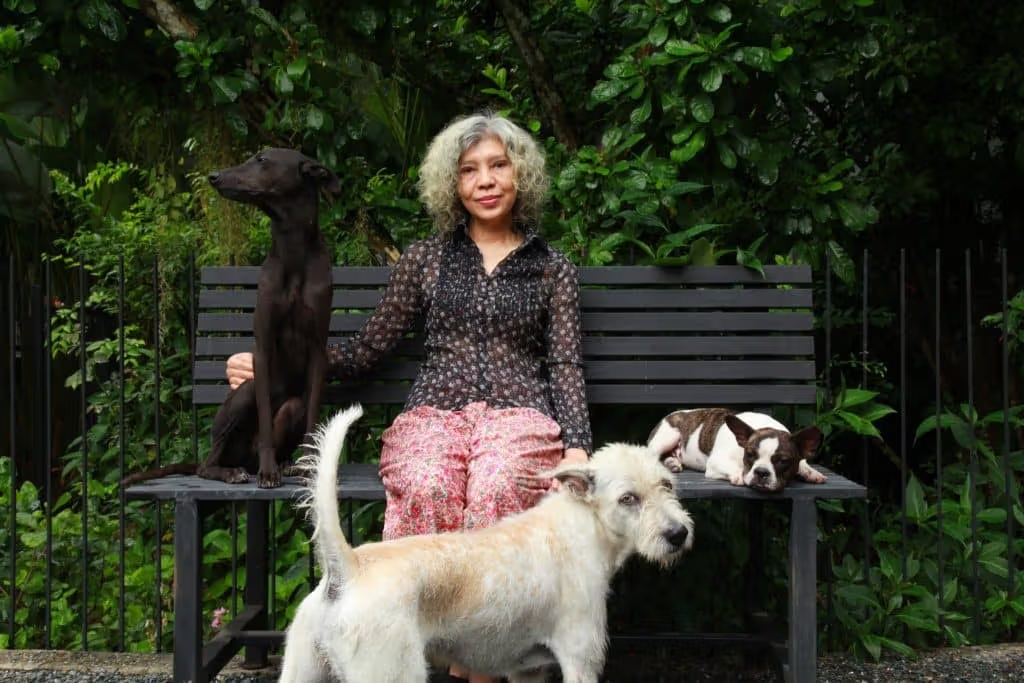
The artist’s everyday relationships with dogs also enter her work.
Who decides what a painting means in a bamboo grove?
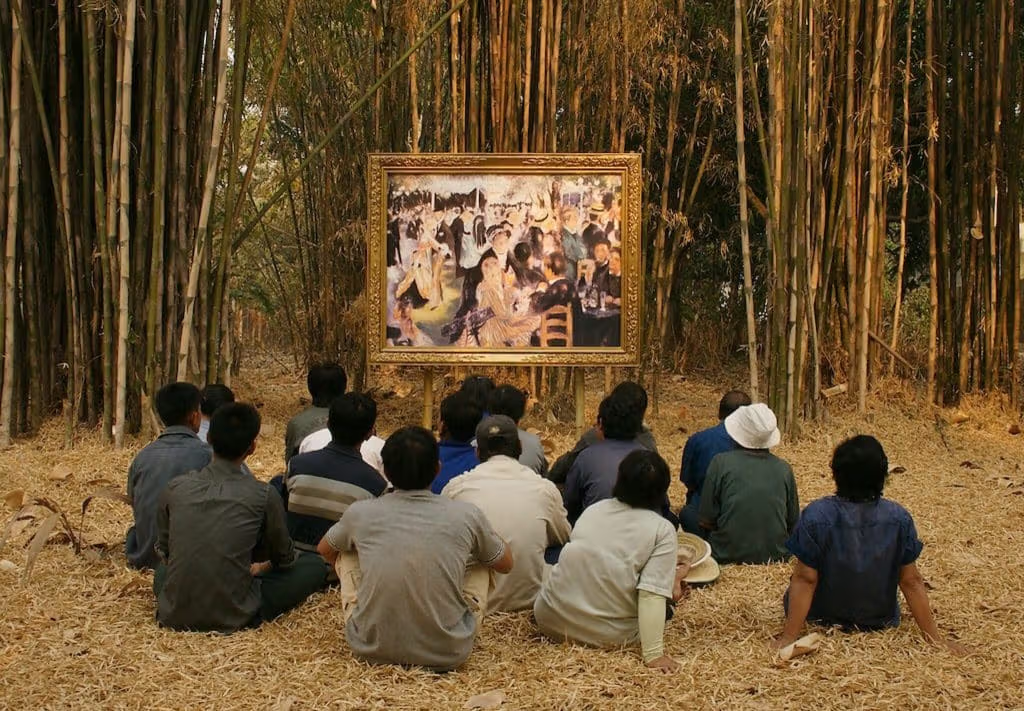
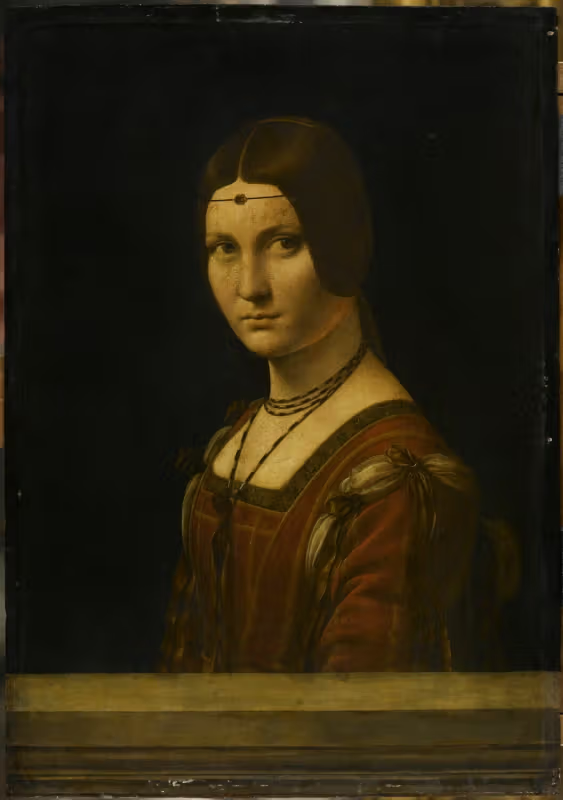
The Two Planets series places reproductions of European paintings in rural Thailand, where villagers sit and discuss what is happening in their own words. Renoir’s dance scene, Millet’s rural figures and other familiar art-historical images leave museum walls and their professional labels. Groves and fields become conditions for another body of lived experience to enter the conversation.
Two Planets invites Thai villagers to discuss a painting through their own experience.
The arrangement also moves the viewer’s position. People often worry about not understanding an artwork. Here, interpretation begins with visible figures, actions and everyday knowledge. Different accounts need not converge on a single correct answer. The work makes us notice which interpretations are habitually granted authority, and which perceptive voices may be excluded because of the speaker’s position.
Why can a bed and words become artistic materials?
In The Class, Araya brings speech about death into a hospital morgue, placing language alongside people who cannot answer. Its force extends beyond shock into the conditions of communication. What does speaking mean when a listener does not respond? Viewers can keep their own distance; enduring discomfort need not become a test of understanding contemporary art.
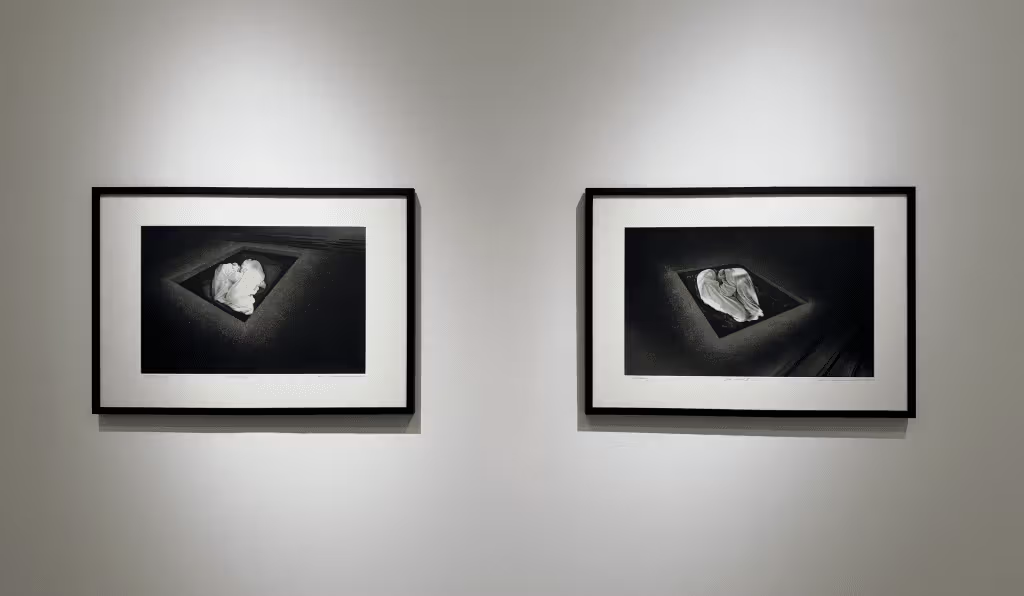
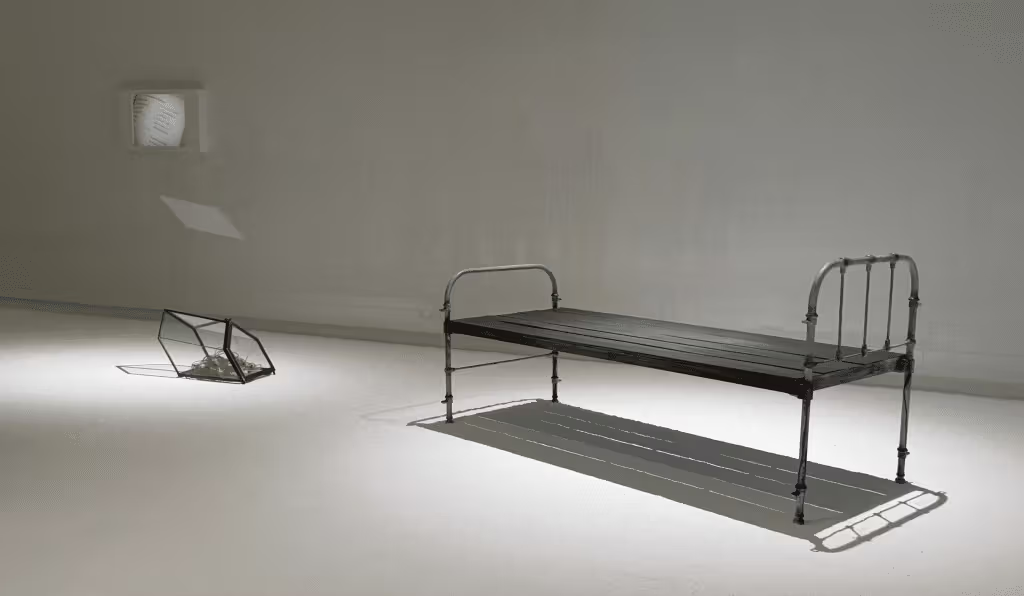
In Giving Life, Dinner with Cancer (Rebirth) connects a hospital bed and medical objects with her experience of her father. The curled forms in The Birth I and The Birth II bring beginnings and endings into related postures. A bed, a wrapping and an empty floor are ordinary things. Rearranged, they give care, vulnerability and absence a spatial form beyond an abstract discussion of life.
The Birth I and The Birth II place curled forms in dialogue.A hospital bed and medical objects form the space of Dinner with Cancer (Rebirth).
How do sculptures of dogs bring companionship into the gallery?
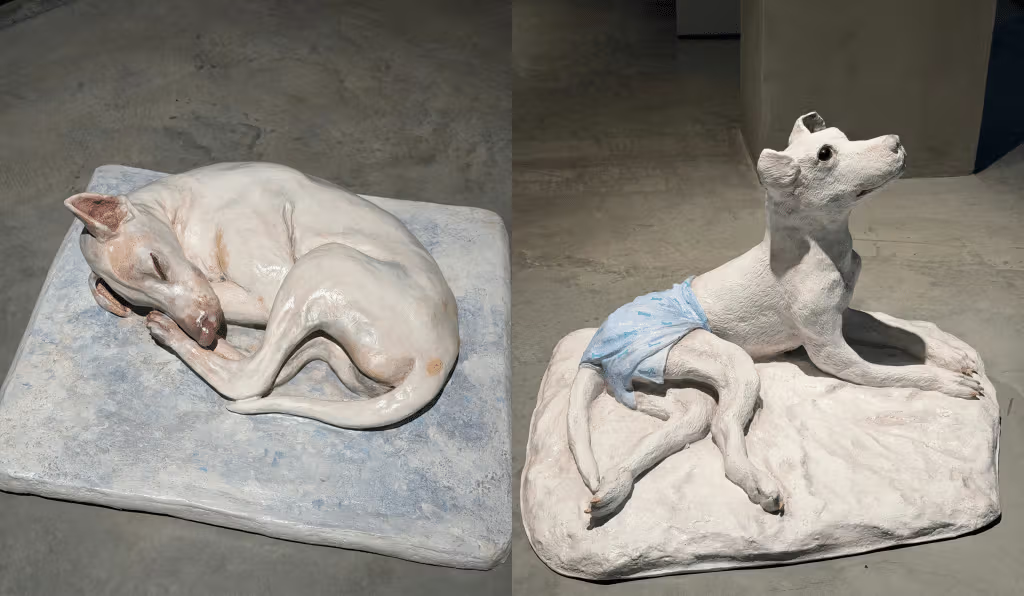
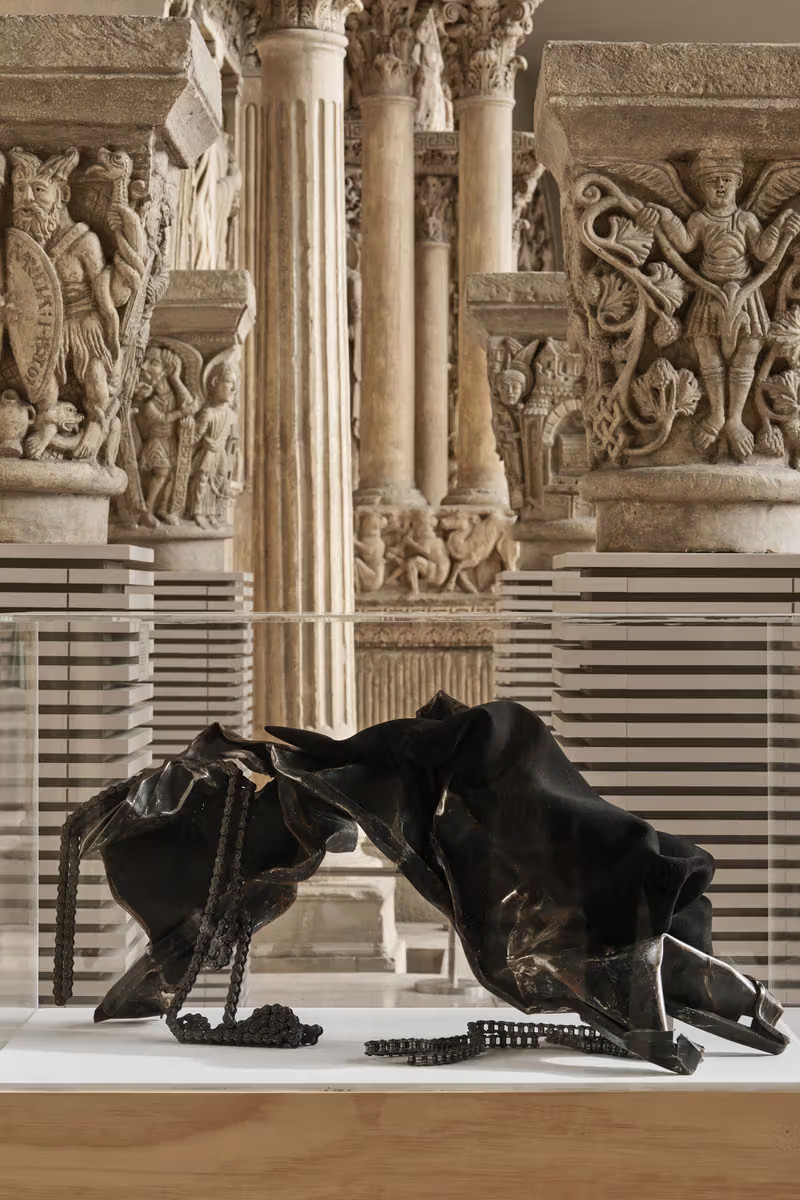
Araya lives in Chiang Mai and cares for stray dogs, making animals more than occasional visual symbols. The sculptures Noo-Nil and Aram extend these relationships through resting and curled positions. Rather than demanding the upward gaze of a monumental memorial, their forms close to the floor ask viewers to lower their eyes. A small act of looking can change how we approach another life.
Noo-Nil and Aram present animal forms in different resting poses.
The large survey The Bouquet and the Wreath at MAIIAM in Chiang Mai ended in May 2026 and is separate from the current Bangkok exhibition. At Dib Bangkok, try comparing one installation, one video and one dog sculpture. Who speaks, who is seen and who needs care? Araya does not rush towards an attractive answer. She keeps places from which we might turn away within the range of sustained thought.