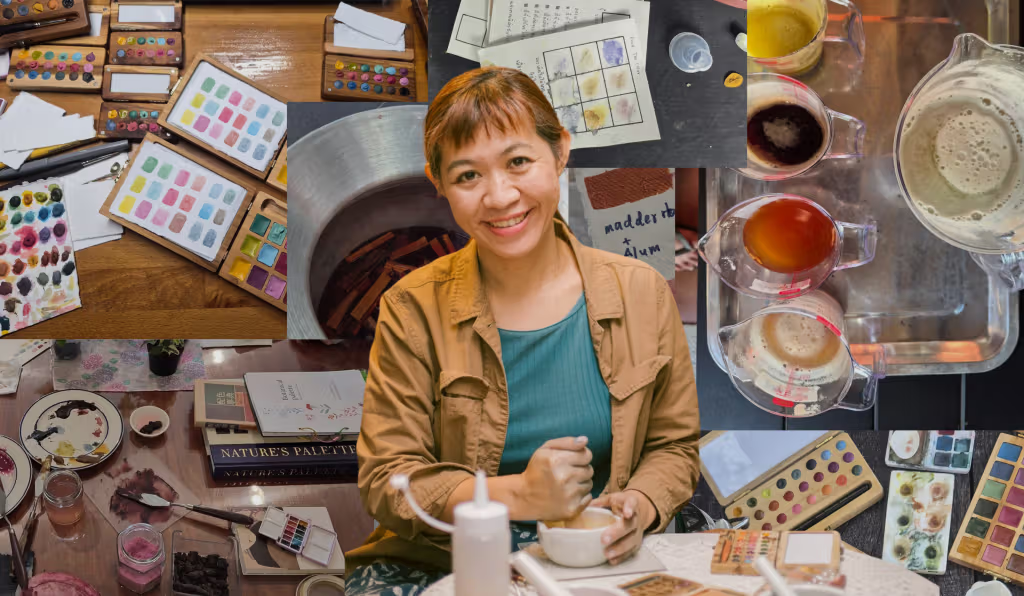
A watercolour box can be a beautiful palette or an index of materials. Through Craft Colour, artist and researcher Pornpimon “Mew” Mingmitmee, based in Sakon Nakhon, Thailand, studies natural pigments and art materials. Local plants, minerals and traditional colour-making methods enter contemporary practice. Her concern extends beyond what is painted to how a colour is made, and whether work practised by fewer people can find use again.
Why study pigments before choosing a colour card?
Mew grew up around textile craft. University research relating to mural conservation led her to question the ingredients and methods behind historical colours. Further study in India introduced plant and mineral pigments, textile-printing colours and opaque watercolour methods, before she returned to connect that knowledge with Thai resources. Colour becomes a process of making rather than a fixed code taken from a shop shelf.
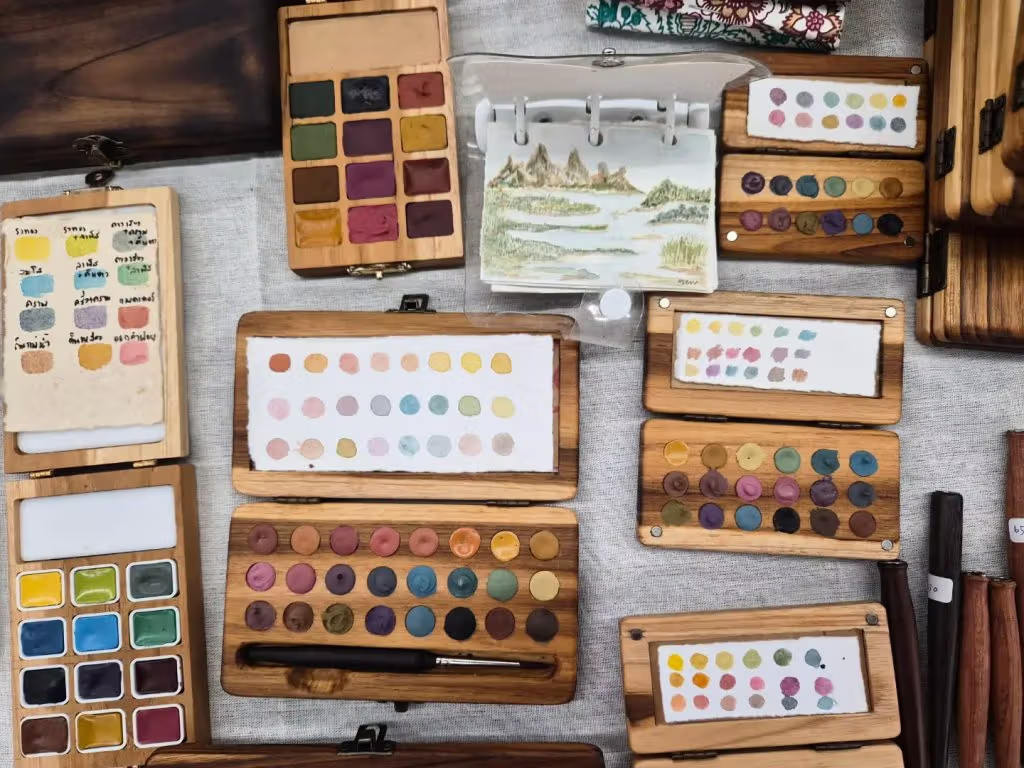
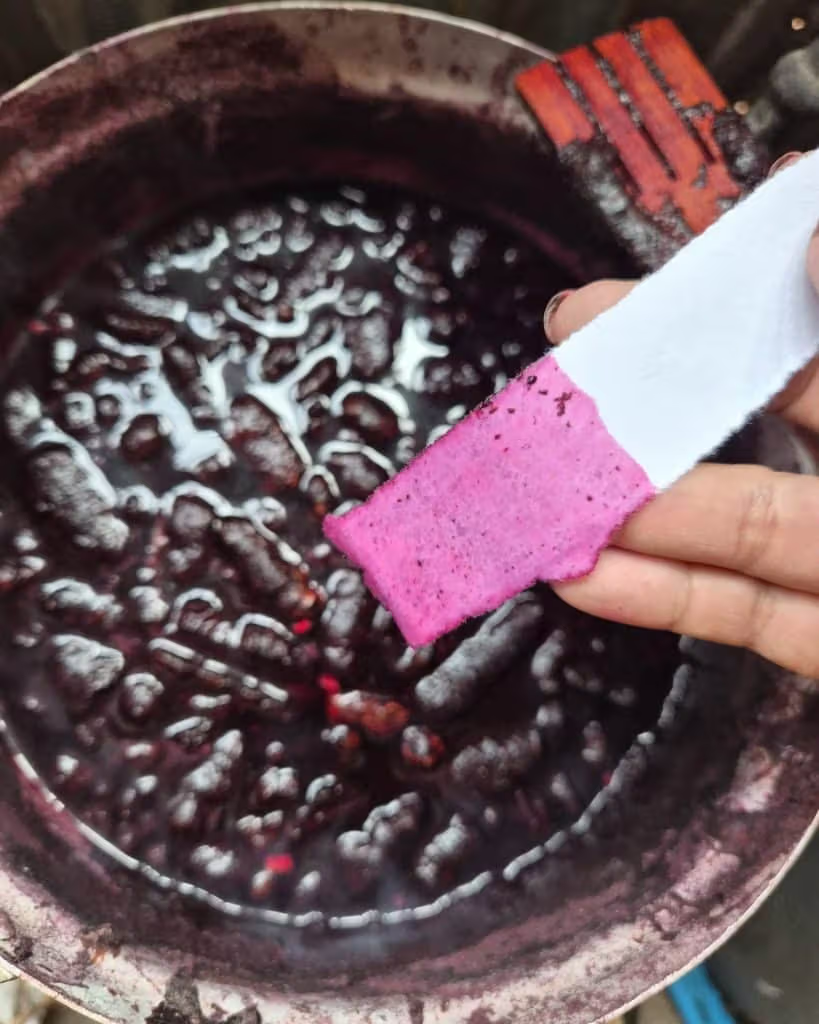
Different materials invite different questions. Does the colour dissolve, how does it adhere to paper, and what happens to its surface on drying? These conditions can direct an image rather than only obstruct it. Small swatches make it possible to observe density, overlap and edges, offering more practical information than the dark appearance of paint in its container alone.
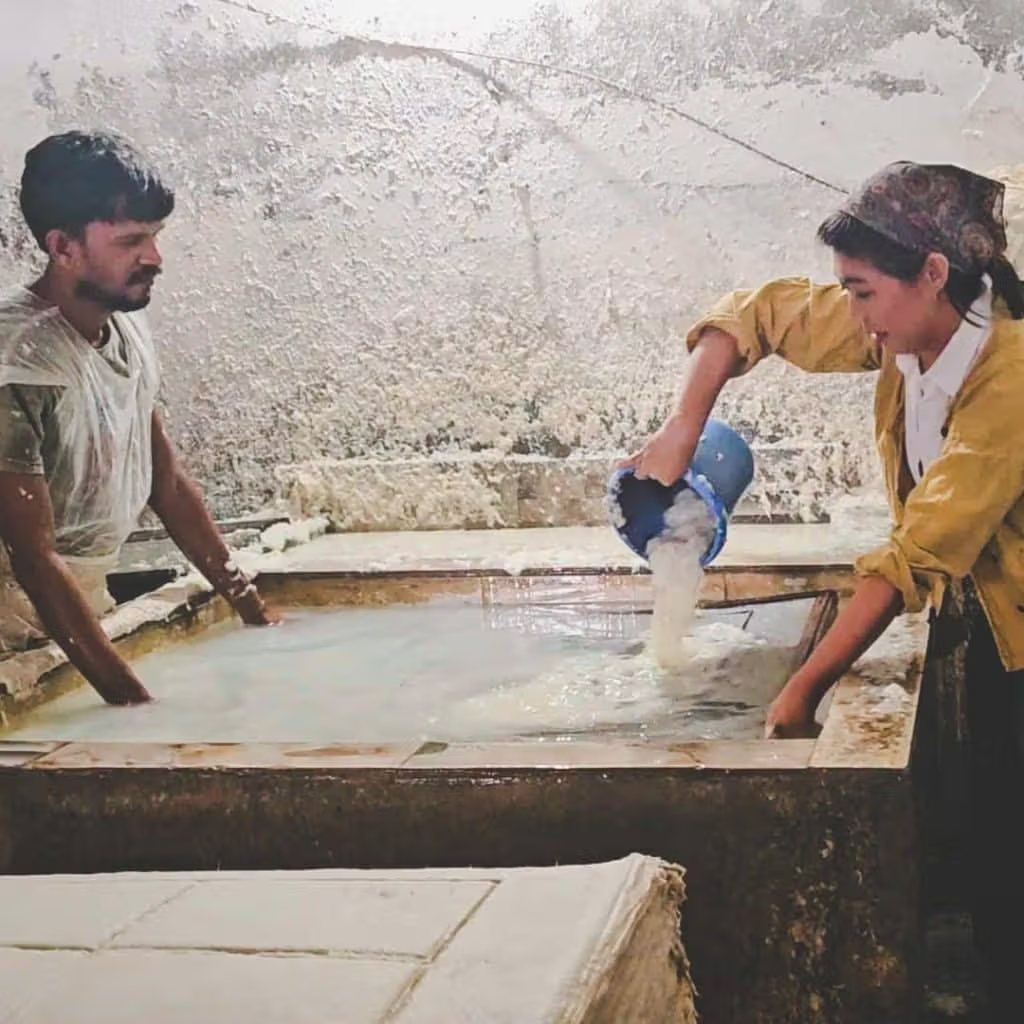
Papermaking turns fibres and water into workable materials.
What can a swatch’s name preserve?
Craft Colour connects colour names with their material origins, while workshops share trial painting alongside cultural stories. When a pigment means more than simply red or green, a user can remember its processing and associated local knowledge. Preservation requires more than collecting a recipe. Someone must open the box, paint with it and pass observations to the next person.
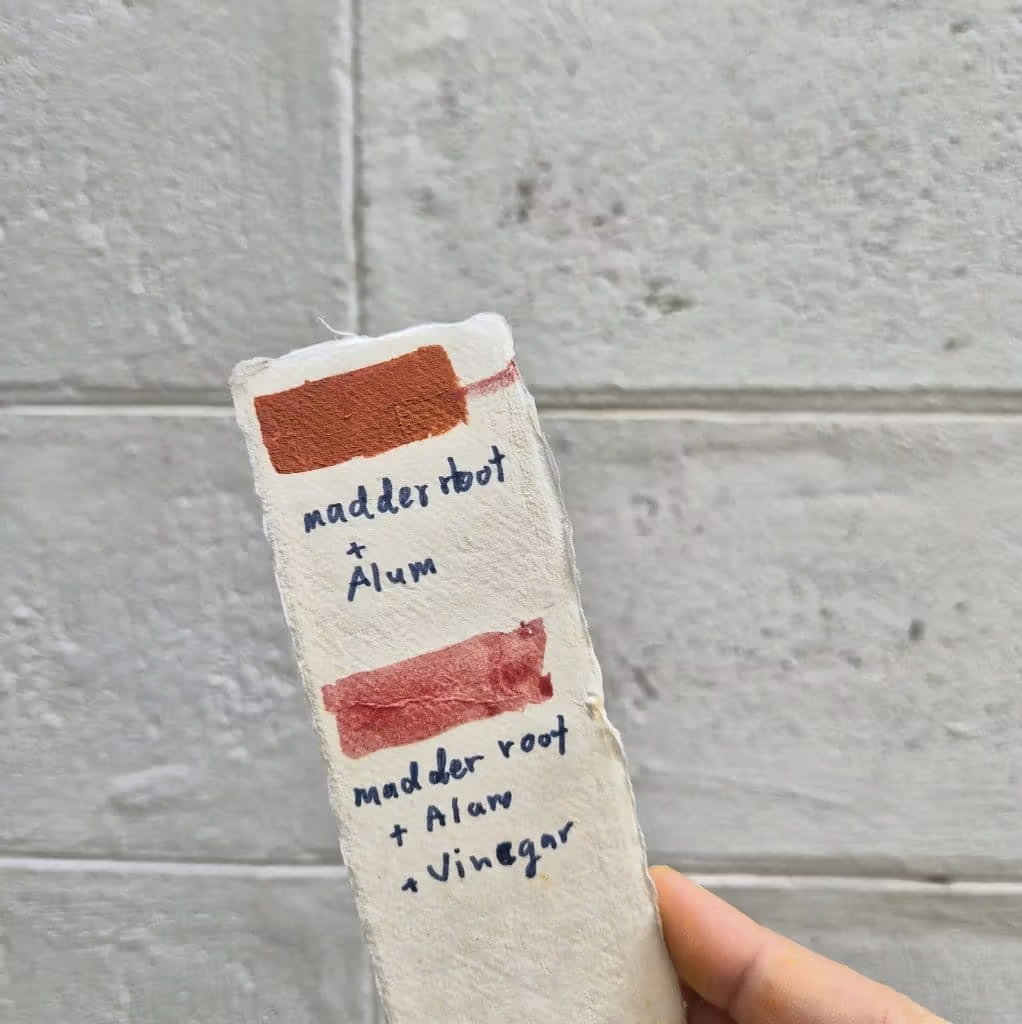
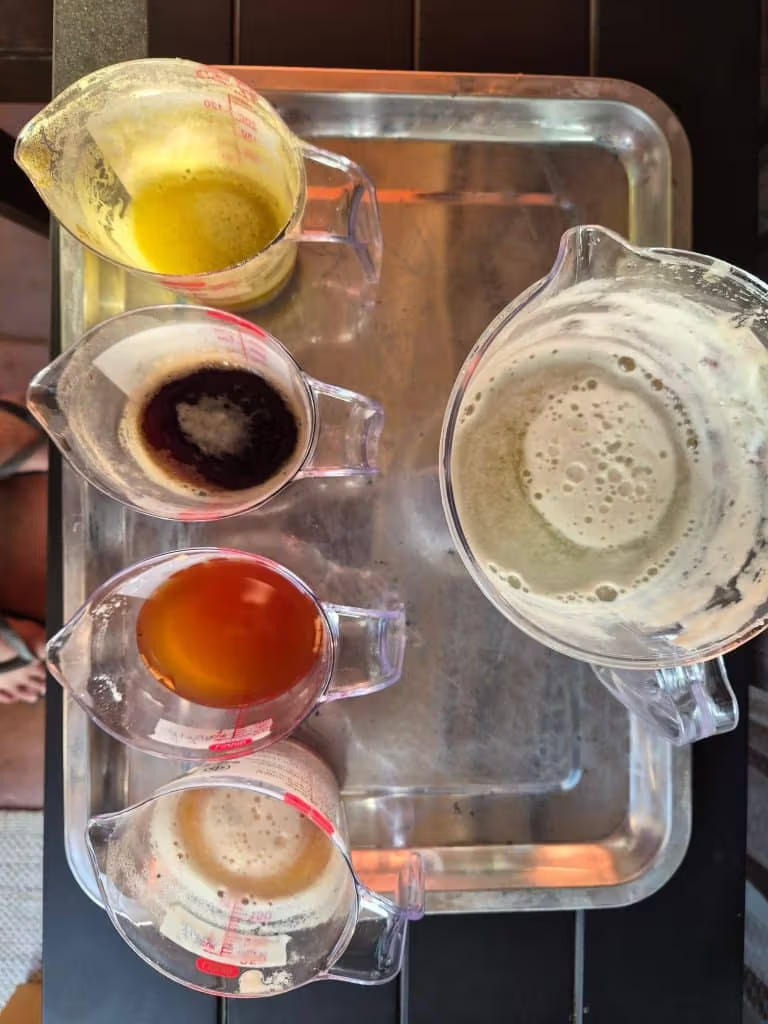
Different treatments of a material leave comparable test colours.
Published images place palettes, glasses, test sheets and worktables within the same material setting. Different treatments leave changes in shade and boundary on a piece of paper. Perfect uniformity need not be the only goal for a tool. Natural describes an origin, however, and does not automatically mean non-toxic or suitable for every application. Follow the material’s formal instructions.
Palettes and swatches present a way of comparing colours.Dark liquid and a tool provide a close view of colour processing.
Why is handmade paper also a question of colour?
Mew extends her research to Thai fibres, traditional papermaking and plant-derived binders. Paper is not a passive background. Its fibres, absorbency and surface change where water flows and pigment stays. When a colour maker also studies paper, the tool becomes a relationship between materials rather than a paint box joined to an arbitrary sheet.
Coloured liquids in glasses show material research in progress.
In the recent interview, Mew discusses plans to invite a Japanese papermaking specialist for a two-day workshop in November. Exact dates and registration await formal information; a plan should not be treated as an open event. Creators can already begin recording the paper used, water added and changes after drying. Seeing the makers and methods behind tools gives local craft room to develop beyond remembrance of the past.