GOLD opens records: Asian experimental sound meets the Beatles’ White Album in Wong Chuk Hang
Twelve selectors and Rutherford Chang’s White Album collection turn records into evidence of sound and time. Check the Sunday closure before planning a visit.
What can a record offer in the streaming era? The new exhibition records at GOLD, a cultural space in Wong Chuk Hang, locates its answer in sound, sleeves and traces of collecting. Opened on October 24, 2026, it presents selections of Asian experimental sound alongside Rutherford Chang’s nearly two-decade project We Buy White Albums. These are music formats, but also evidence of how different people preserve, organise and understand sound.
Side A: enter experimental sound through selections from three cities
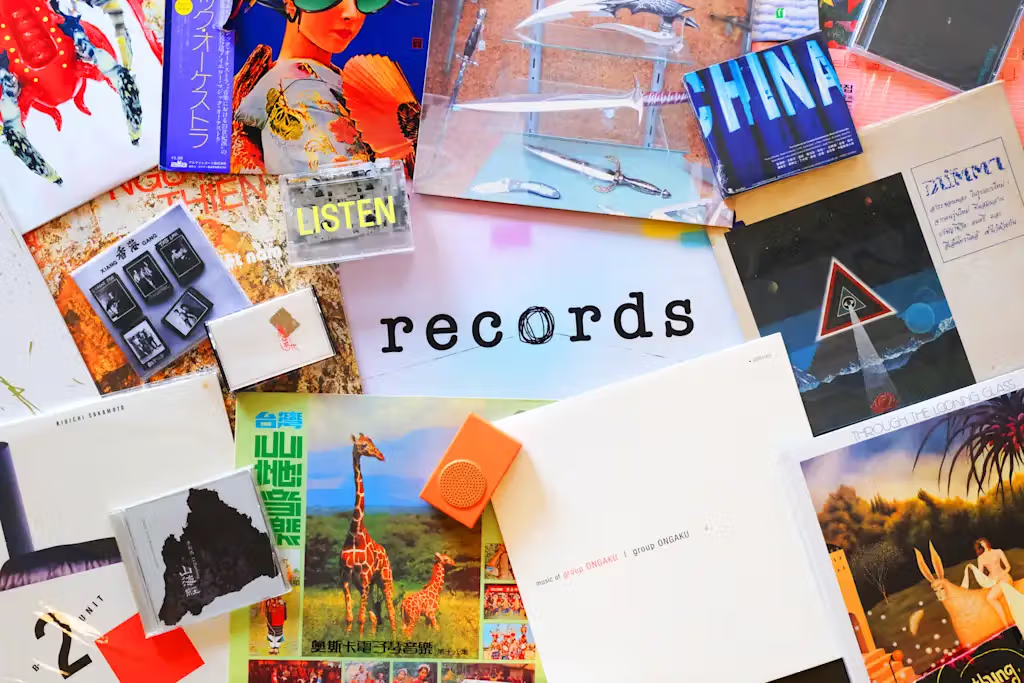
Experimental Sound: Asia invites twelve selectors from Hong Kong, Tokyo and Bangkok to share vinyl records, cassettes and CDs that have informed their artistic, listening or collecting practices. The formats involve different ways of playing music, so the display reaches beyond a single “vinyl aesthetic”. Small cassettes, square CD cases and large record sleeves each invite a different viewing distance, giving sound history physical forms that can be compared side by side.
The records promotional image brings together vinyl, cassettes and sleeve artwork.
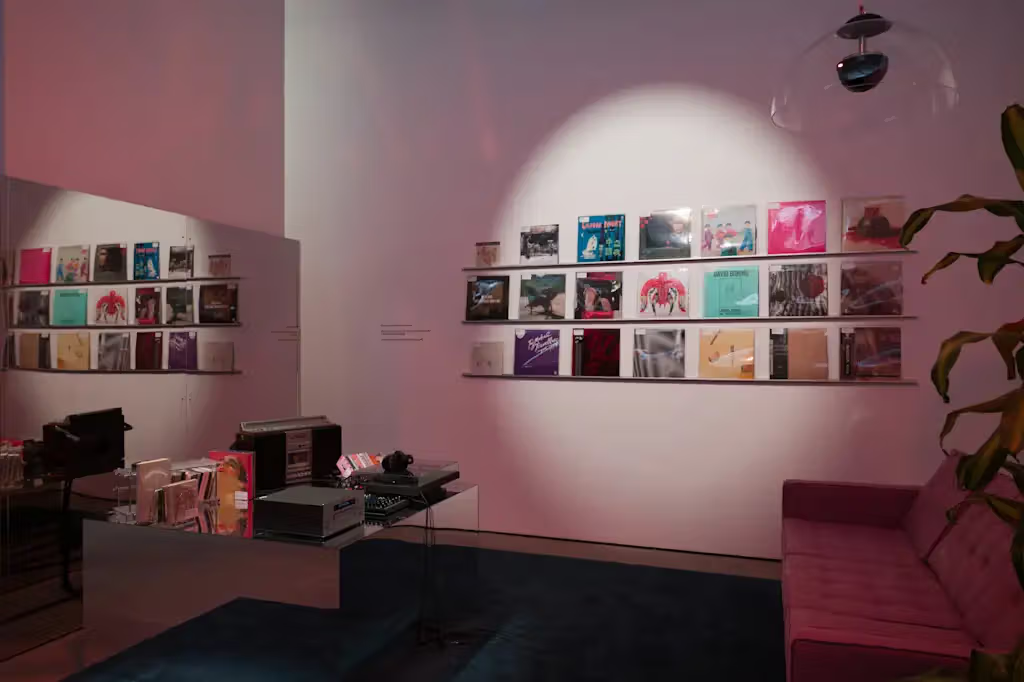
In the official installation photographs, records sit on several horizontal shelves, with playback equipment on a table and a sofa nearby. The arrangement makes sleeves into images to look at while retaining a reminder that music is meant to be played. One way in is to choose an intriguing cover and then ask how it entered a selector’s life. That personal route may reveal more about an unfamiliar sound scene than trying to memorise every name at once.
The Asian experimental sound section combines record shelves, playback equipment and a sofa.
Side B: why are no two copies of the same white sleeve quite alike?
The other side presents We Buy White Albums (2006–2025) by Rutherford Chang (1979–2025). Over many years, he collected first-pressing vinyl copies of the Beatles’ 1968 album, commonly known as the White Album. The circulation histories of identical mass-produced objects made each one different. This is the late artist’s sustained collecting project, rather than a launch of new work attended by Chang himself.
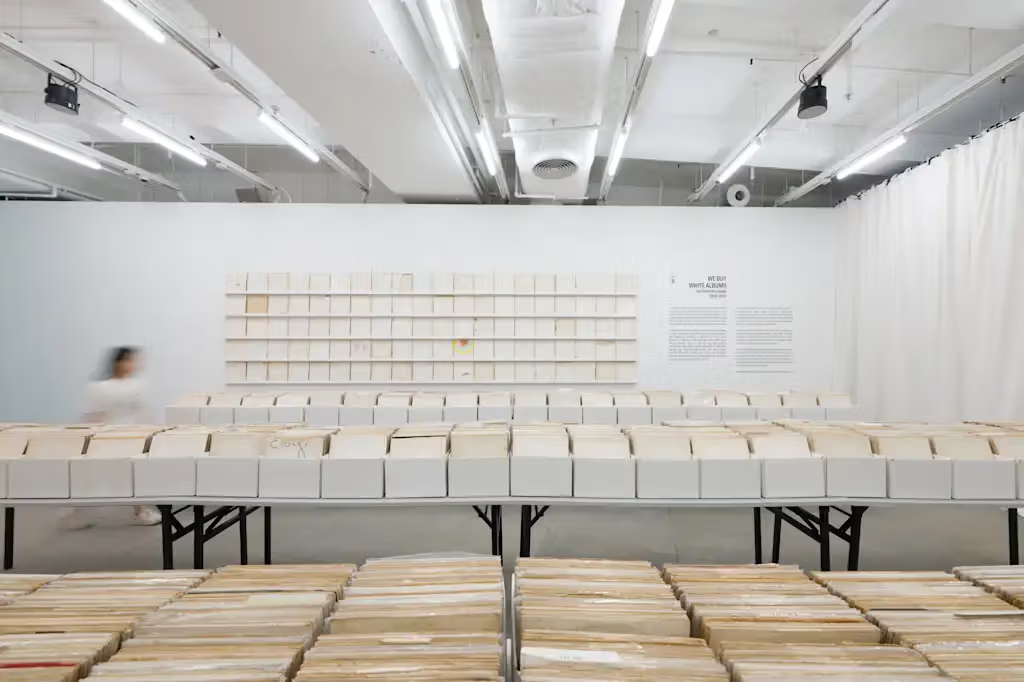
Photographs of the bright gallery show rows of white record boxes and sleeves on a wall. Paper ranges from near-white to yellowed, with writing and stains visible in places. As a dominant cover image almost disappears, attention moves to corners, colour differences and signs of use. For collectors accustomed to judging an object by its condition, these records raise another question: can wear also document time? How does the same music product become a different object in the hands of each owner?
When can you visit GOLD? Start with the Sunday closure
The exhibition runs until December 19, 2026. Regular opening hours are Wednesday to Saturday, noon to 6pm. It is closed on Sundays, Mondays, Tuesdays and public holidays, with November 1 listed as an exception. Sunday, October 25 is therefore not a regular visiting day; plans for the following week can begin with Wednesday, October 28. GOLD is on the ground floor of Remex Centre, 42 Wong Chuk Hang Road, with an entrance near the junction of Nam Long Shan Road and Wong Chuk Hang Road, accessible from Wong Chuk Hang MTR Exit A1.
If you include GOLD in a Wong Chuk Hang gallery route, allow time to listen attentively and look closely at paper. The two sides of records encourage different speeds of looking: one introduces choices through varied covers, while the other asks you to find differences among similar white squares. For digital music users, it is also a reminder that collecting concerns more than how many songs one owns. Objects pass through hands, rooms and years, accumulating details that a shared audio file cannot replace.