Why should a pair of shoes, a card or an inexpensive object belong in an exhibition? What We Regret Most at The Garage in Heath, Tsim Sha Tsui, pairs forty objects with stories submitted by the public. Running from October 8 to 27, it is co-curated by Kenny X. Li and Salomé Grouard, with spatial design by Honmi Studio. Regret moves from private drawers into a route that visitors can read slowly.
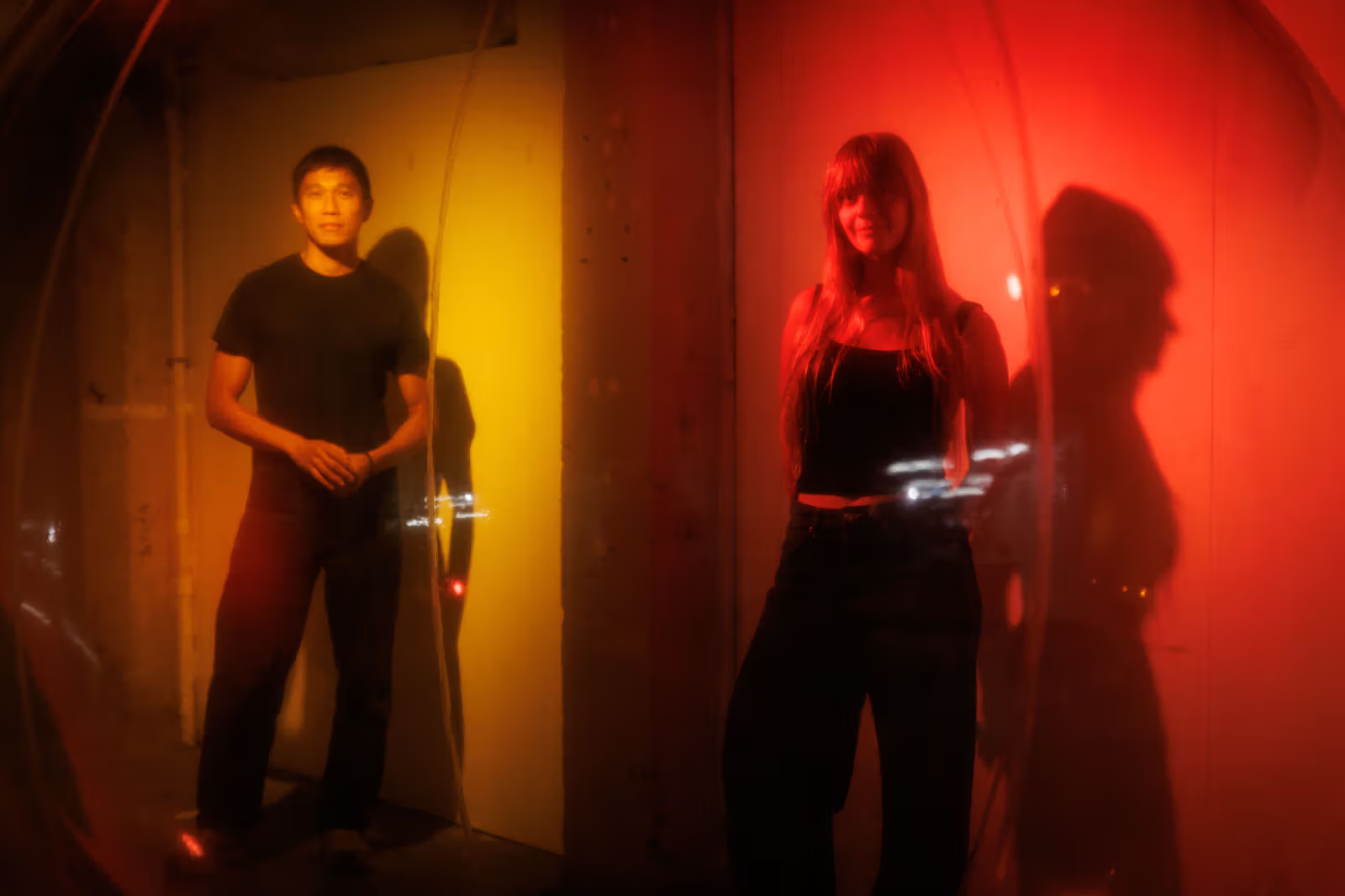
Kenny X. Li and Salomé Grouard in the exhibition they co-curated.
How does an ordinary object carry a memory?
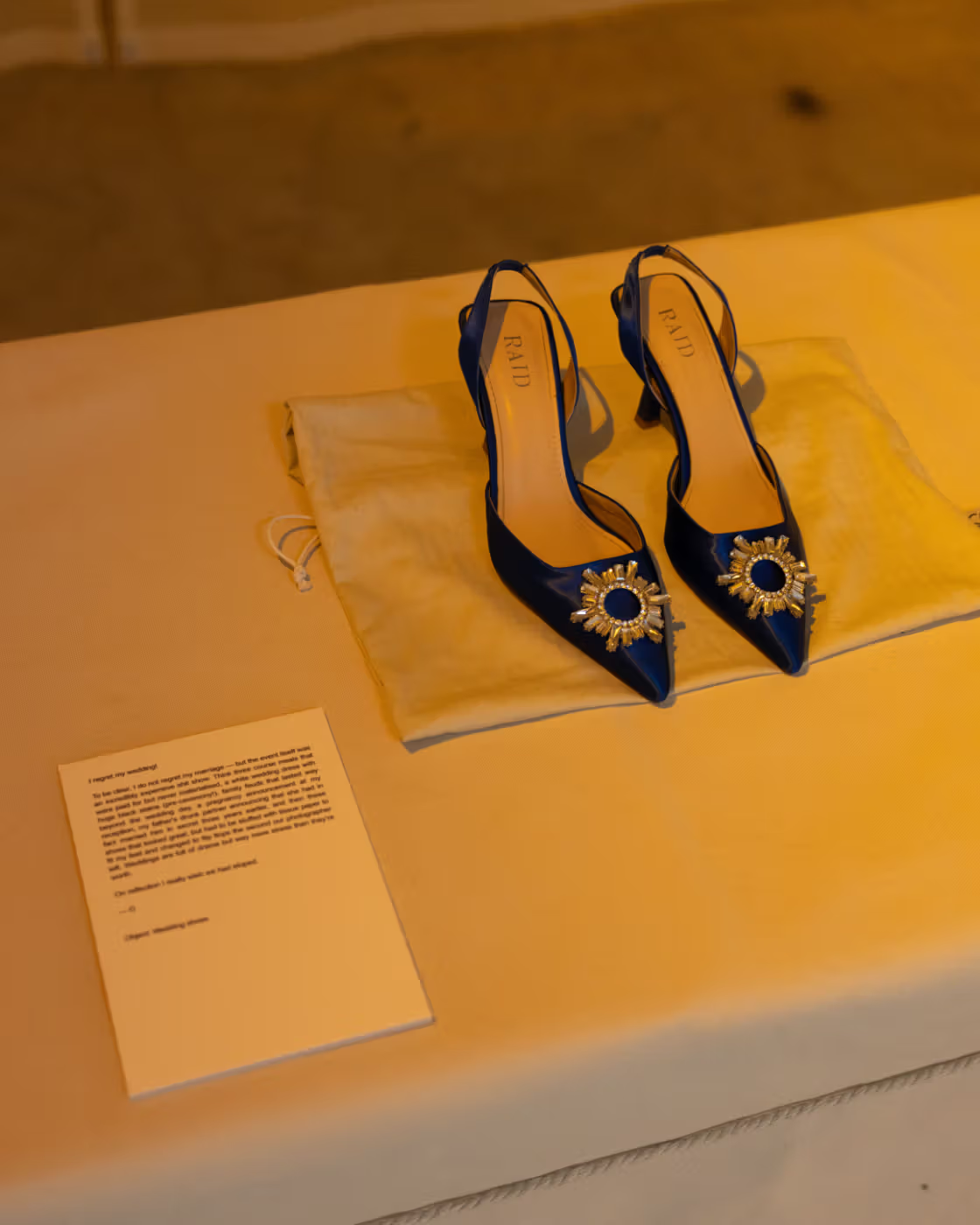
Objects appear alongside anonymous texts, with participants identified only by initials. Shoes, plastic roses and notebooks may not immediately communicate their importance to a stranger. A story supplies the connection with a choice, relationship or unfinished wish. The same thing can look ordinary while carrying a weight that is difficult for one person to replace.
Shoes and text pair an ordinary object with a personal story.
The arrangement leaves the order of attention to the visitor. Being drawn to an object first, or reading a sentence first, can produce different imaginings. Photographs alone can concentrate attention on attractive display. Comparing text and object offers a chance to understand whether what is being kept is the thing itself or an experience that remains unresolved. The scale encourages approaching, rather than photographing an entire wall from a distance.
What do translucent curtains change?
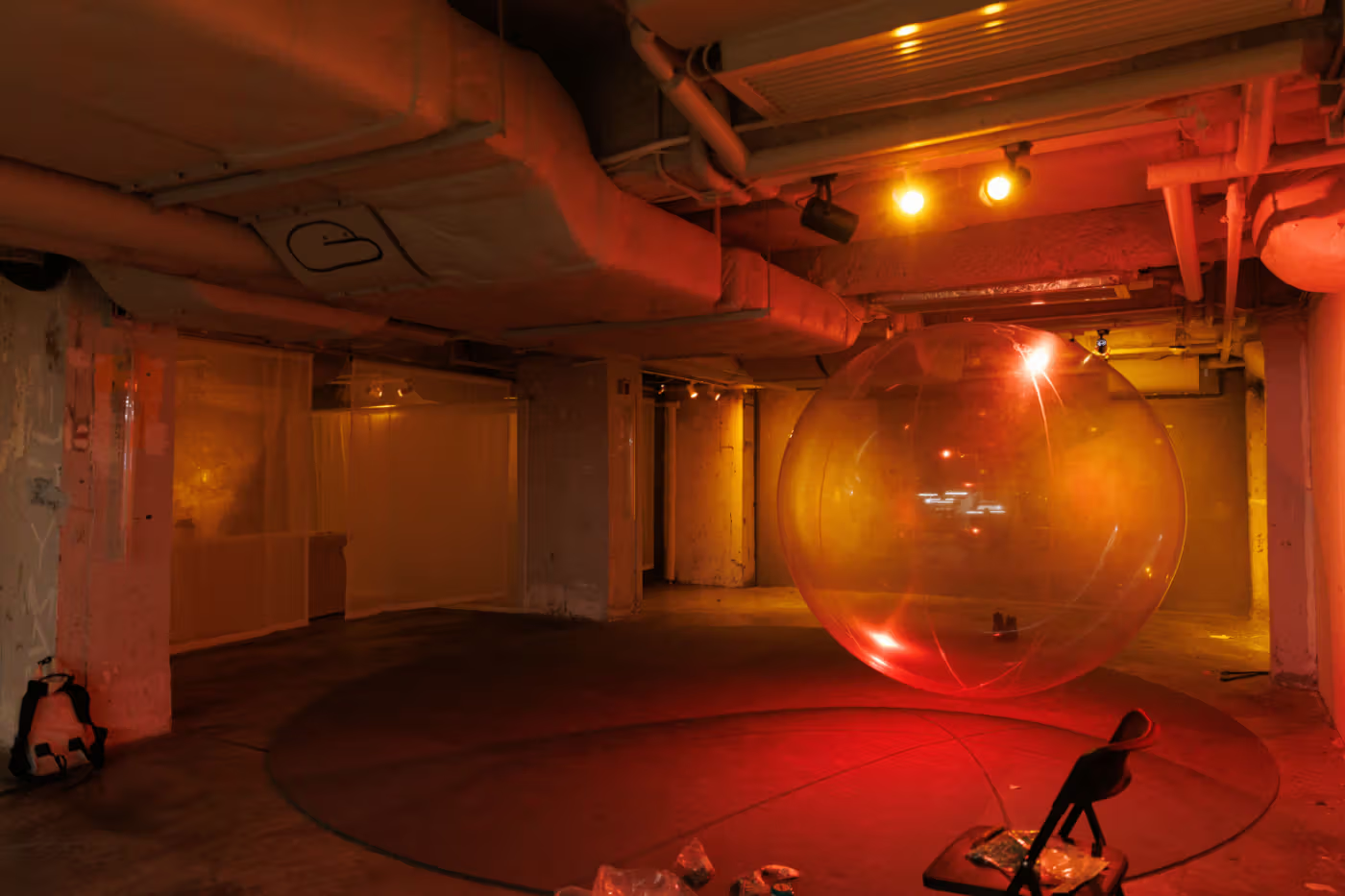
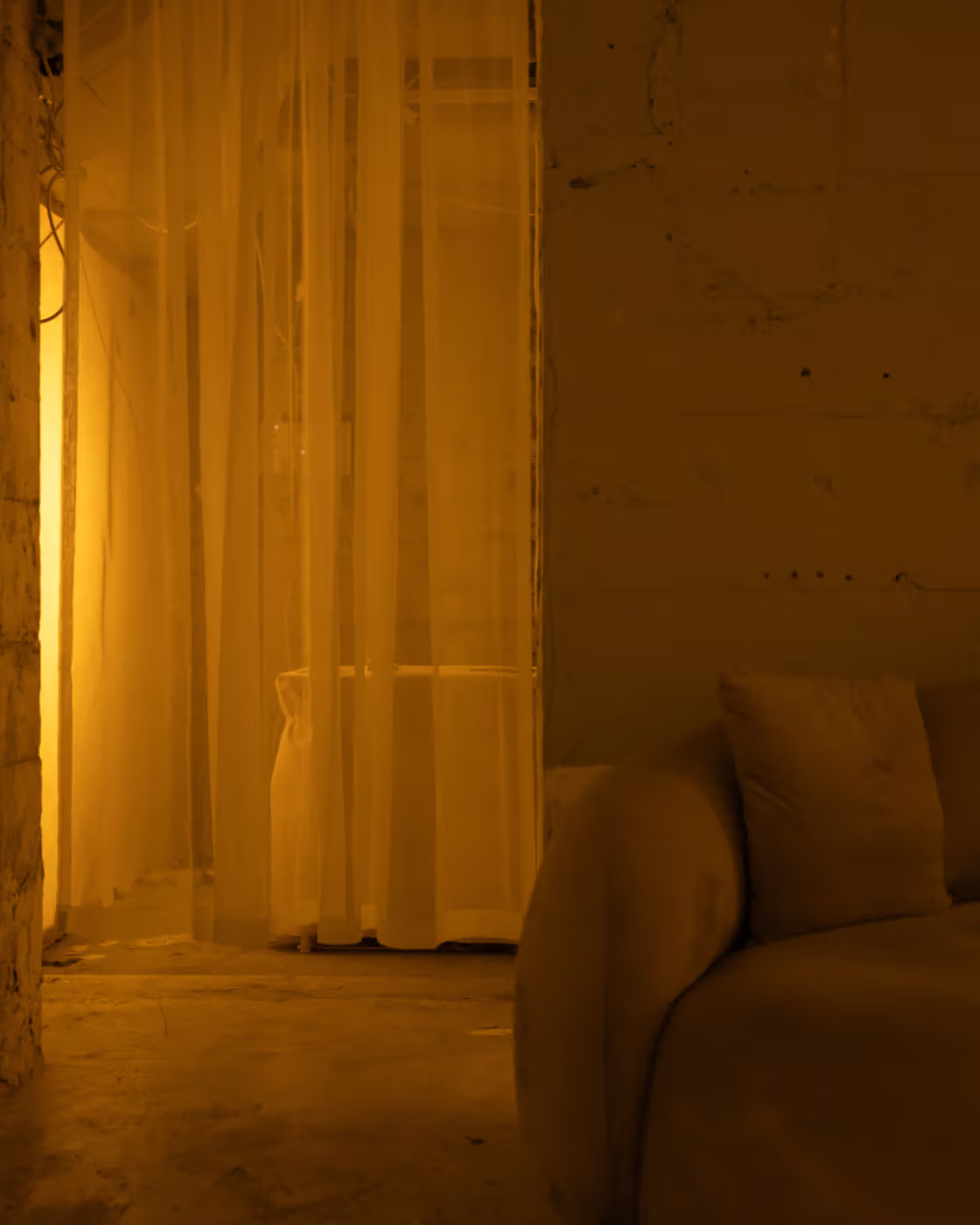
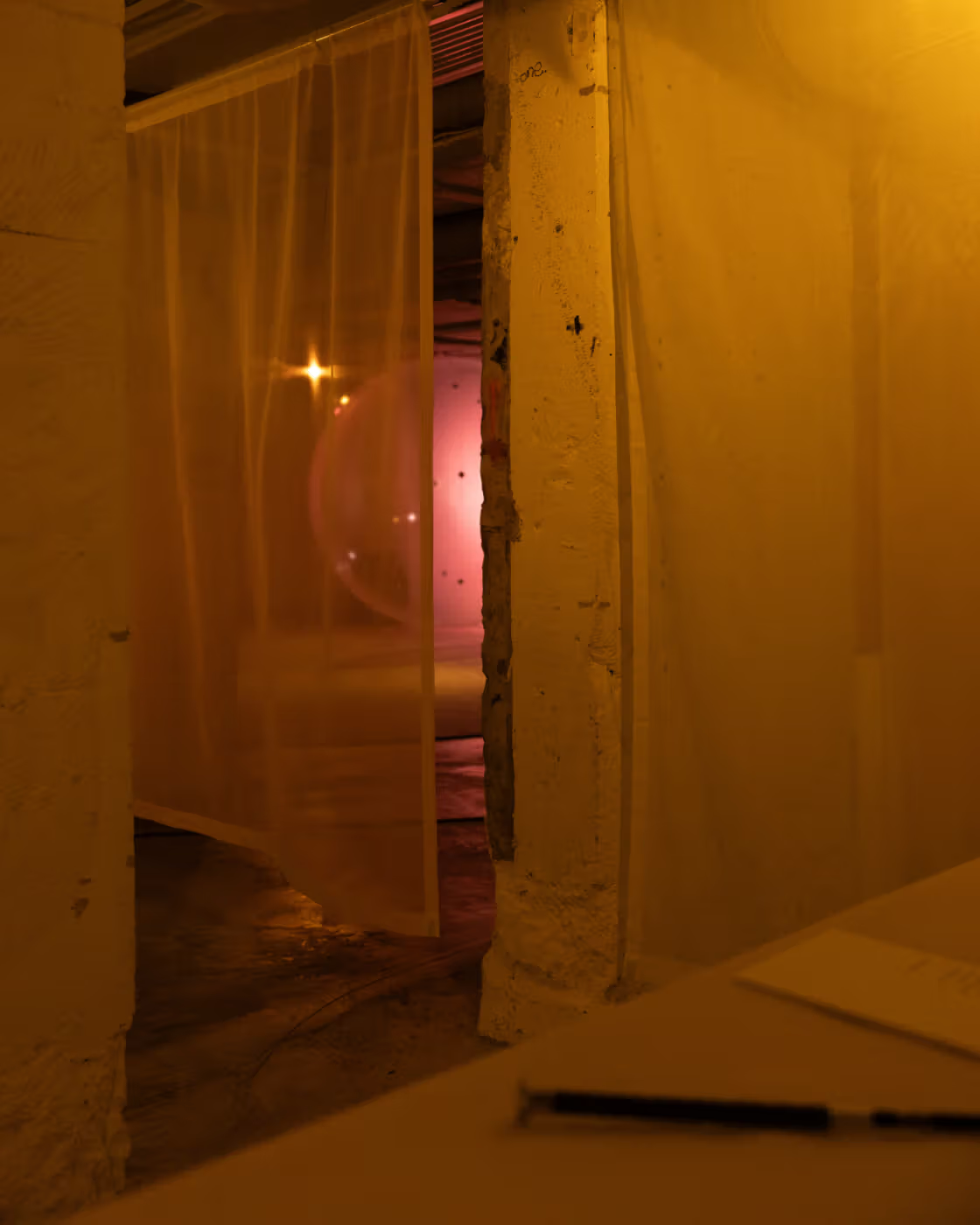
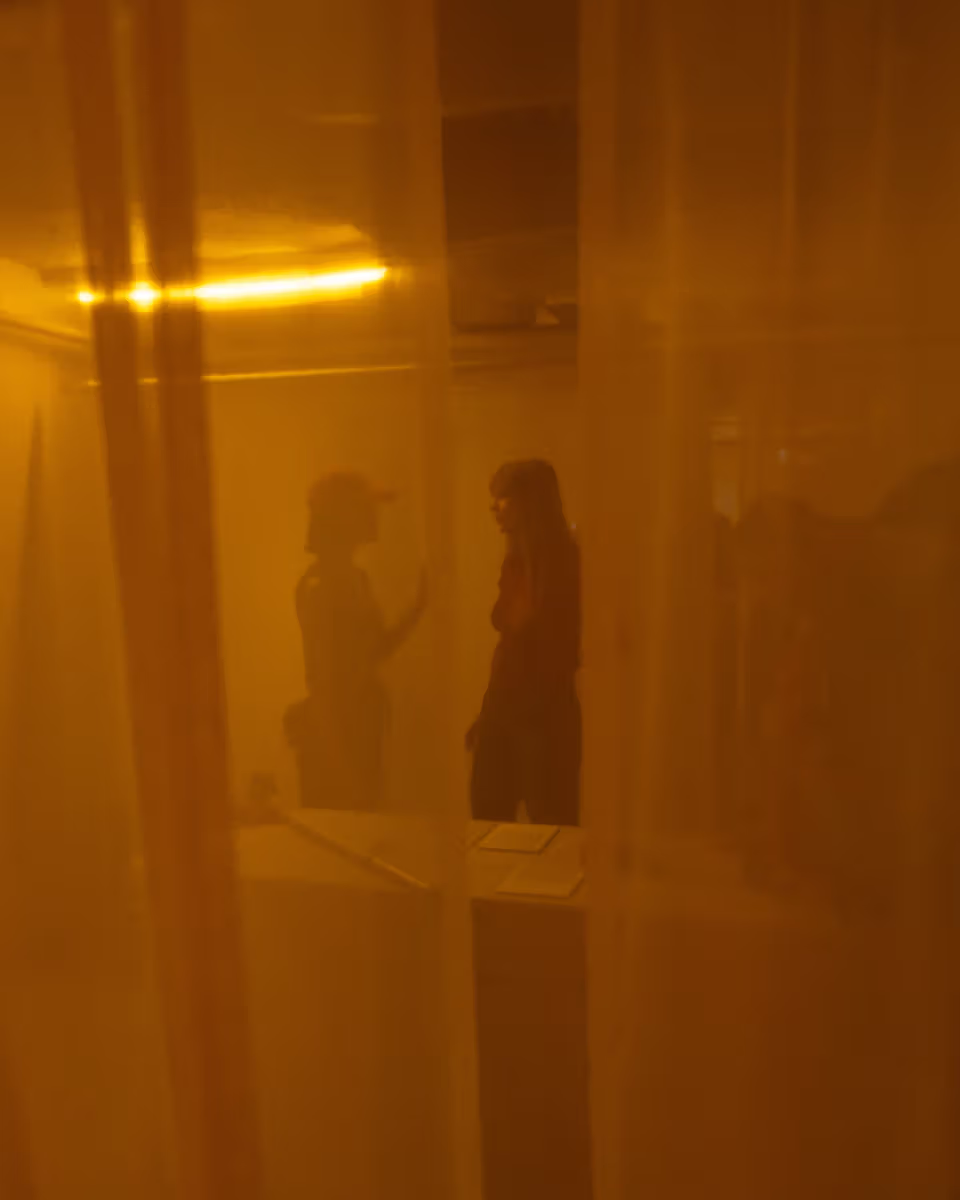
Photographs show concrete columns, exposed services and translucent curtains shaping the route, with warm light giving different areas their own depth. A curtain divides sightlines without entirely disconnecting adjacent spaces. Walking visitors can still sense light and silhouettes beyond it. For an exhibition about private memory, this offers a transition between public and intimate experience distinct from a completely closed room.
Translucent curtains divide the existing space into walkable areas.Curtains and passages keep neighbouring areas partly visible.
The Garage sits within Heath’s retail and cultural space in the basement of Chungking Mansions, with shops and food venues around it. This context keeps art connected with everyday life. Before and after entering, the city’s sounds and movements continue. Ordinary objects need not receive an extravagantly elaborate display to deserve serious attention.
Figures and light create layers through translucent curtains.
How can visitors participate beyond looking?
The project includes a regret wall for leaving thoughts, guided meditation, literary elements and cross-disciplinary performances. These offer different means of expression. Visitors need not disclose their own stories, and an art activity should not be treated as psychological treatment with guaranteed results. Reading quietly or writing a sentence can both preserve a personally chosen distance within the same space.
The exhibition is free and runs until October 27 at Heath, in the basement of Chungking Mansions, 36–44 Nathan Road, Tsim Sha Tsui. Allow time to read rather than treating a visit only as a photographic stop. What We Regret Most poses a direct question: when an object’s significance can finally be explained, can it help a stranger understand another person’s choice? Answers may differ, while both sharing and silence remain possible ways of looking.