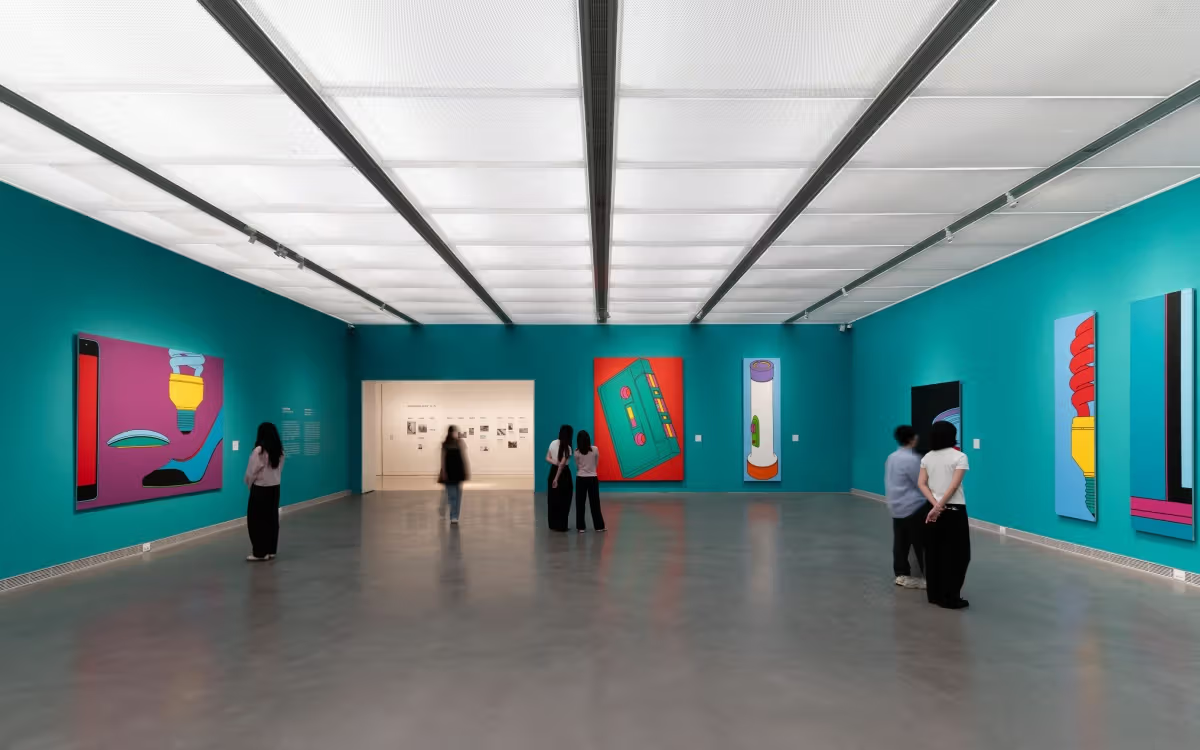
What can familiar headphones, pins, bulbs and computers say once their original uses are removed? Kaohsiung Museum of Fine Arts’s Michael Craig-Martin: The Language of the Everyday answers through more than 70 works, running October 3, 2026–March 7, 2027, across galleries 101–103 and the grounds. The artist’s first major solo exhibition in Taiwan places concepts, line, colour and digital animation on one viewing route.
Why is a glass of water called An Oak Tree?
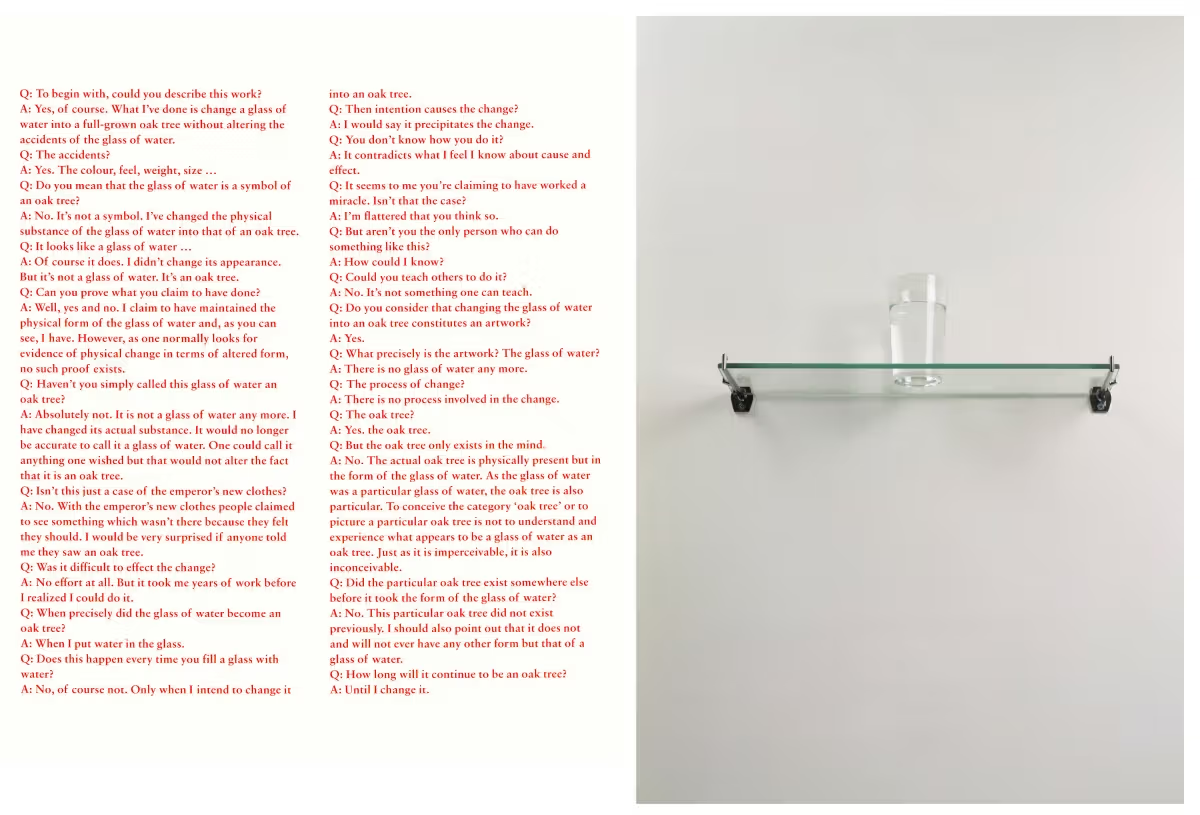
The 1973 An Oak Tree consists of a glass, water, a support and text, creating a gap between the title and the object before us. It does not rely on a realistic tree shape; believing the artist’s act of naming becomes part of looking. Alongside later vivid everyday imagery, it shows a continuing concern with objects and cognition, moving from repurposed readymades towards a clearer pictorial language.
An Oak Tree consists of water, a glass, a support and text.
From the mid-1970s, ordinary objects such as pins, screws and laptops became protagonists in line drawings. Saturated colours do not follow real materials, while crisp contours resemble industrial diagrams. We recognise the object immediately but cannot use it as usual. Magenta and turquoise exhibition walls extend this method: rather than merely carrying paintings, they join their blocks of colour to alter bodily orientation in space.
Cosmos is not a star field, but everyday objects recombined
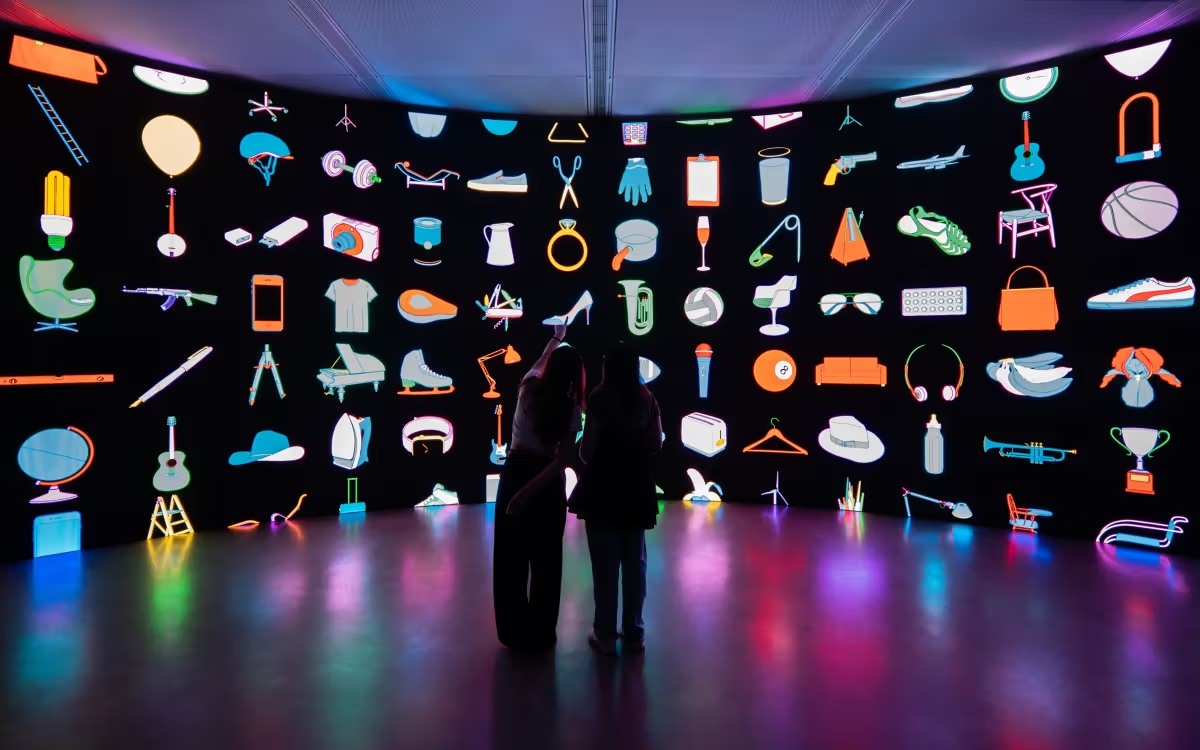
The digital installation Cosmos debuted at London’s Royal Academy of Arts in 2024 and has been remade as a curved LED theatre for KMFA. Its 184 panels form an image four metres high and 11 metres wide, with five-channel sound and a 21-minute-30-second running time. Instead of looking at pictures from outside, viewers are surrounded by the same vocabulary as objects change size, move and overlap.
Everyday-object imagery in the curved LED theatre Cosmos.
Technical direction and immersive-image design are by Daniel Jackson, combining particle systems, 3D animation and physical simulation to reuse roughly 40 years of the artist’s everyday-object imagery. This “cosmos” does not simulate astronomy; it frees a personal visual dictionary from gravity and scale. Returning to the paintings afterwards allows a comparison of how the same line guides the eye when still and when moving.
Outside, line sculptures let landscape pass through objects
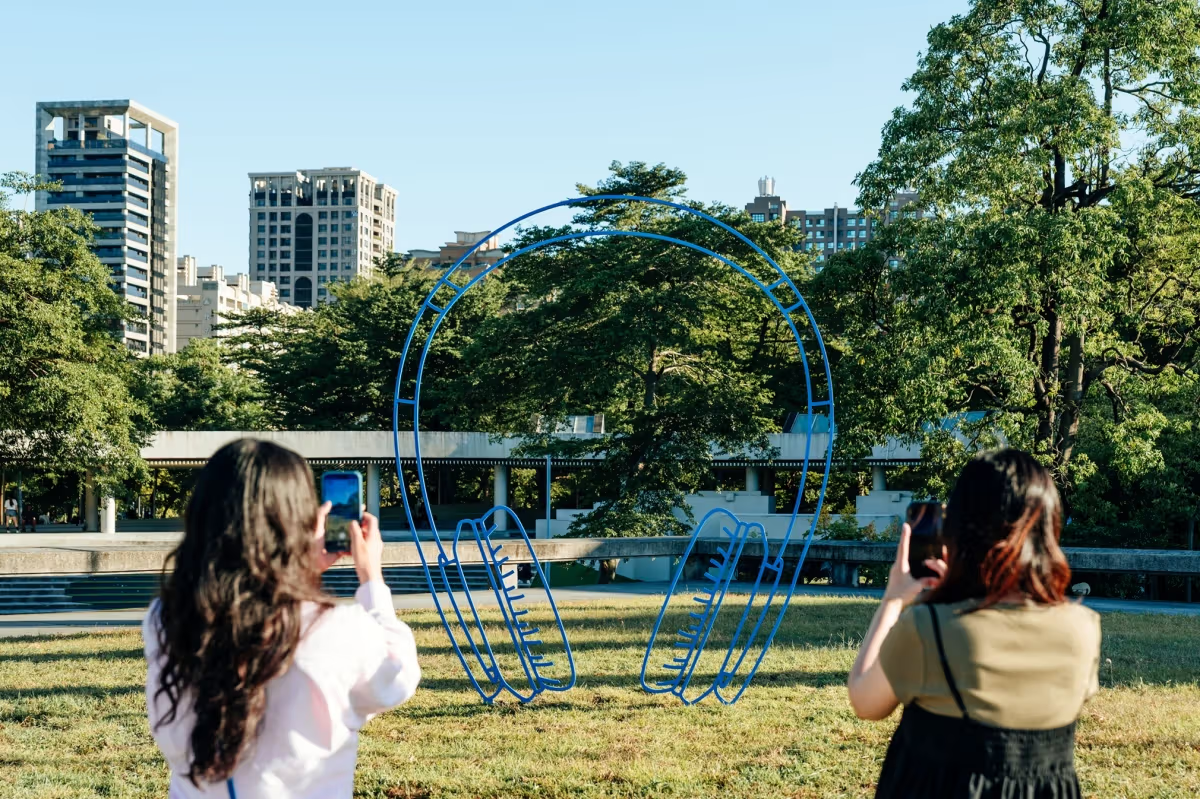
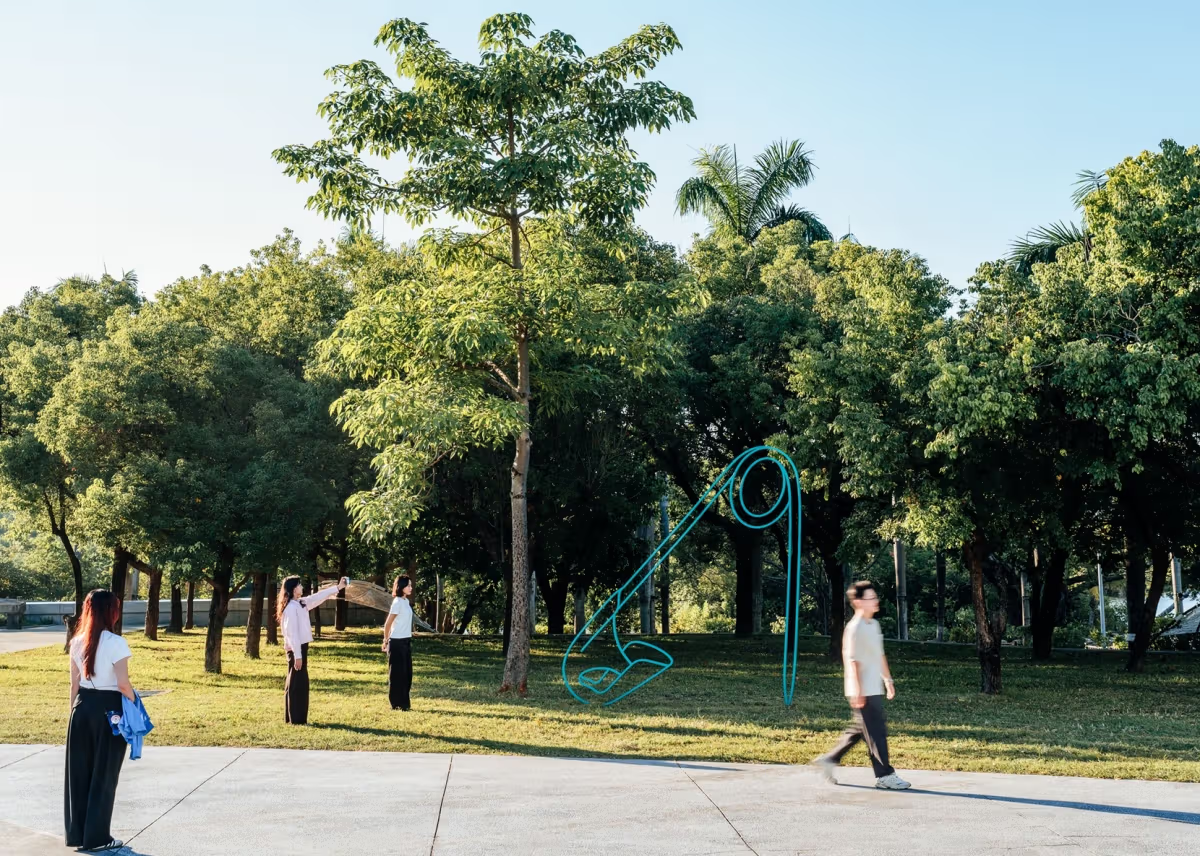
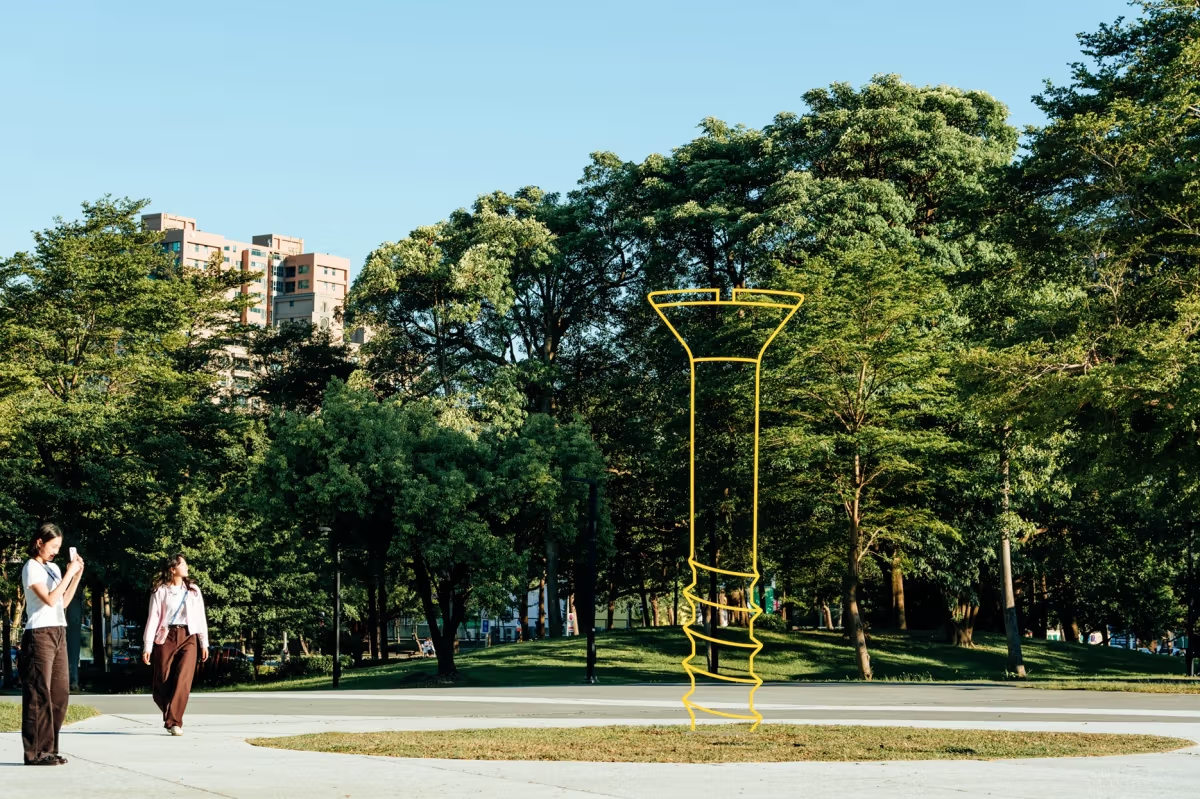
Four large outdoor sculptures turn flat outlines into three dimensions, including blue headphones, a turquoise safety pin and a yellow screw. Unlike solid monuments blocking the background, their open lines admit trees, sky and passers-by. Seen frontally they are legible household objects; from the side they may contract into a few lines. A viewer’s steps become part of the changing form.
A large blue headphone line sculpture in the grounds.Landscape passes through a turquoise safety-pin sculpture.
Craig-Martin also taught for many years at London’s Goldsmiths, connecting him to the development of the Young British Artists generation. Rather than first sorting the show by art movements, start with the most familiar object and ask what has been removed from its colour, proportion and purpose. Carry that question to An Oak Tree, Cosmos and the outdoor sculptures. Allow 21 minutes 30 seconds for the complete film, then walk outside to connect the same lines across three scales.
A yellow screw sculpture outlines an object with open lines.