How to visit Sou Fujimoto’s two Taipei venues: NT$250 for a model forest and a 1:5 Grand Ring
Primitive Future Forest runs through January 3, 2027. The main museum traces 30 years; a 4.1-metre-high partial Expo roof and film at the satellite venue bring architectural scale to the body.
Sou Fujimoto: Primitive Future Forest is showing at Taipei’s Jut Art Museum and the former Jianguo Brewery’s finished-goods warehouse from August 15, 2026, to January 3, 2027. Six themes and more than 100 architectural projects trace 30 years at the museum, while the satellite venue holds a 1:5 partial model of the Osaka Expo Grand Ring. First read how design happens, then enter an enlarged structure rather than treating every model as a miniature house.
Forest is a method of coexistence, not just a shape
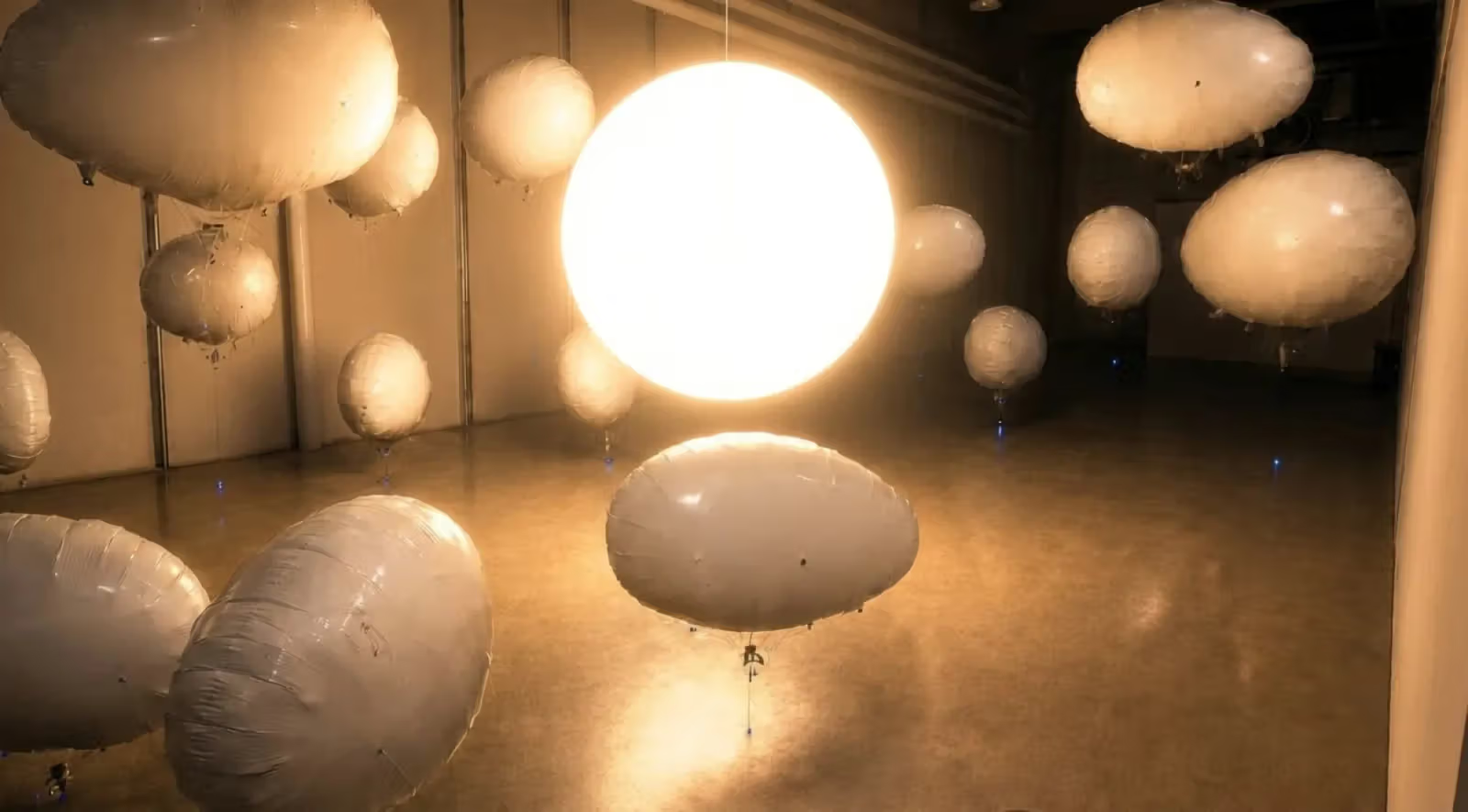
Born in Hokkaido, Fujimoto understood space through diverse, interwoven woodland. The exhibition’s forest therefore includes not only nature but people, buildings and cities accommodating one another. More than 60 project images at the entrance juxtapose early and recent work. A suspended future-city installation imagines spherical homes, greenery and connections beyond floor levels a century ahead: a thinking tool, not an urban project already under construction.
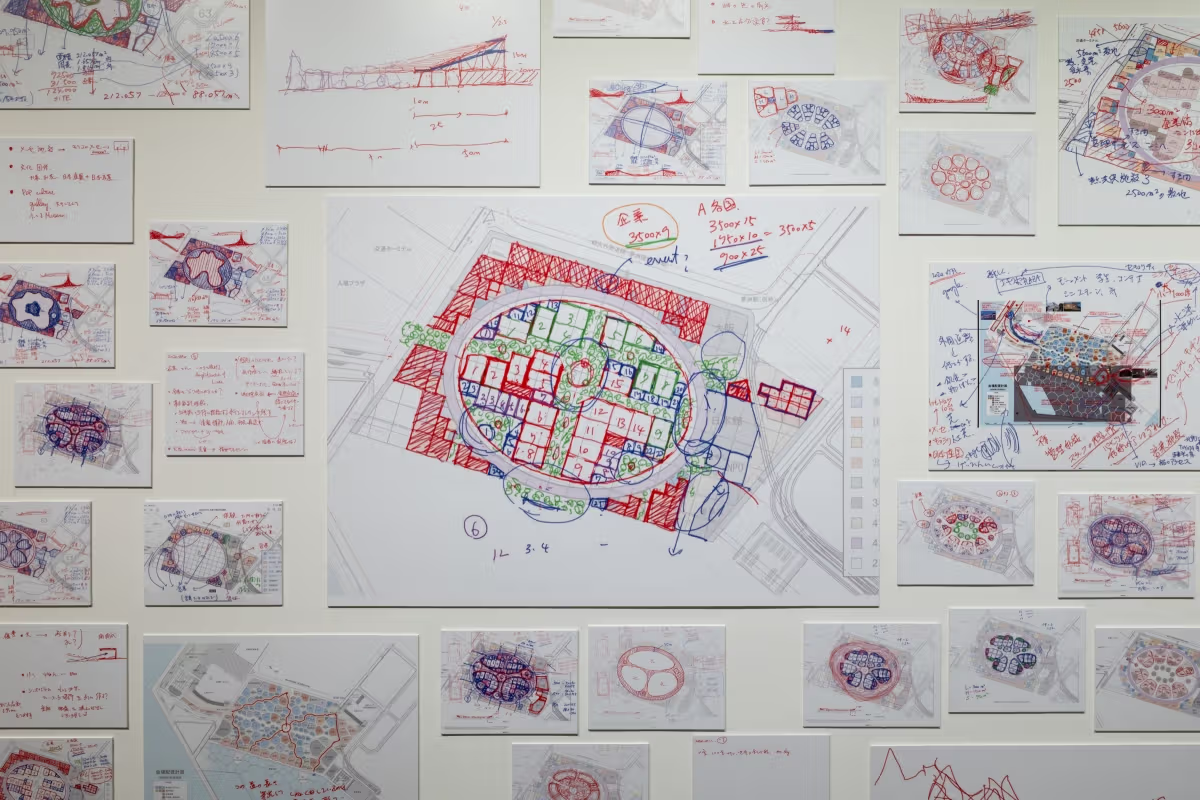
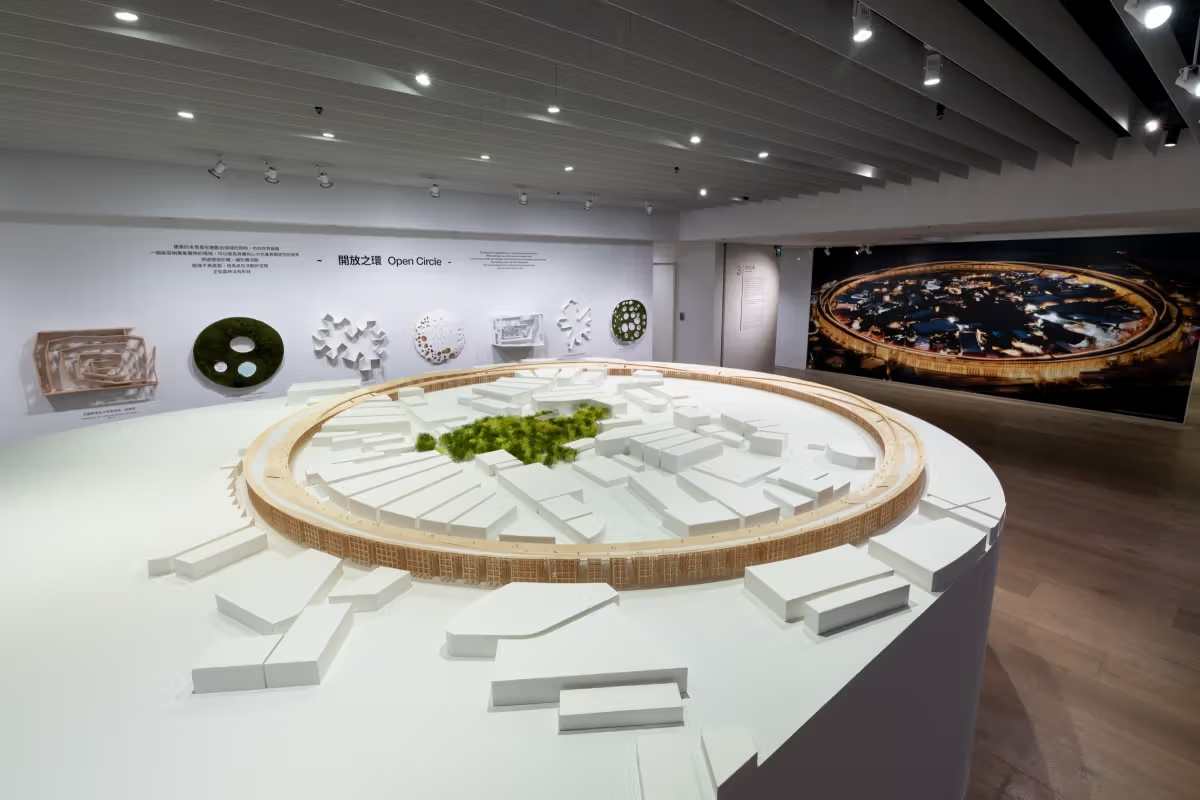
The Open Circle theme uses a 1:200 Grand Ring model and sketches to explain how enclosure and openness coexist. A ring can create a shared centre without blocking outward connections. Comparing models and revisions shows a process beyond choosing an attractive circle and filling it with functions: protection, openness, crowds and circulation are adjusted repeatedly, allowing architecture to hold differences rather than erase them.
Revised sketches reveal the Grand Ring’s design process.
In the model forest, crisps and empty bottles also offer clues
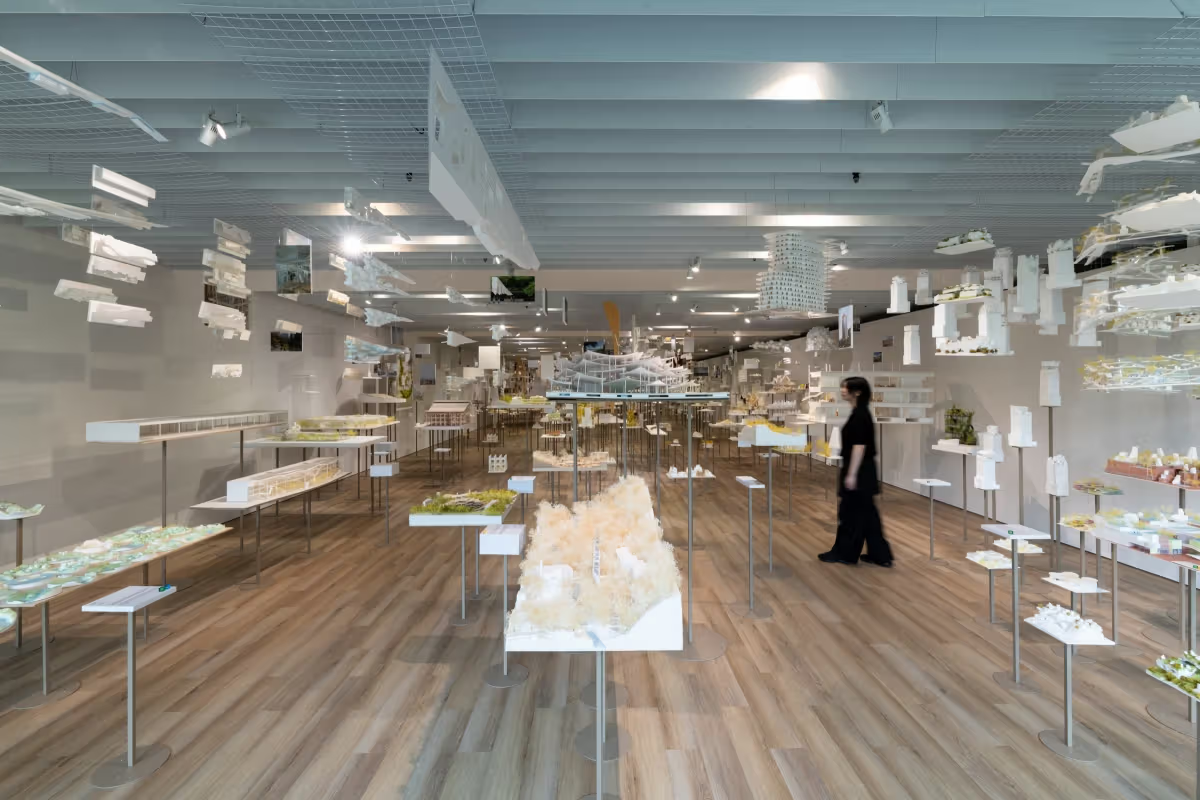
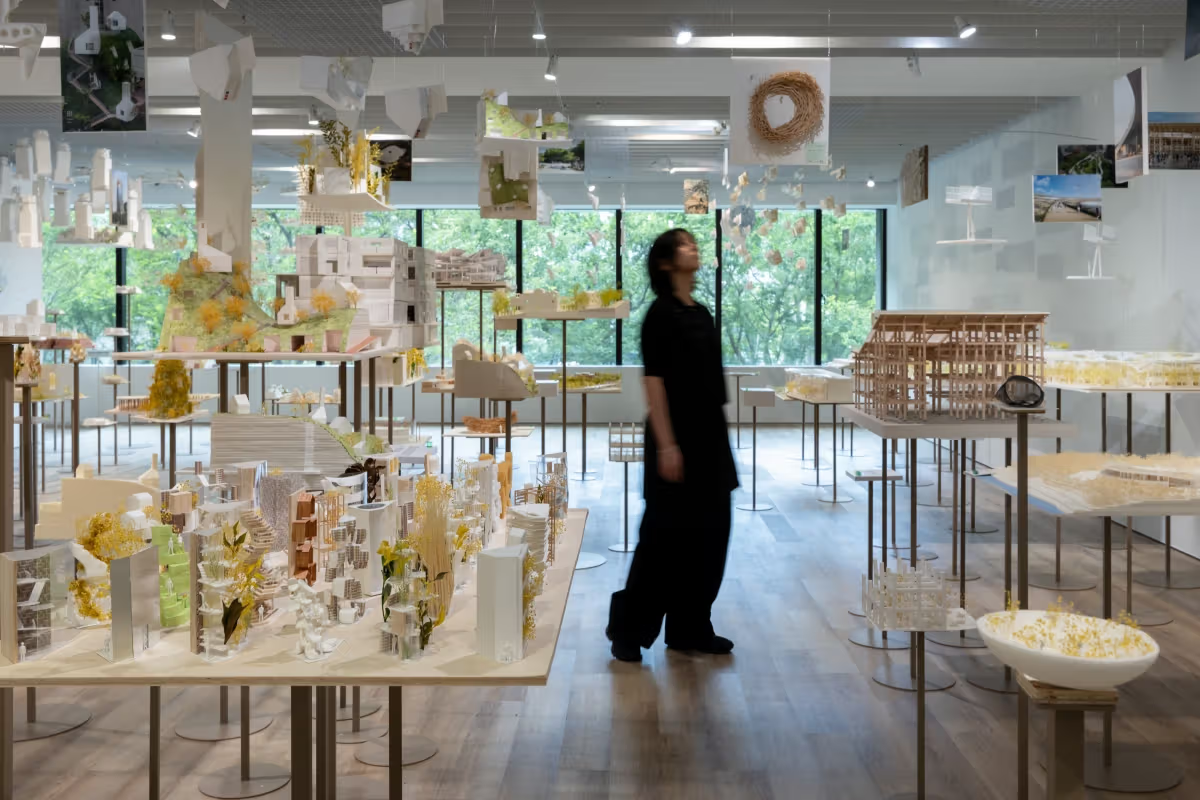
Forest of Thoughts displays models at different heights and even suspends them, prompting new angles as visitors move. Three threads concern opening and enclosure, parts forming wholes, and spaces not assigned a single use in advance. Coloured acrylic blocks connect labels to concepts, and one project can belong to several threads: they need not become three fixed styles.
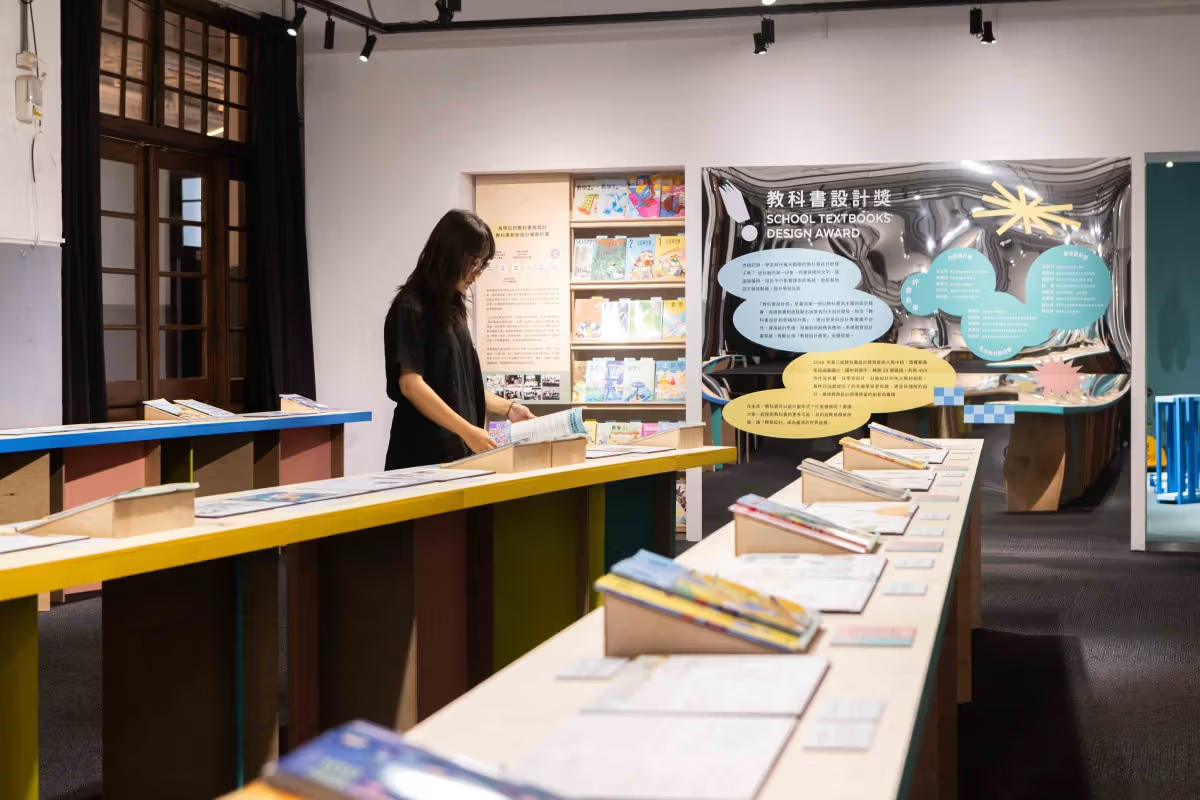
Visitors move among models and suspended installations.
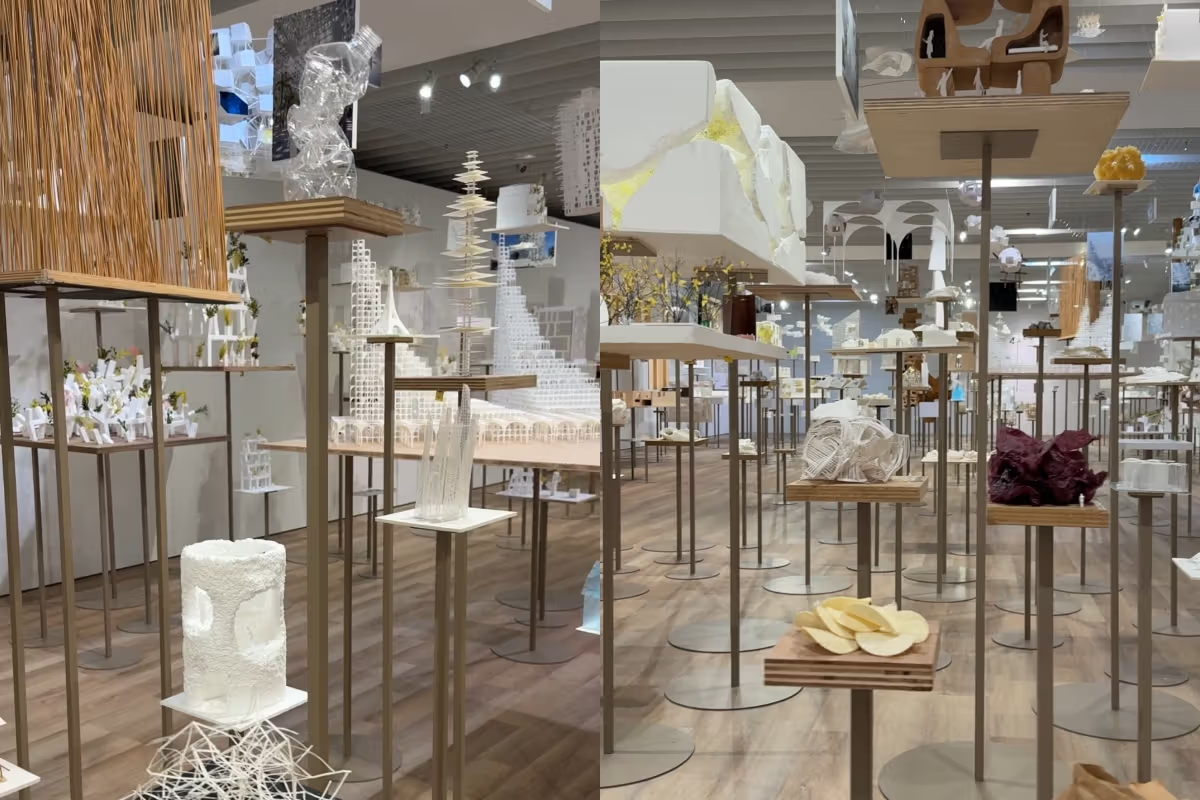
Fruit-protection mesh, crushed plastic bottles and crisp models also appear: porous packaging, distorted surfaces and gaps between stacked pieces become spatial prompts. Forest of Traces, supervised by architectural historian Kurakata Shunsuke, gives timelines, manuscripts and records a place alongside repeated revisions. Begin with an ordinary object, then look for how it changes form in drawings and models.
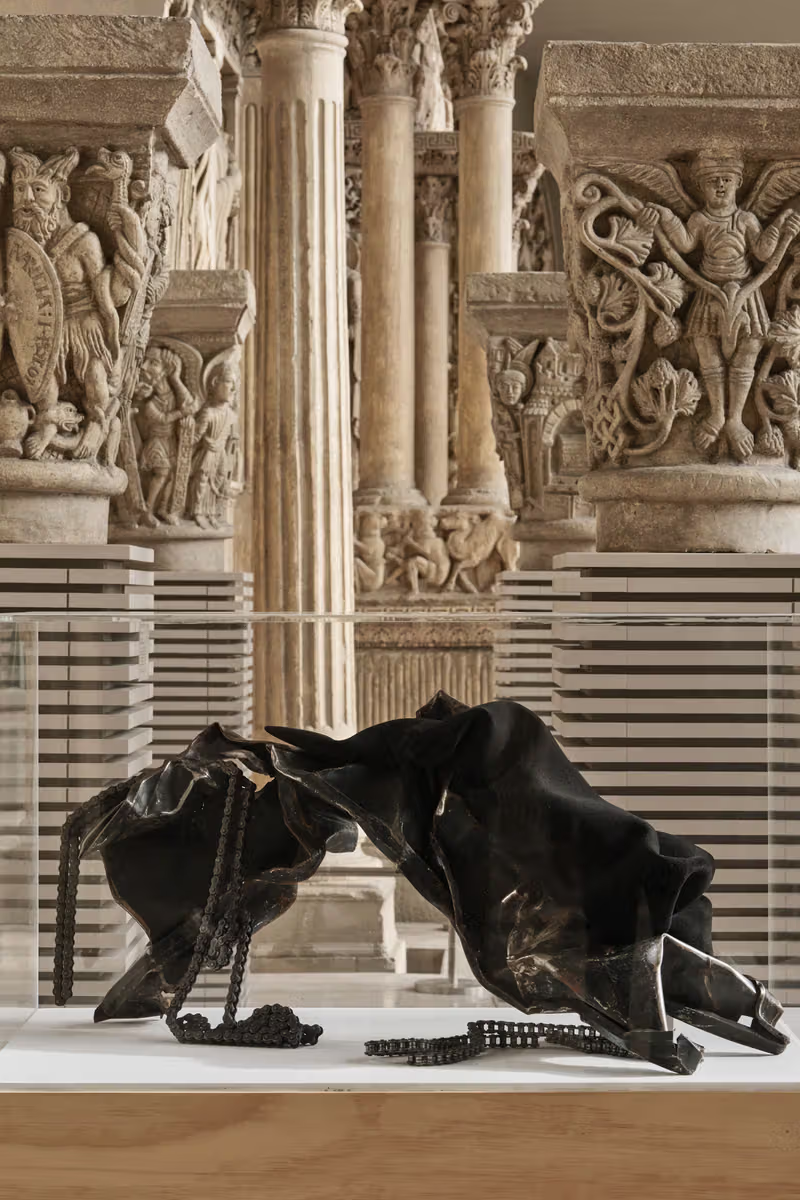
Models and everyday objects open spatial possibilities together.
One ticket covers both venues on different days; buy before the satellite visit
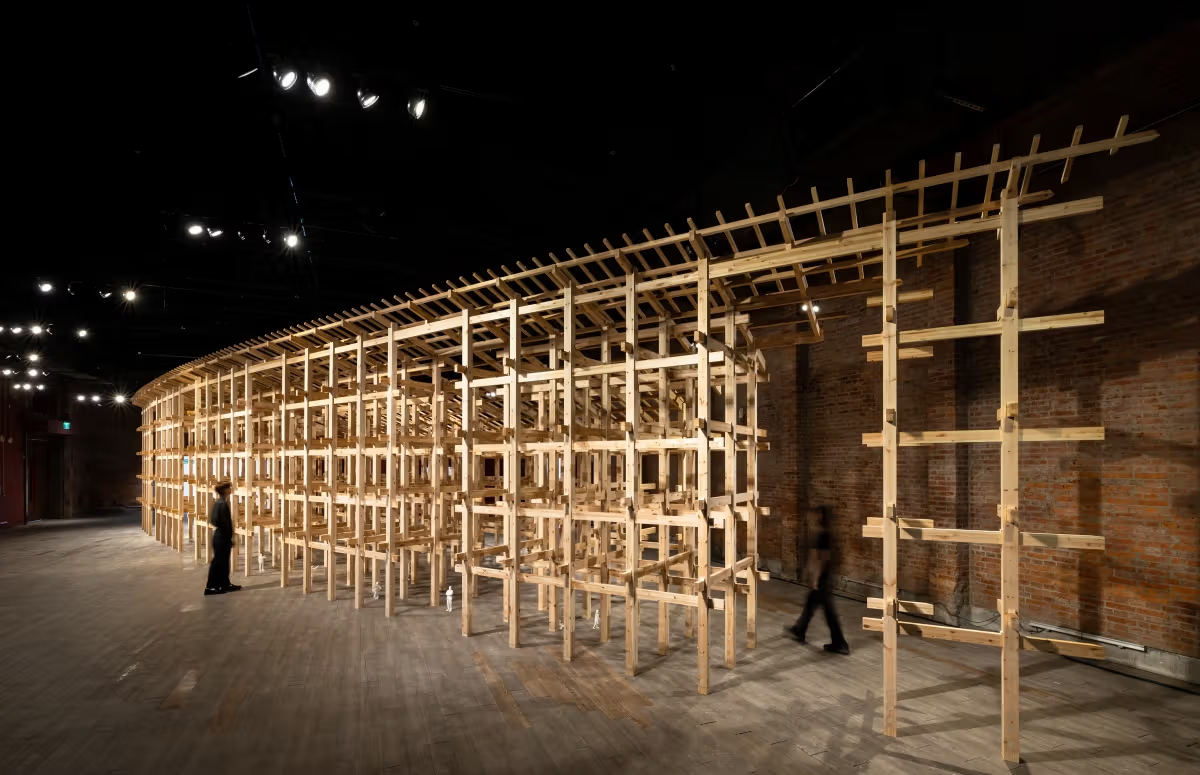
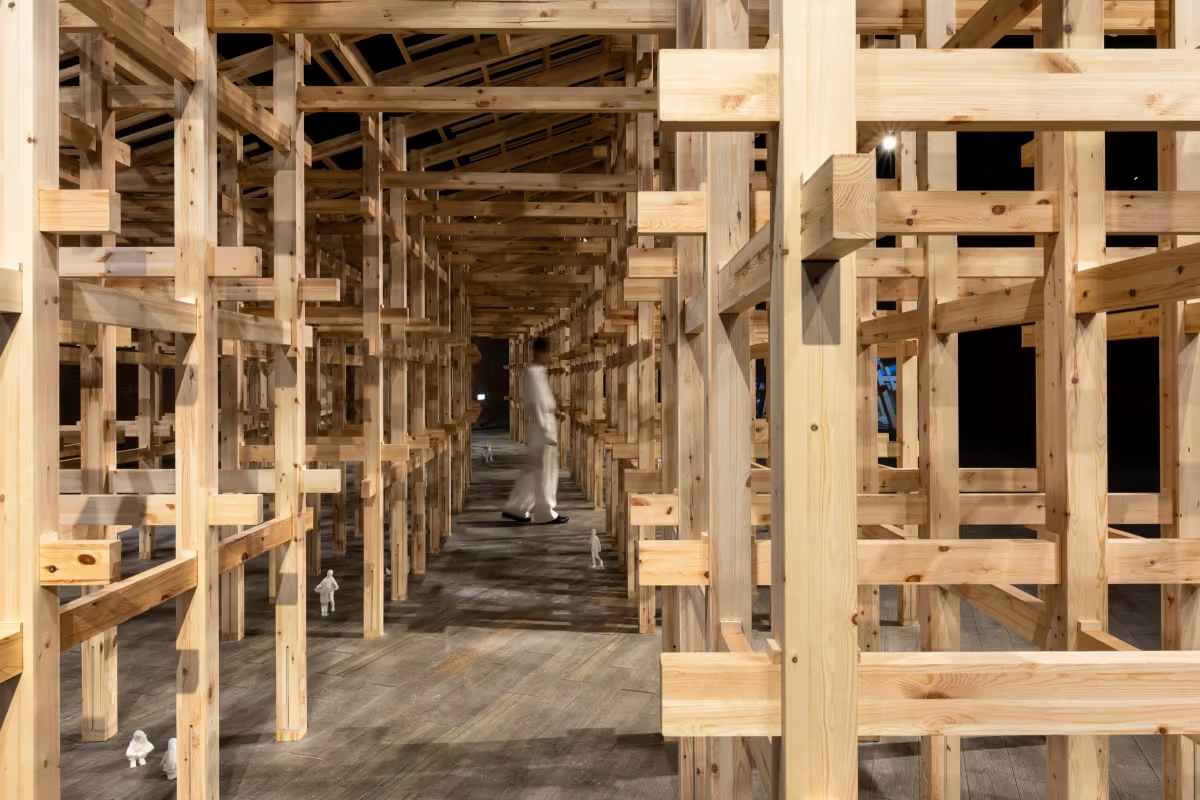
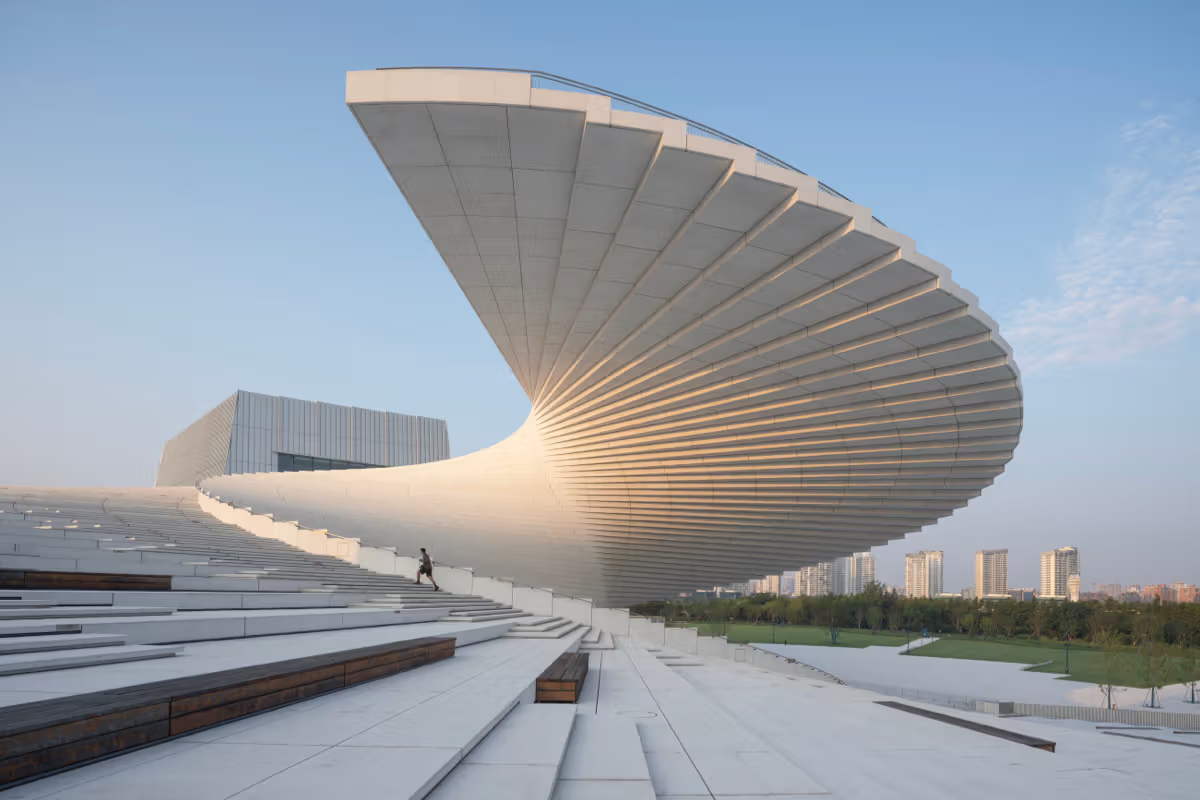
The brewery’s 1:5 partial Grand Ring rises around 4.1 metres. Visitors can circle and enter it, contrasting with the smaller complete model at the museum. A 15-minute film records people and sounds from morning to evening at the Osaka Expo roof. Architecture includes not only rows of posts but light, pauses and shared use. Watching the film before passing through the model explains scale more effectively than taking a panoramic photograph alone.
A complete Osaka Expo Grand Ring model in Open Circle.The 1:5 partial Grand Ring at the Jianguo Brewery satellite venue.
Official full admission is NT$250, concession NT$200, covering both venues on different days during the exhibition. Students can make a single free visit on Wednesdays with proof. Both normally open Tuesday–Sunday 10am–6pm and close Mondays; the satellite has no on-site ticket sales, so purchase online first. The museum is at 178 Civic Boulevard Section 3, and the warehouse at 40 Lane 25, Songjiang Road. Separate days leave time to digest dense models and bodily scale.
A walk-through timber model reveals continuous columns and scale.