Stone Island No Seasons: Why Six Jackets in One Lead-Grey Colour Look Different
One hooded jacket takes on six signature fabrics, unified by Piombo grey. From pockets and hood construction to a removable liner, this is a guide to the Autumn/Winter 2026 material comparison.
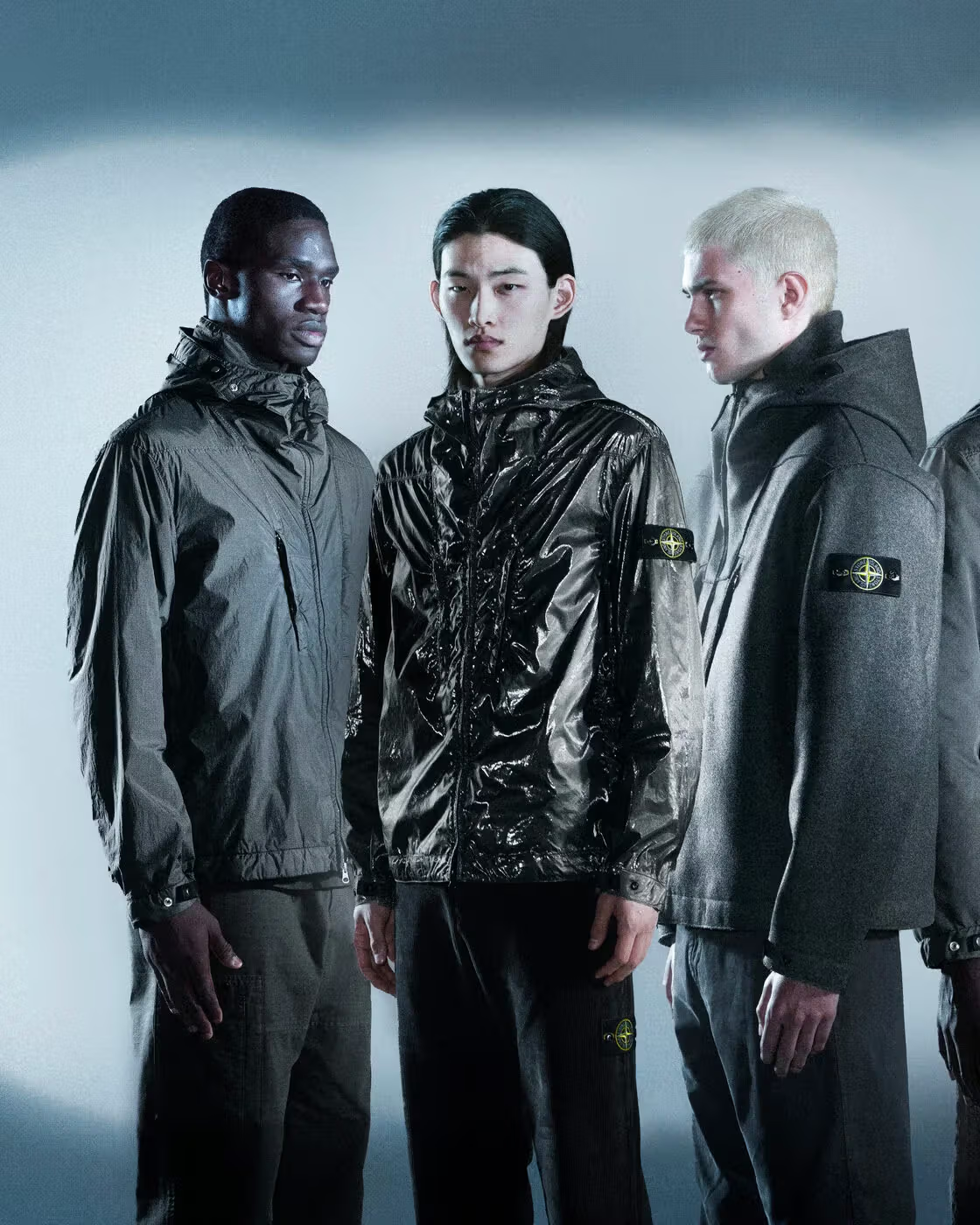
Stone Island continues its No Seasons project for Autumn/Winter 2026, realising one hooded jacket in six fabrics, all dyed Piombo lead grey. The styling project published in Korea in October places similar silhouettes and colours side by side. What really changes their appearance is the surface, drape and way each fabric absorbs dye. The collection shifts the question of choosing outerwear from finding a new colour to comparing how materials change one structure.
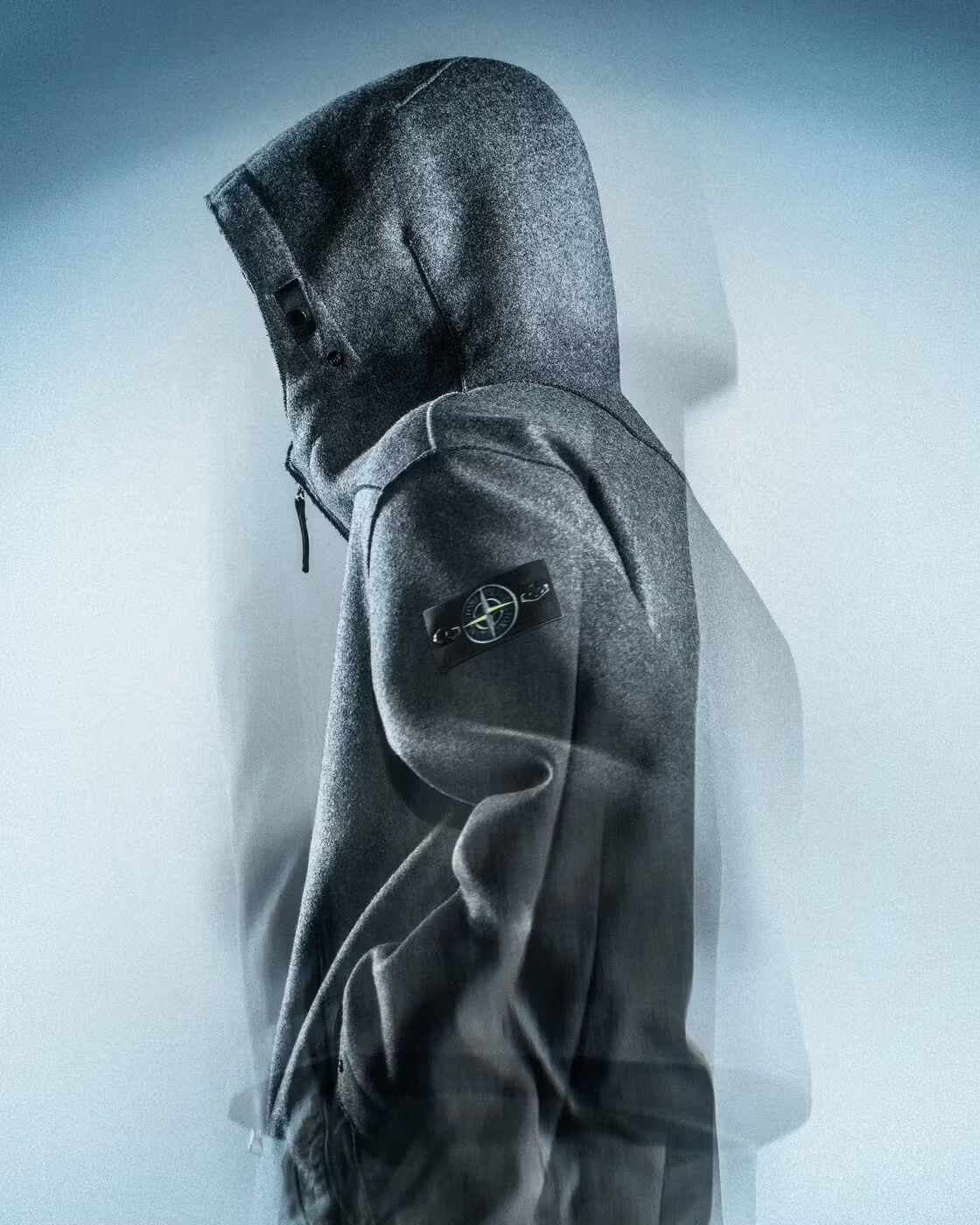
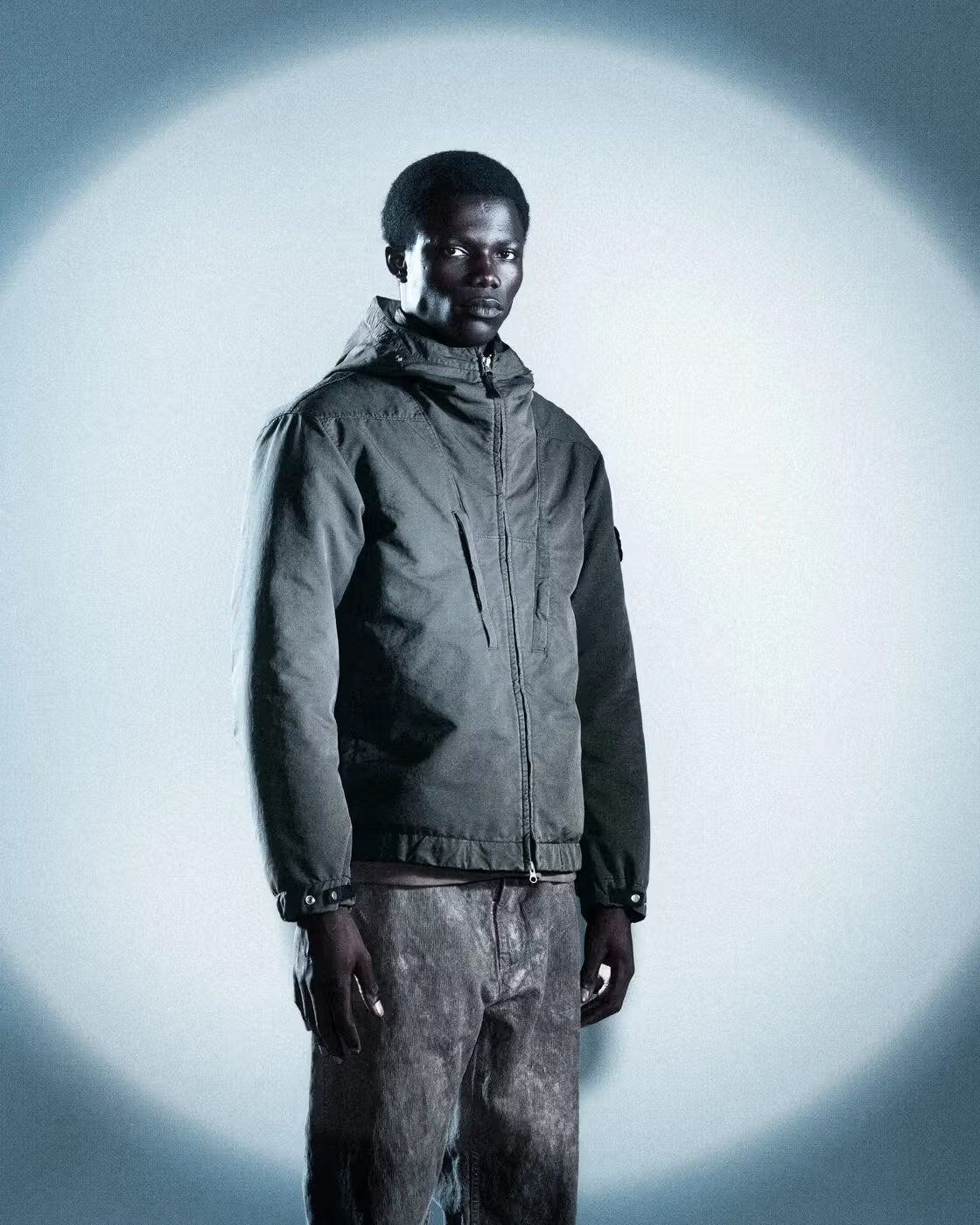
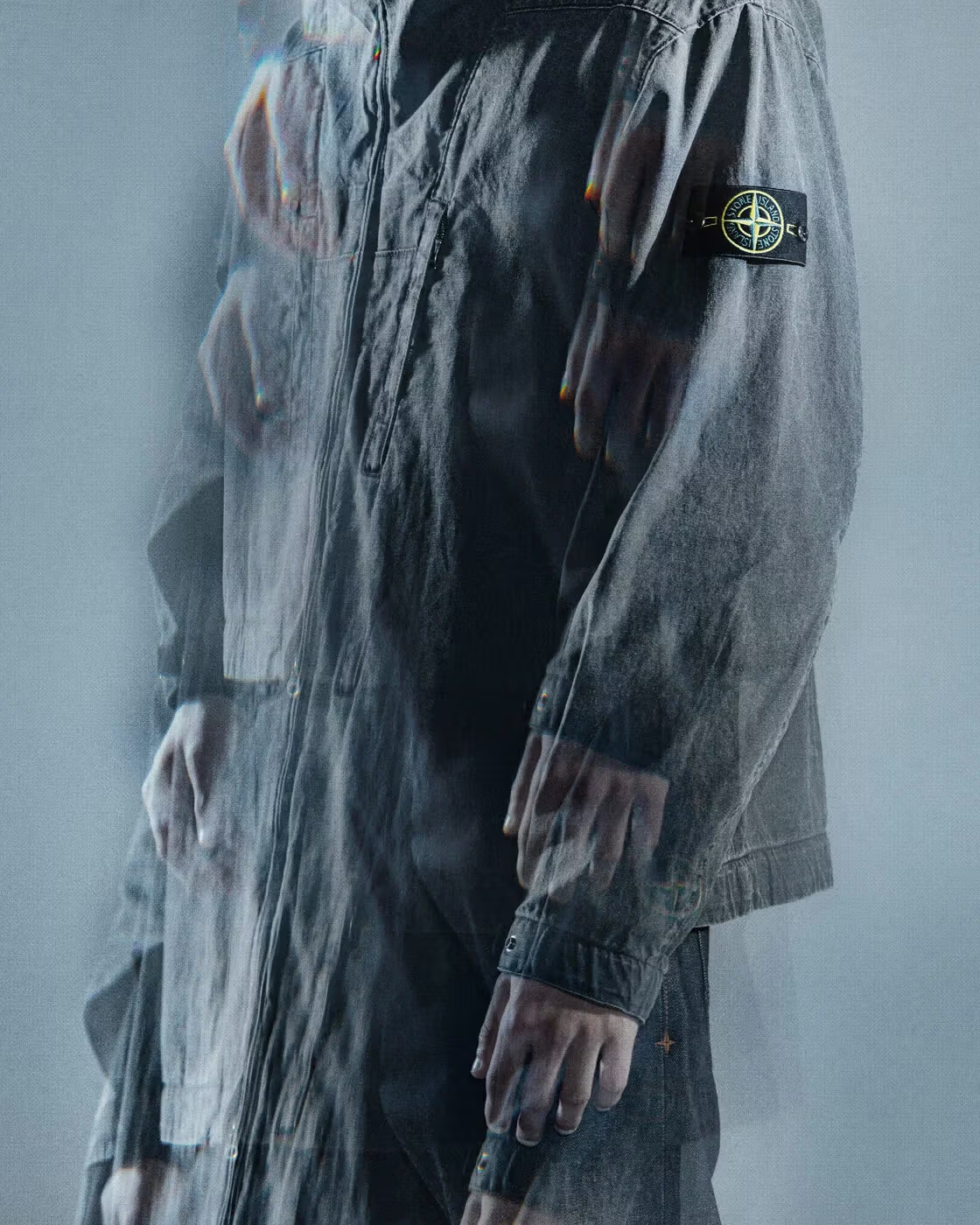
The side silhouette of a hooded jacket and its sleeve badge.A full-length look featuring a hooded jacket with a quieter surface.
Fix the silhouette first, then let the fabrics speak
No Seasons began as Massimo Osti’s design experiment from 1989 to 1994, concerned with continuity and evolution. The six contemporary jackets share a three-dimensional hood, tape drawstring, articulated central panel, concealed-zip chest pockets, side pockets and snap-adjusted cuffs. Keeping the main storage and adjustment points consistent makes the material differences easier to read. The sleeve badge remains, but variations do not depend on continually adding decoration.
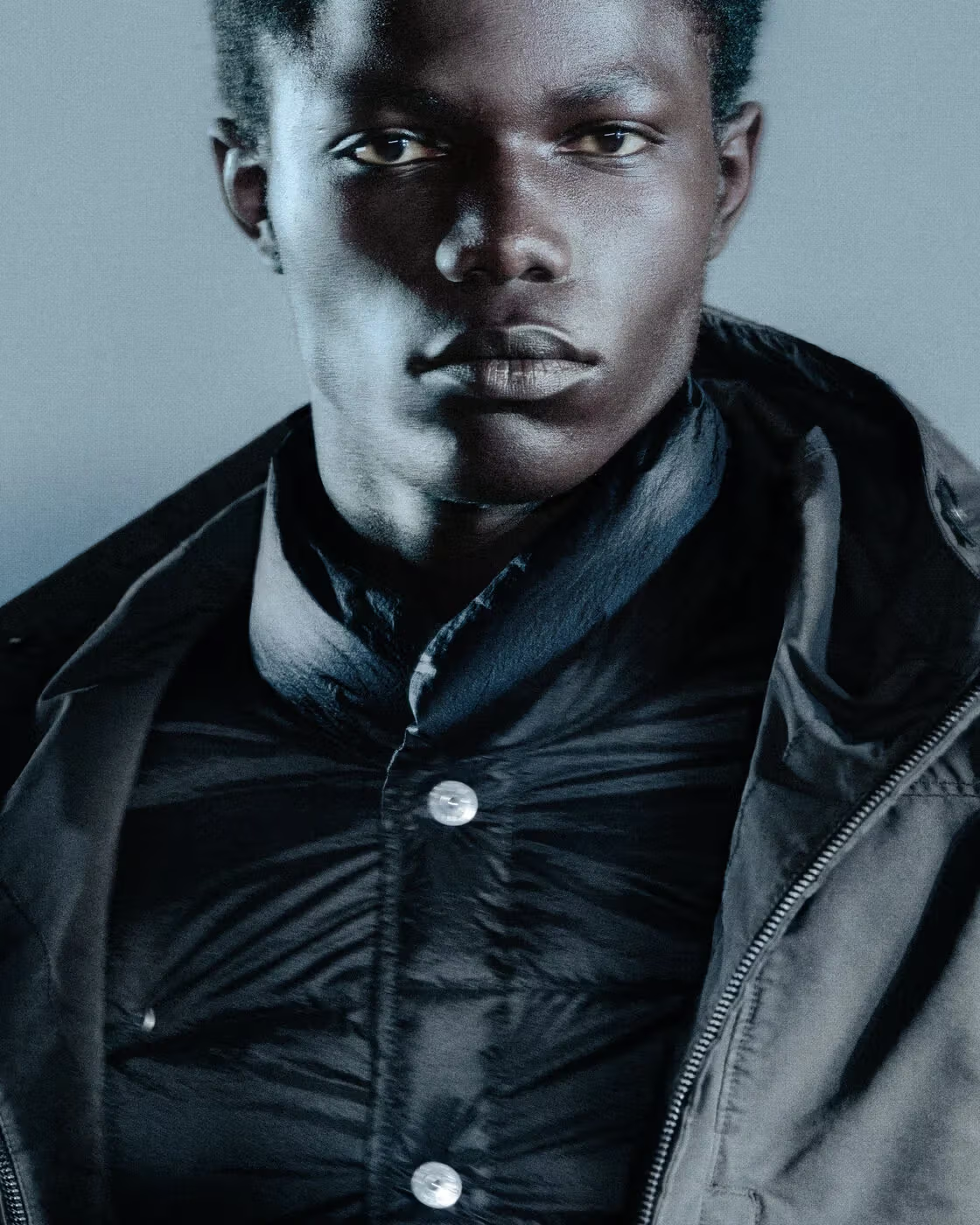
A closer view of the central panel, snaps and a brighter fabric surface.Sleeve fabric texture and the Stone Island badge in detail.
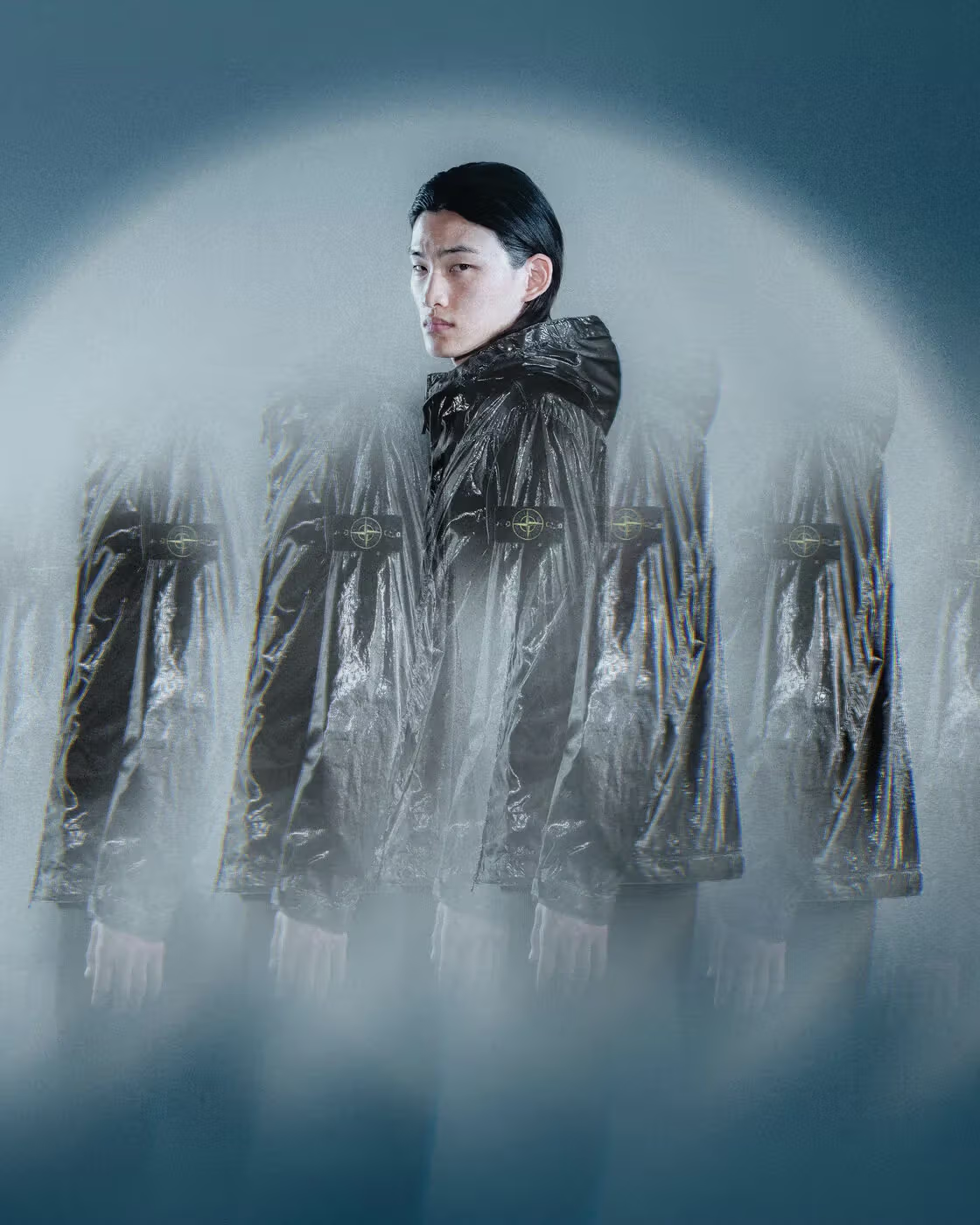
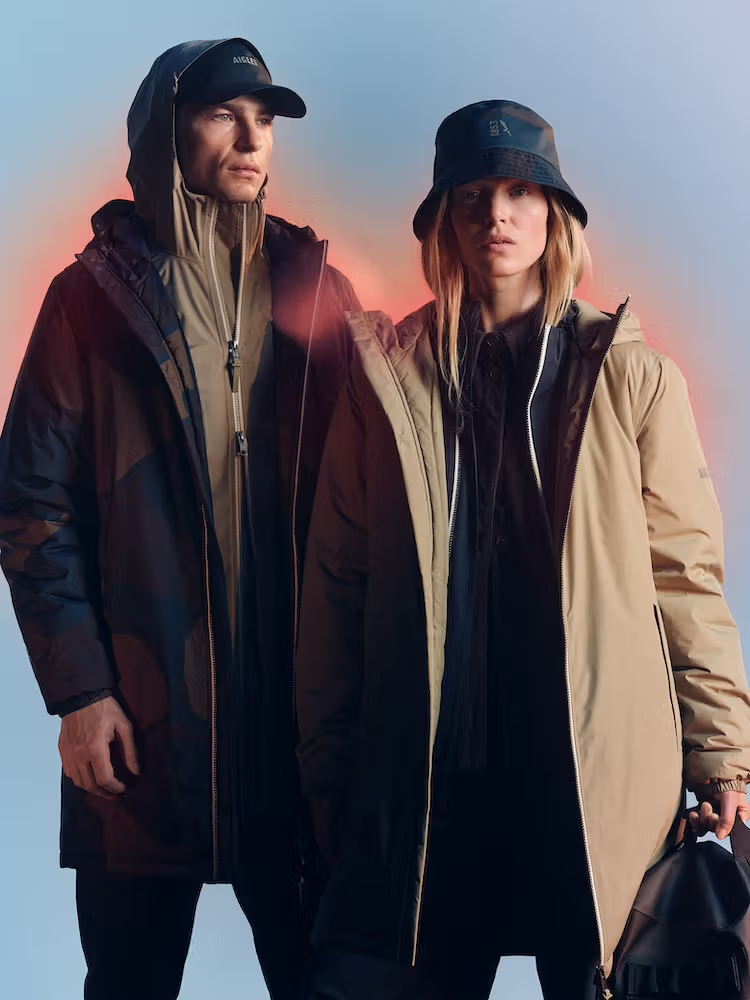
Piombo does not turn all six garments into an identical grey. The brand explains that each material’s technical properties change its receptivity to dye, affecting the final tone and hue. Brighter, more reflective surfaces already contrast with quieter finishes in the styling photographs. A single colour becomes a comparison tool: light and shade around cuffs, shoulders and hoods reveal how fabrics still change a silhouette’s presence despite similar construction.
A reflective-textured jacket presented with layered portraits.
Six fabrics do not mean identical protection or insulation
The six are Tela Resinata, Nylon Prismatico-TC, Raso Gommato, David-TC, Crinkle Reps NY and Panno. Tela Resinata evolves from the brand’s early Tela Stella; the other names similarly bring material research from different periods into one jacket. Rather than reproducing archival garments unchanged, the project uses a consistent contemporary structure to compare what those technical languages can express today.
Each version’s conditions still matter when choosing. The official site describes Crinkle Reps NY as wind-resistant and water-repellent, and Nylon Prismatico-TC and Raso Gommato as wind- and water-resistant. Panno emphasises padded construction and raw edges, while David-TC is a down jacket with a detachable liner. A shared hood and pockets therefore do not establish equal warmth across all six, nor do all surface treatments amount to the same rainwear performance.
Which market’s prices and which season should you look at?
At the time of checking, the brand’s English-language Cyprus site listed euro prices: €895 for Crinkle Reps NY; €1,200 each for Tela Resinata and Raso Gommato; €1,350 for Nylon Prismatico-TC; €1,450 for Panno; and €1,850 for David-TC. These are public prices for one specified market, useful for understanding the six versions’ positioning. Prices and size availability in Korea or Taiwan depend on local channels; this is not a single global price list.
The project appeared at Capsule Plaza during Milan Design Week, April 20–26, 2026; that exhibition has ended. The current focus is the Autumn/Winter garments themselves. “No Seasons” expresses an intention toward continued wear, without removing weather or individual needs. Deciding first whether you need a light outer layer, insulation or an adjustable liner, then comparing the textures and silhouettes in one grey, turns six campaign jackets into a concrete question of material choice.