Sunhyewon’s Trembling Things: Glass Webs, Golden Ties and Blue PVC
Through October 31, Mona Hatoum, Choi Sungim and Kim Yunsoo reshape a Seoul hanok with fragile materials. Explore the dates, dimensions and processes of the works, with venue details.
Glass beads, bread ties, thin plastic and corrugated cardboard are changing how visitors look through Sunhyewon, a hanok in Seoul’s Samcheong-dong. Curated by PODO Museum, A Note From Trembling Things runs from September 2 to October 31 with Mona Hatoum, Choi Sungim and Kim Yunsoo. It is Sunhyewon Art Project 2.0.
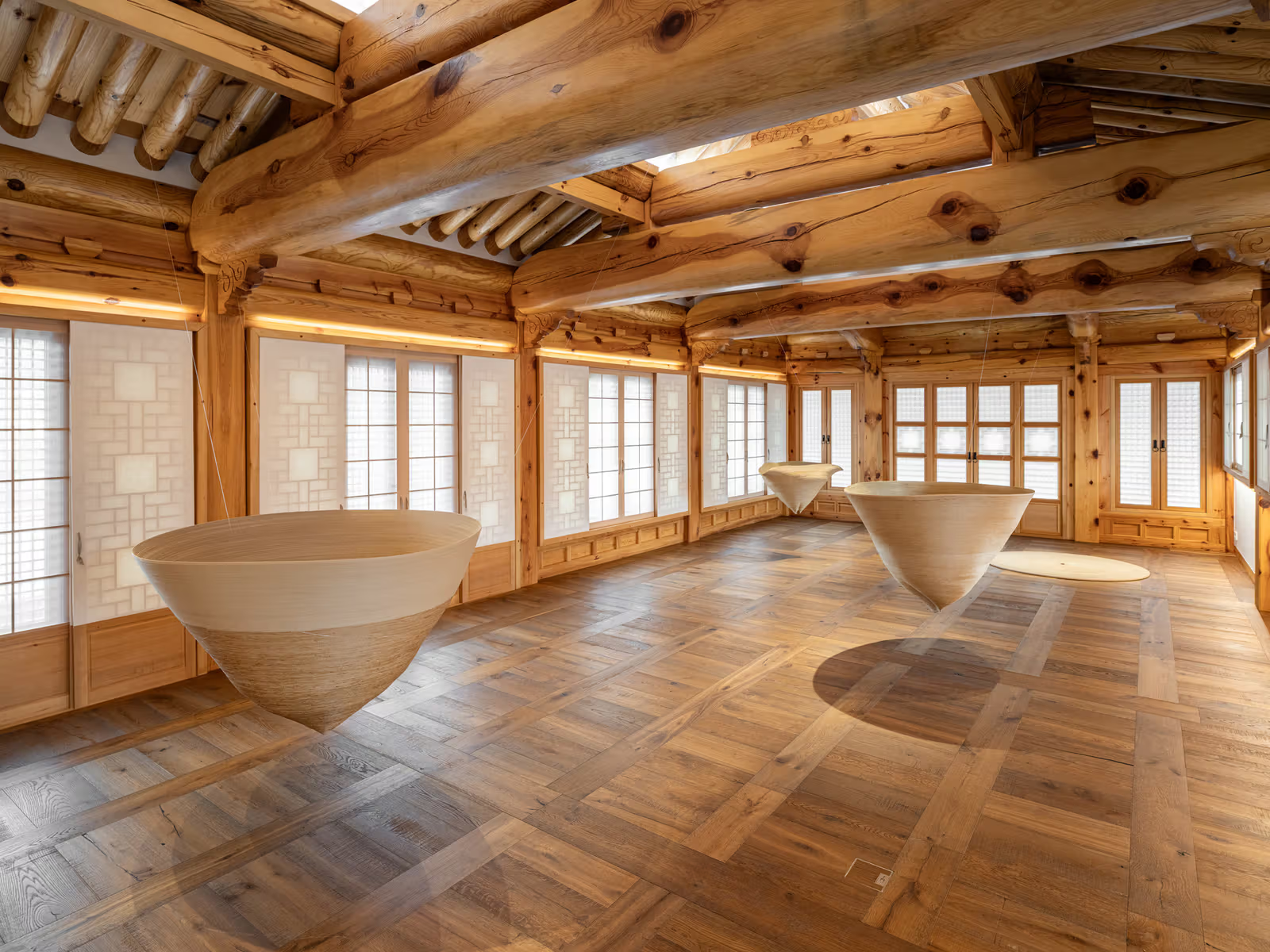
Kim Yunsoo’s corrugated-cardboard works bring curved surfaces and volume into a hanok gallery.
Web: glass beads bring the hanok structure into view
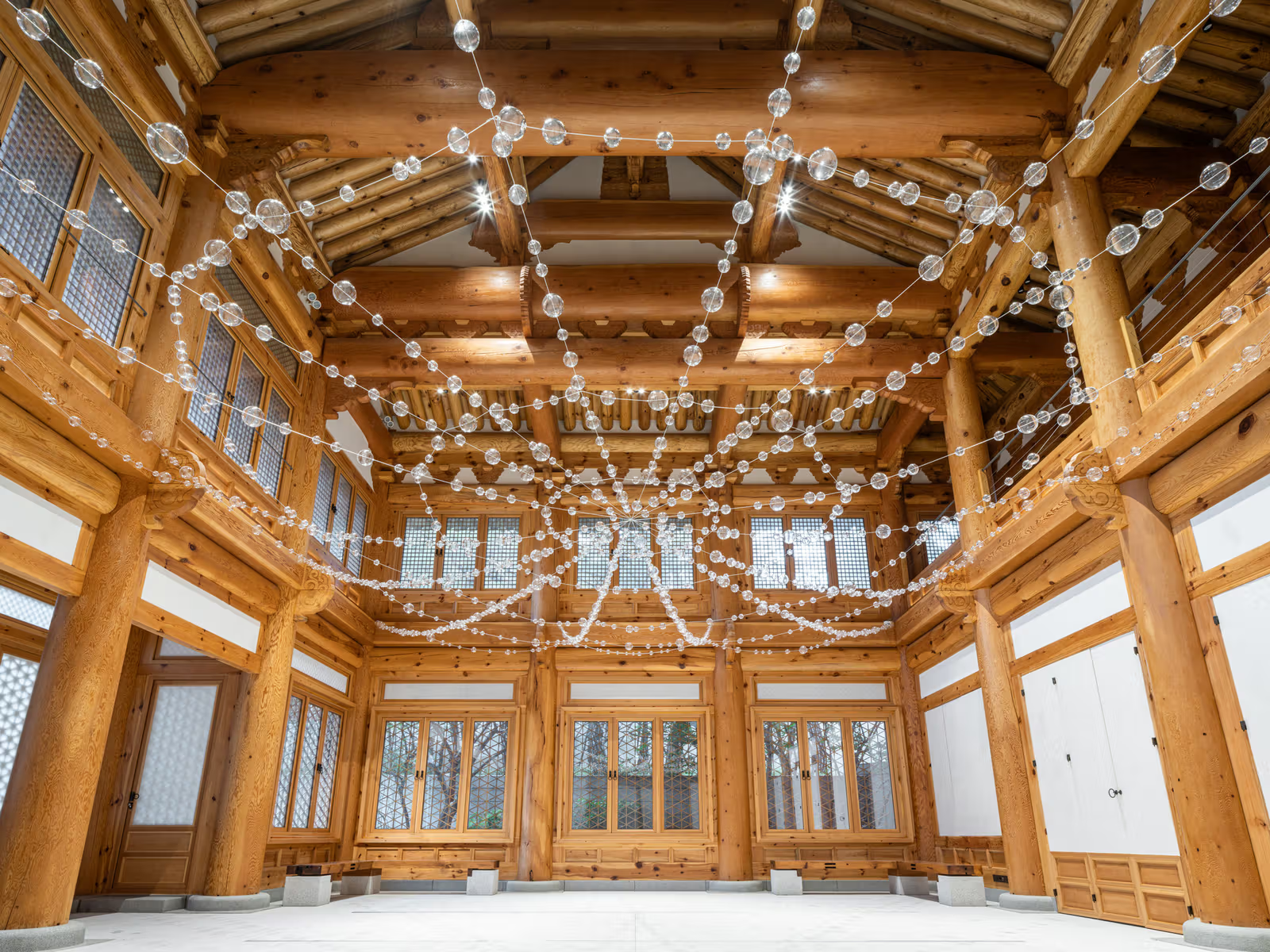
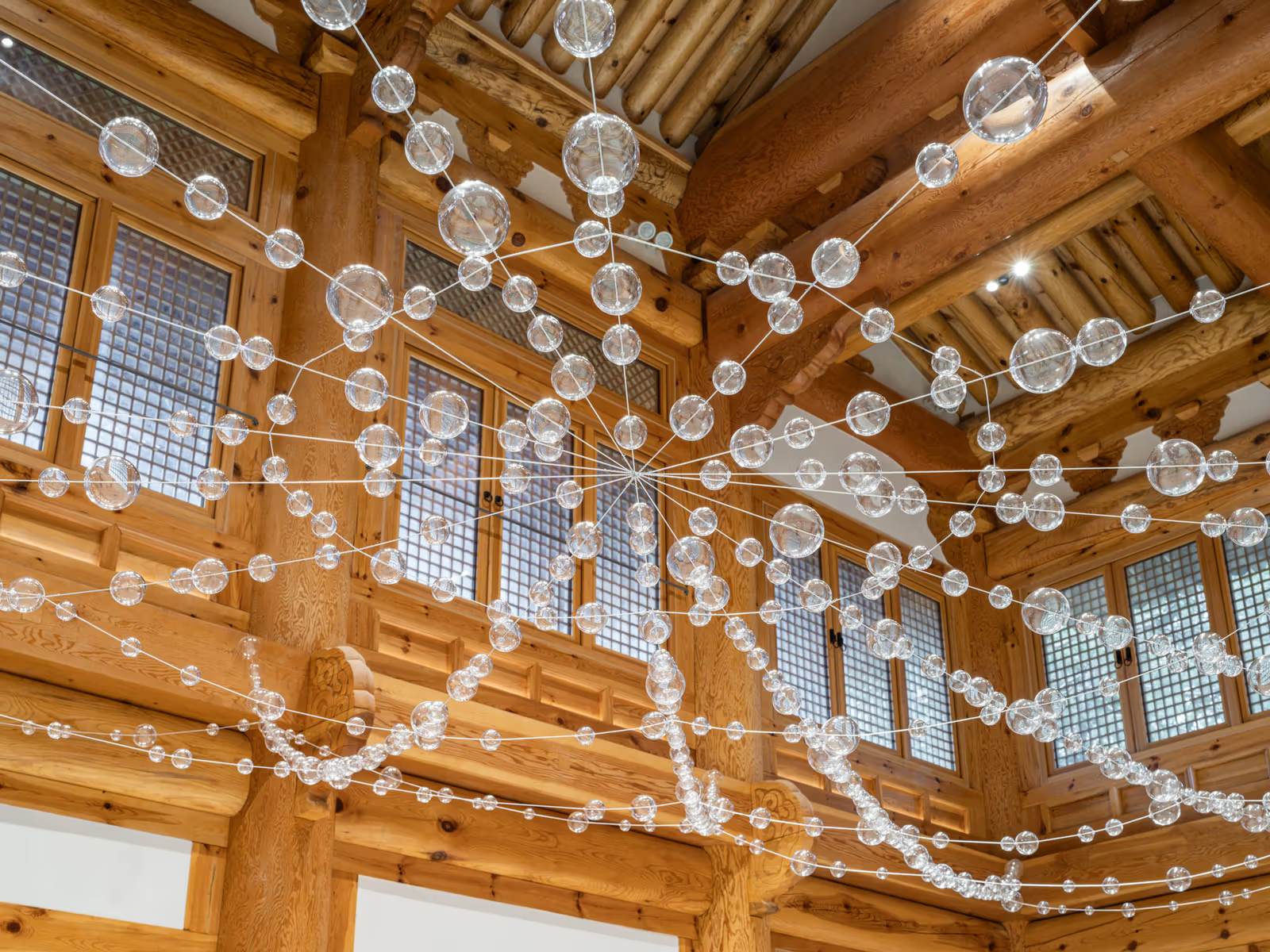
Mona Hatoum’s Web, made in 2025, combines handmade transparent glass spheres and stainless-steel cables in a variable-size installation from the SK and PODO Museum collection. It spans Gyeongheunggak’s interior, with fine lines meeting between timber beams and glass spheres breaking window light into small highlights. Rather than concealing the hanok, it allows the existing posts and beams and the added net to remain visible together, two structures coexisting at different heights.
Web in detail, showing glass spheres and crossing cables against timber windows.
The museum links a spider’s web to both protection and capture: a dwelling for a creature and a device for obtaining food. That dual role becomes more tangible within a former domestic space. Consider first how the network crosses the room, then how individual spheres and cables connect. At a distance it resembles a thin surface; close details reveal the tension sustained by many small junctions.
Golden Blanket: a volume accumulated from ties, not cloth
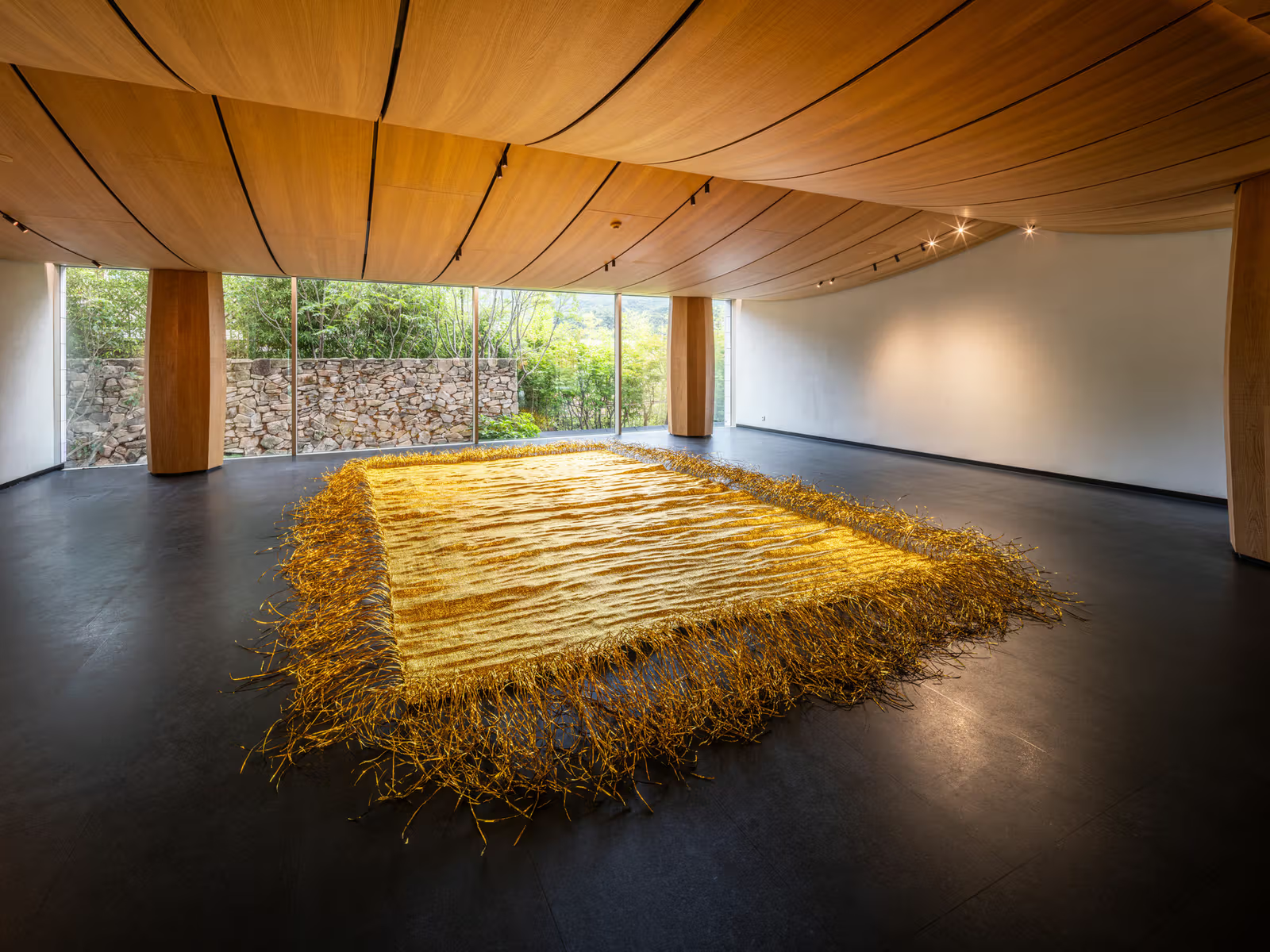
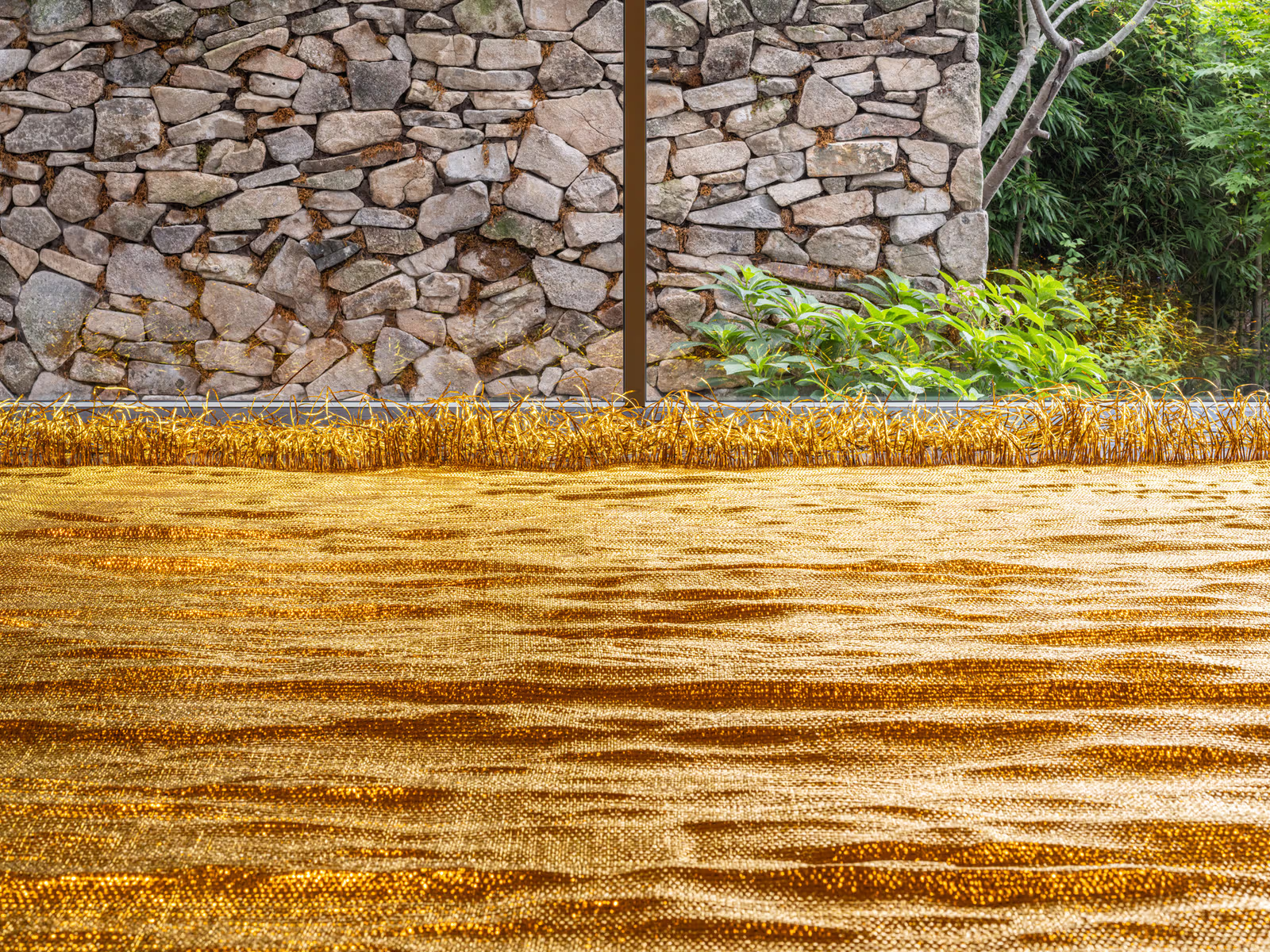
Choi Sungim’s Golden Blanket was commissioned by PODO Museum in 2026. Its listed material is wire ties and its dimensions are 480 by 620 centimetres. Taking inspiration from everyday bread-packaging ties, she connects and weaves small, lightweight elements into a wide golden surface. It appears textile-like at a distance, while dense projecting strands remain along its edge, separating the familiar title from the unfamiliar material.
Choi Sungim, Golden Blanket, 2026, 480 by 620 cm.Golden Blanket in detail: small ties form an undulating golden surface.
The official introduction relates the work to time divided between housework, care and making art. Rather than romanticising daily life, it focuses on how scattered moments become visible scale through repeated handwork. In the installation photographs, the golden surface receives light from large windows and the garden, while a dark floor defines its outline. The broad undulations and the tiny bindings visible in close-up require two different viewing distances.
Blue footprints become landscapes; cardboard suggests floating vessels
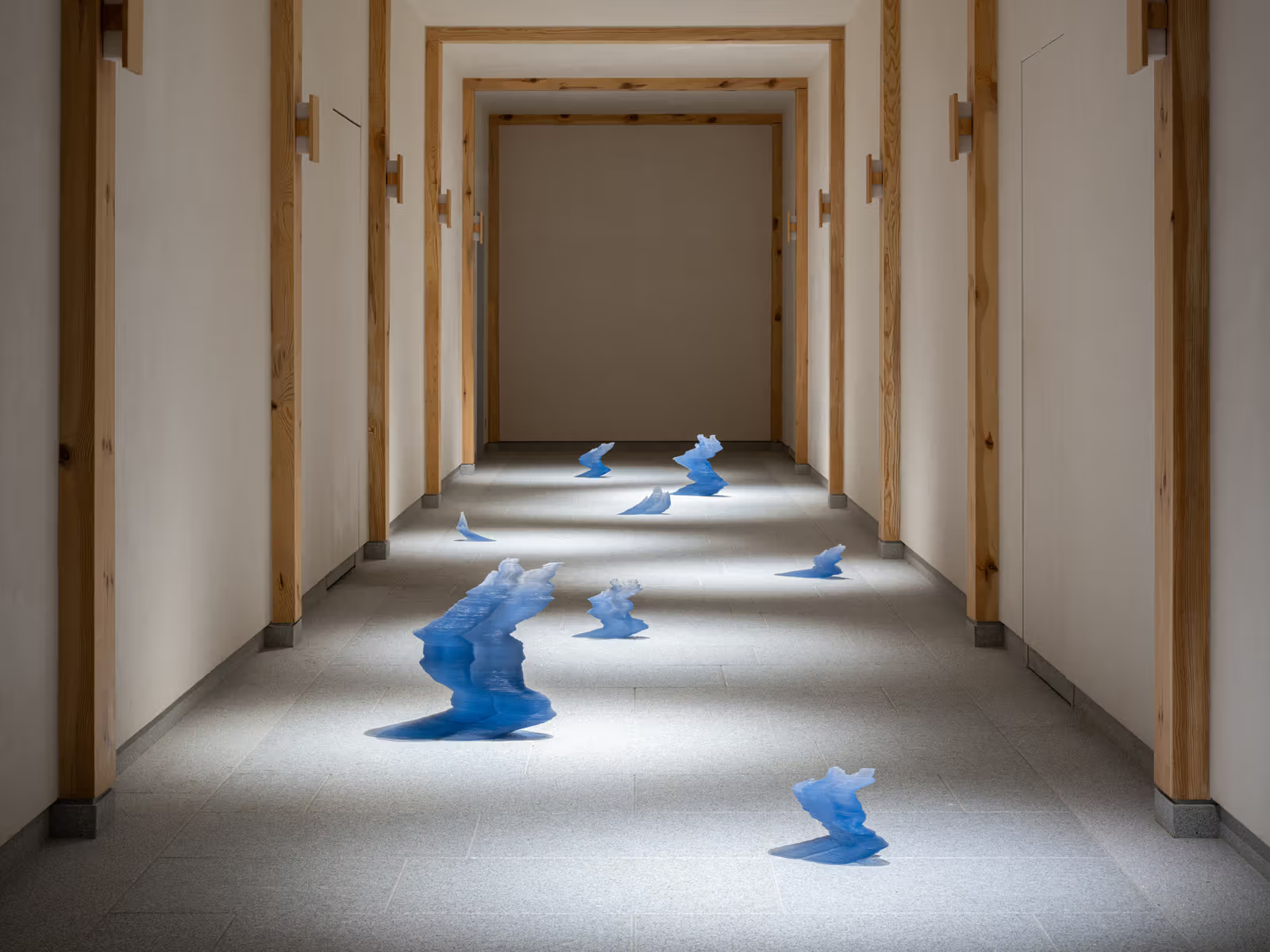
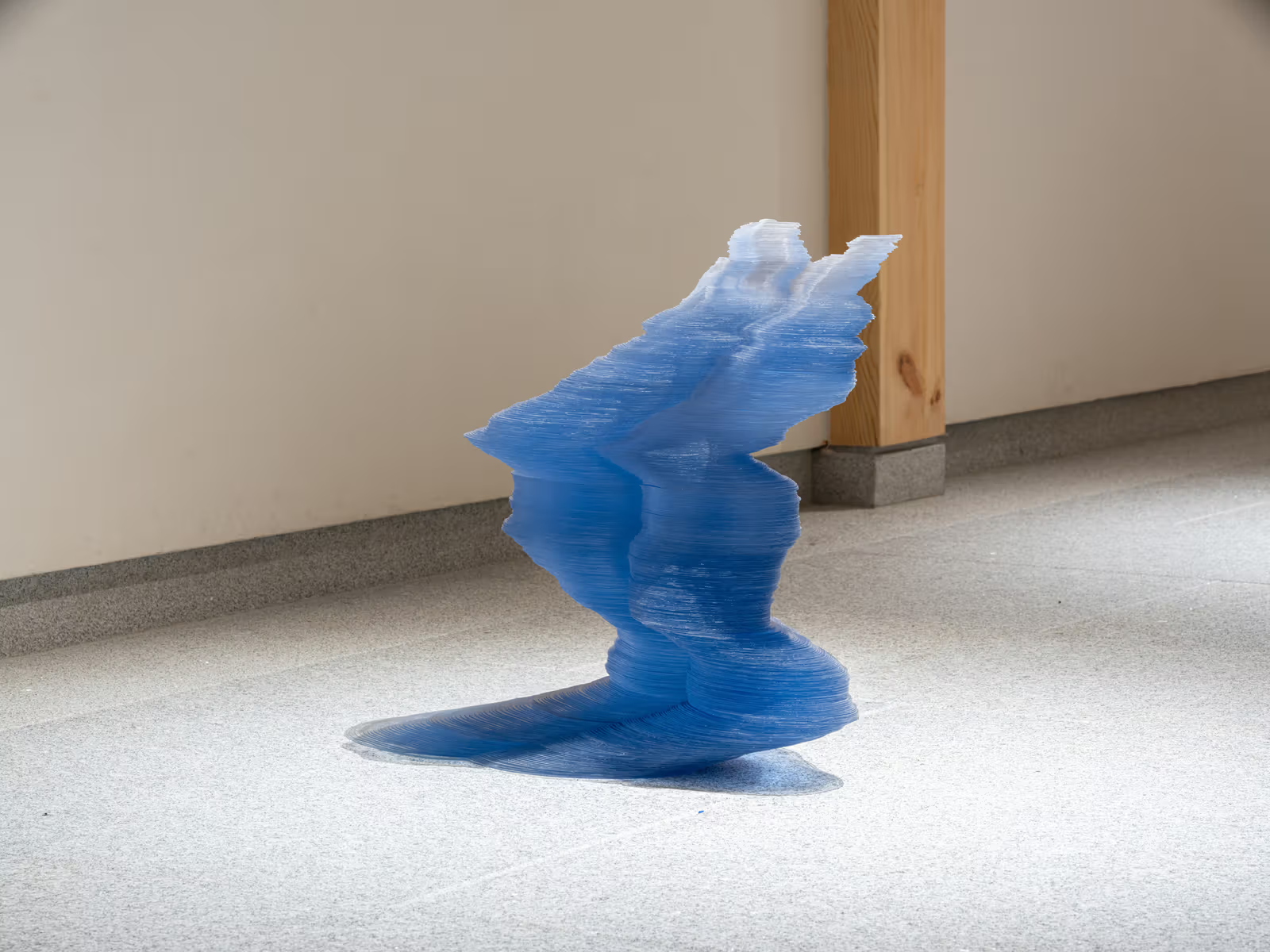
Made from 2011 to 2018, Kim Yunsoo’s Surface of Winds traces different people’s soles onto thin blue PVC, cuts the outlines and repeatedly layers them. Recognisable foot shapes gradually shift and extend, acquiring volume and tonal depth. In the official installation photographs the blue pieces are distributed along a corridor. Natural timber doorframes lead the eye into the distance, while translucent PVC edges make each layer seem like a section left by light.
Kim Yunsoo’s Surface of Winds occupies a corridor with layered PVC.Detail of Surface of Winds, where thin layers create different depths of blue.
Kim also winds corrugated cardboard in works including Wind (A Sculpture on Transparency). Works dating to 2001, together with Longing for Innocence from 2002, partially restored in 2026, give paper vessel-like curves beyond its familiar flat roles in writing or packaging. Organised by SK Sunhyewon and curated by PODO Museum, the exhibition is at 3-5 Samcheong-ro 9-gil, Jongno-gu, Seoul. Ask the venue on 070-8730-0191 about visiting arrangements. Different materials bring the three artists towards one question: how can lightweight things change our sense of spatial scale when gestures accumulate over time?