A northern Thai temple or handmade object can first draw attention through roofs, carving and textiles. Chiang Mai University scholar Woralun Boonyasurat’s recent profile instead focuses on the people behind them. Her work in Lanna arts education, communities and architectural conservation moves from classrooms into villages, allowing inherited knowledge to remain understood, used and discussed in everyday life.
Why begin a temple’s preservation by knowing its community?
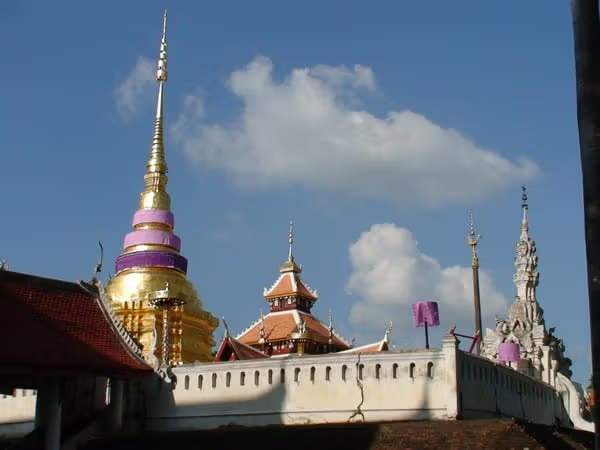
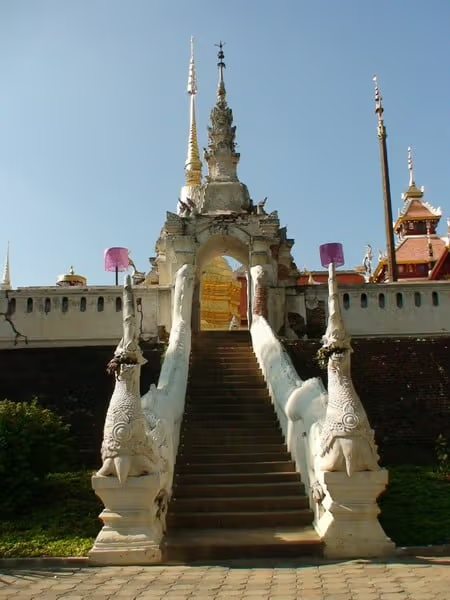
The restoration of Wat Pongsanuk in Lampang, in which Woralun participated, received an Award of Merit in the 2008 UNESCO Asia-Pacific Heritage Awards for Cultural Heritage Conservation. This recognition belongs to the conservation project and makes the cooperation of monks, residents, artisans and scholars visible. In her approach, a community first needs to recognise what it has before deciding together how to care for it.
Wat Pongsanuk in Lampang presents layered roofs and structures.
A temple still in use is more than a photographed façade. Drainage, roof maintenance and the location of ceremonies affect its continuing service to a community. Preservation does not simply freeze time. It addresses practical problems while respecting existing knowledge. An unobtrusive design detail may matter because it allows a building to remain usable.
Why should craft be read through more than the finished object?
Woralun takes students into communities to study Thai art, reconnecting making, ceremony and local experience. Weaving, floral offerings and ritual objects extend beyond their final shapes. Material origins, the people who know how to make them and the occasions of use establish relationships with place. Keeping only a pattern can allow that living context to fade from view.
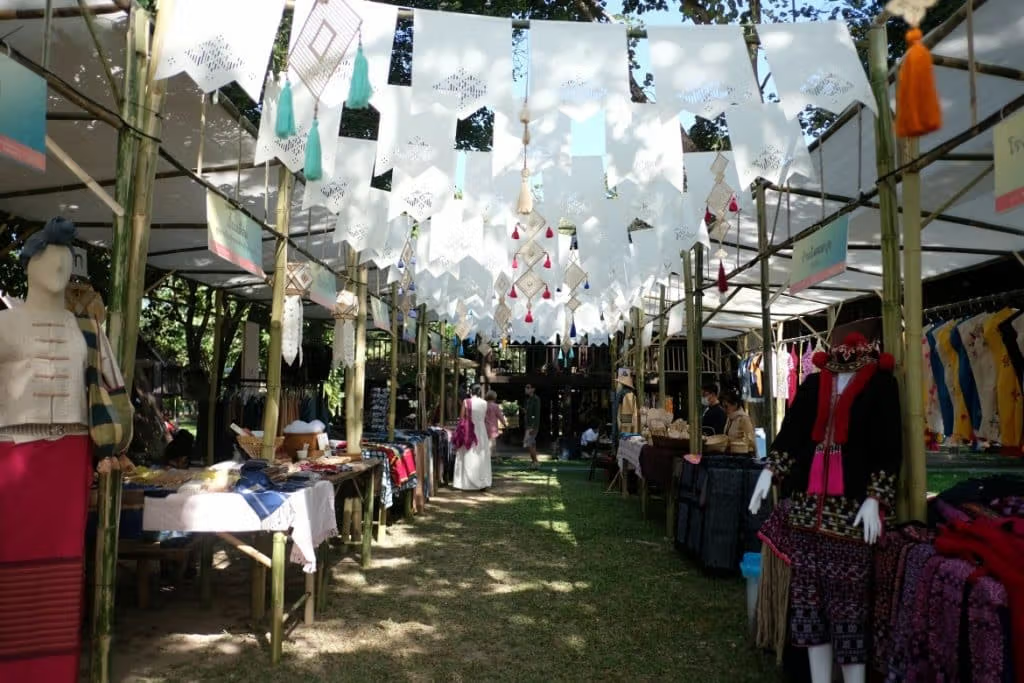
Craft and local events bring cultural knowledge into public space.
Travellers can take another approach too. Alongside asking a price, ask about a material, maker or use when someone is willing to share. Meeting a contemporary market does not automatically strip craft of tradition. Whether new design still supports the original skills and communities deserves consideration alongside the product.
How can tradition return through participation?
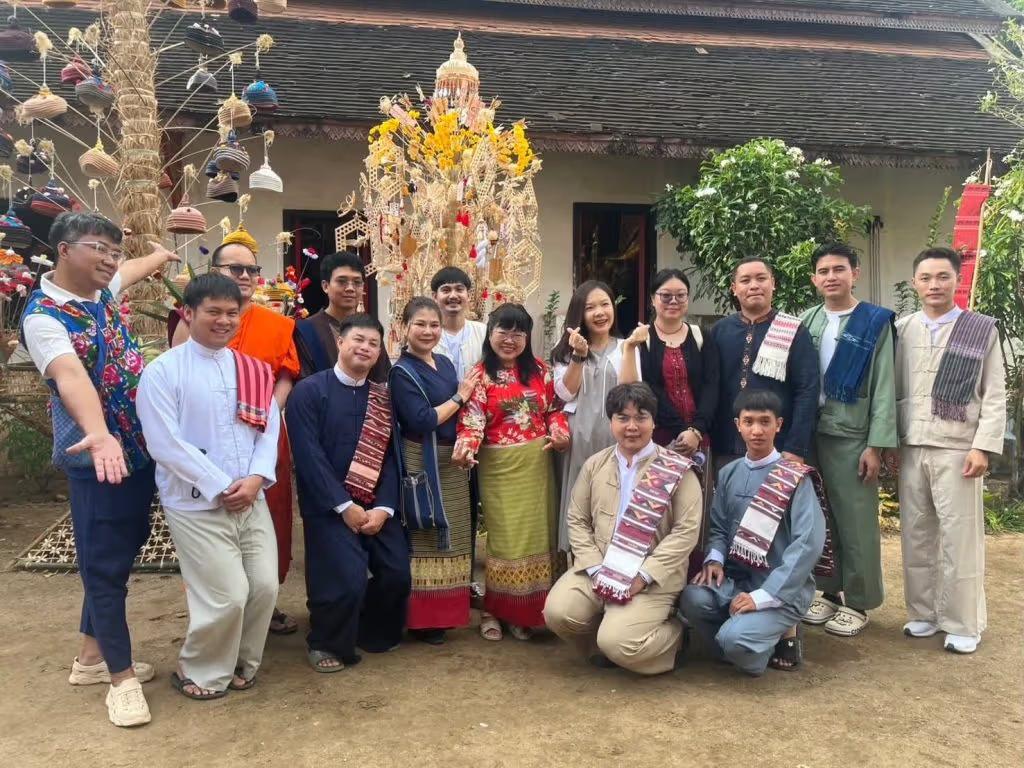
Woralun has also participated in reviving the offering of new rice and firewood at Wat Ton Kwen. The work began with residents remembering how it was practised, followed by students and community members taking part. Unlike a building, intangible knowledge cannot be preserved just by repairing a shell. People need to know when to prepare, how to divide work and be willing to repeat it on another occasion.
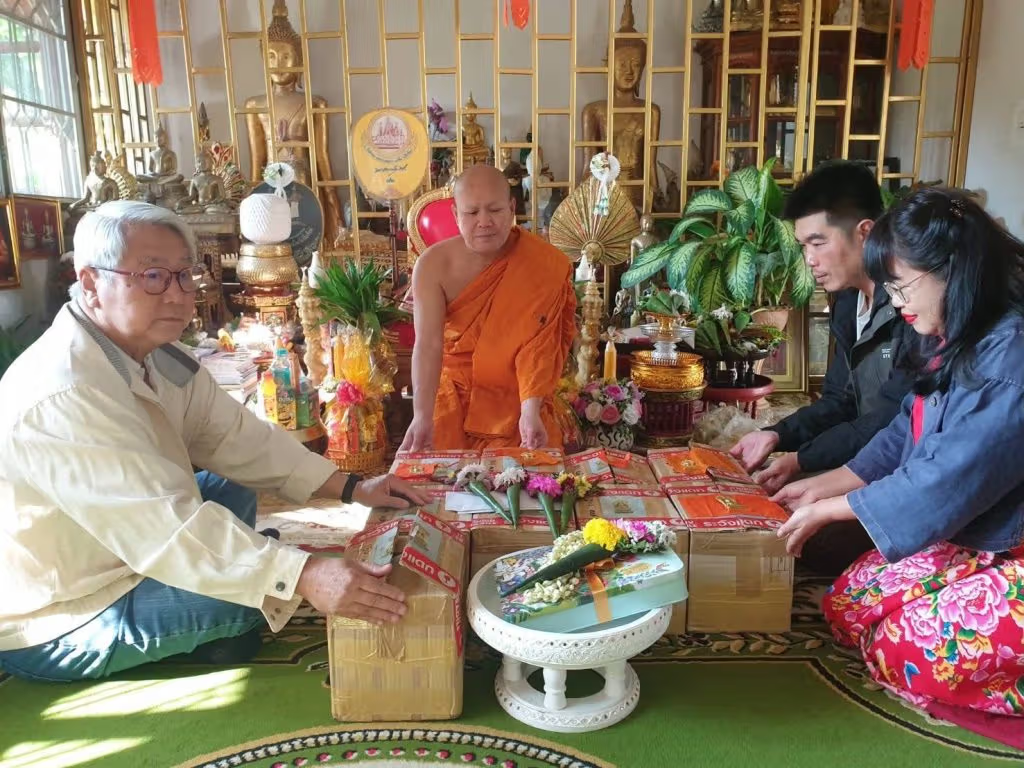
Knowledge of ceremony is also shared through preparation and participation.
Lanna culture can therefore be approached beyond a label of old and beautiful. Temples, craft and rituals change, while another generation needs reasons to participate. Woralun’s work raises a concrete question: after a visit ends, do local people retain the conditions to keep making, maintaining and teaching? Taking that question into a Chiang Mai journey can turn scenery from a photograph into an entry to understanding continuity.
Steps and the entrance clarify the temple’s height and circulation.