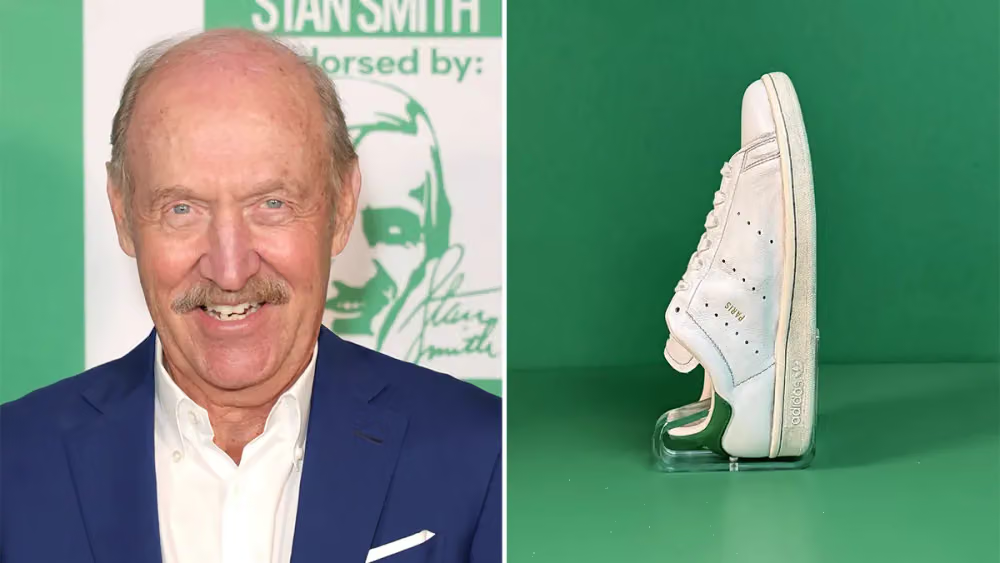
At Paris Men's Fashion Week in June, Willy Chavarria took his final bow at his own Spring/Summer 2027 show wearing a pair of white Stan Smiths, with a small patch of green long-haired suede on the heel and green rose embroidery along the side. Sitting front row was the shoe's namesake himself—tennis legend Stan Smith—who wore an all-distressed green suede version that day. That same week, at the Y-3 show, the Stan Smith was deconstructed and rebuilt into the square-toed, square-heeled "Stan Smith SQ," alongside a sleeker "Lo Pro" version. Adidas even rented out a multi-story old mansion in Paris for a two-day Stan Smith pop-up, bringing in a lineup of artists and musicians to reinterpret the shoe's cultural impact.
These moments became the backbone of Adidas CEO Bjorn Gulden's confidence during this week's earnings call. He told analysts that as "tennis style" makes its way back into the fashion vocabulary, he's confident the Stan Smith will "start growing again," with multiple new versions and collaborations on the way. "We see clear signals from the runway, from consumer surveys, from the data, that this trend is happening," Gulden said. "And the products we've already shipped are showing strong early sales."
The timing of these remarks is telling. Adidas posted net sales of €6.74 billion in Q2 (April–June), a record high for the company, with sales growth of 14%—beating market expectations of €6.63 billion. Yet the stock plunged 11.5% on Thursday to €161.25, then fell another nearly 2% to €159.40 on Friday. Analysts at Deutsche Bank, Bernstein Research, and RBC Capital Markets pointed to the market's shock over World Cup marketing spend, which came in €212 million over budget and directly weighed on operating profit. In other words: investors aren't buying the growth story bought with World Cup spending—while the real bet Gulden is pinning the next chapter on is a shoe that's over fifty years old.