There's no neat thread running through July's five most-loved photo stories on Dazed — each project serves its own purpose, and forcing them into a single "theme of the month" would only flatten their ambiguity and mystery. But if you had to name one shared gesture, it's this: every photographer here is pushing back against something on the verge of vanishing, even if the tools they've chosen couldn't be more different.
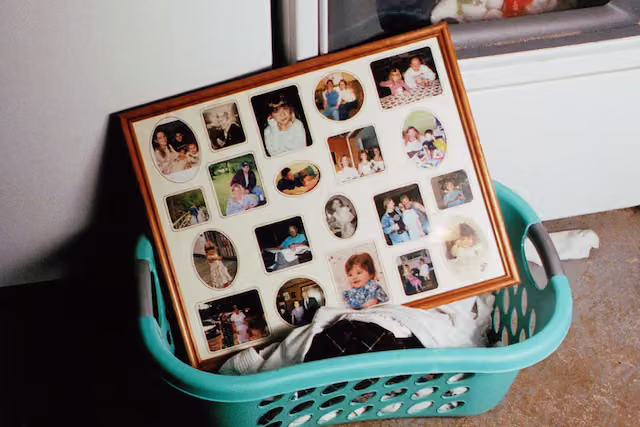
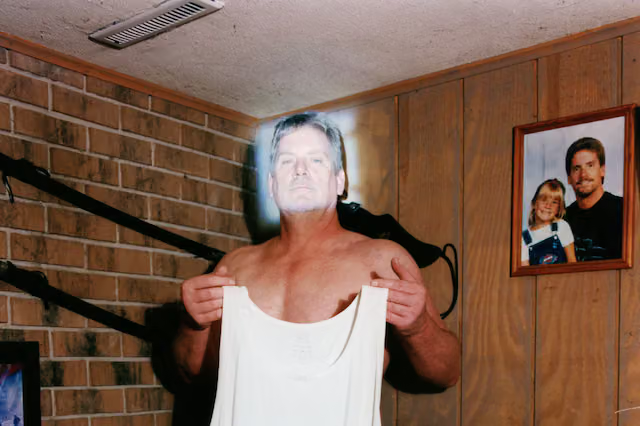
Ashley Markle is fighting the gaps in memory itself. Her solo show Low Hanging Fruit brings together four bodies of work, all circling around her family and relationships, using dramatized self-portraits to restage moments that actually happened — or moments she wishes had happened. Family members occasionally step into frame to perform alongside her, and the camera itself often appears in shot, deliberately breaking the fourth wall. "These stories span my whole life," she told Dazed. "The work is looking at why I am the way I am, why my parents are the way they are, and how that's shaped the way we relate to each other."
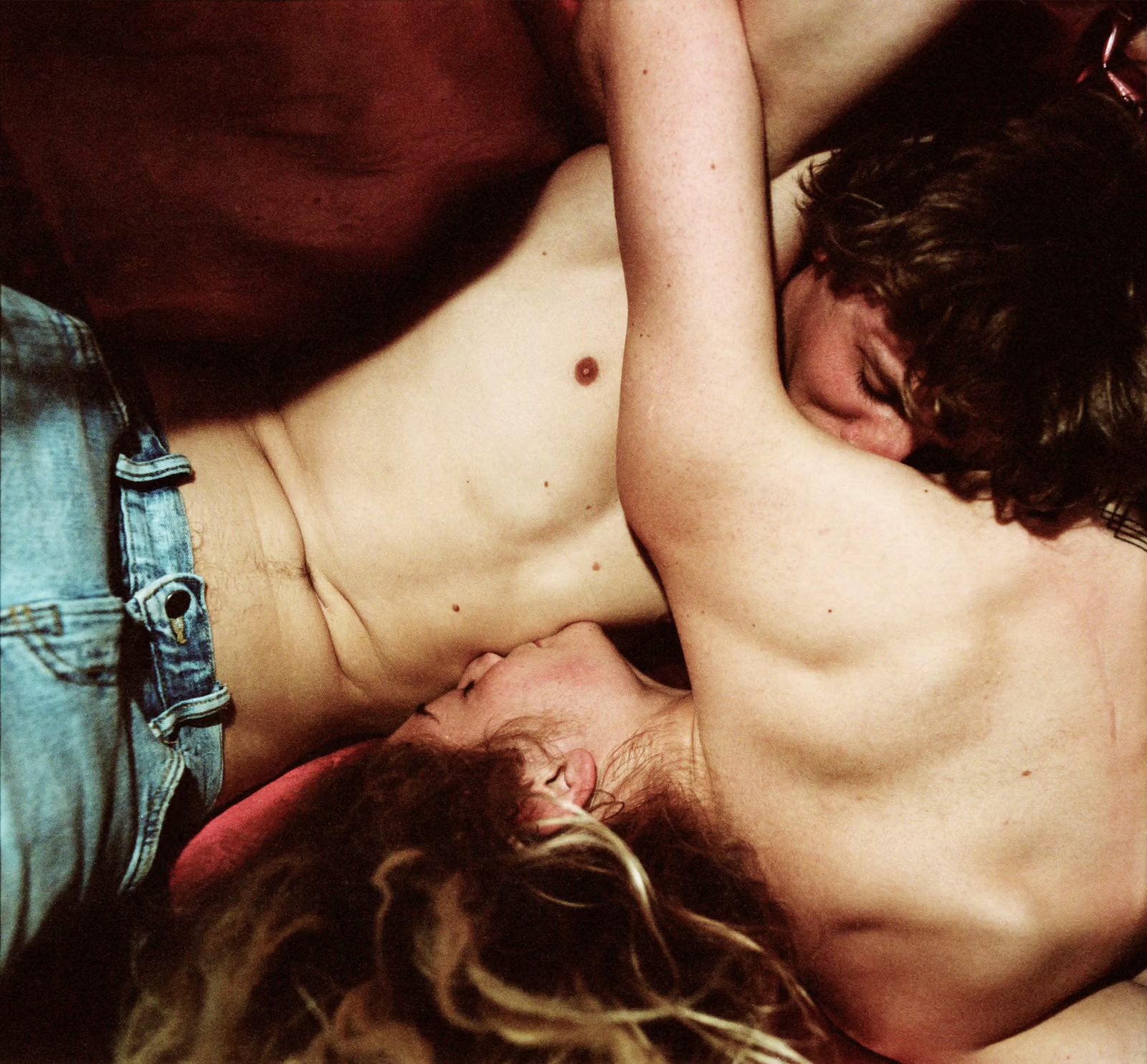
Eva Zar is fighting the flattened narrative the outside world imposes on strippers. Her ongoing project God is a Stripper photographs dancers at New York strip clubs, but skips the "gritty behind-the-scenes" angle so many similar projects reach for, opting instead for deliberate romanticization — even deification. She calls stripping "the purest form of performance": "Clients pay for pleasure and get an experience in return, which isn't all that different from how the rest of us present ourselves in exchange for love and acceptance." Choosing to see beauty, she adds, doesn't mean denying the darkness. "You can be fully aware of the reality and still choose to shape a beautiful version of it."
Mattia Zoppellaro is fighting the flattening effect of gentrification. Raised in Giambellino, one of the last working-class neighborhoods in Milan, he's watched the area transform around him over the years — so he started photographing his neighbors on their own turf, capturing a generation of young faces. Old-school shop signs glow under golden light with an almost nostalgic texture already baked in — will these same people still be living here in ten years? Even Zoppellaro doesn't know.